beginner basics
Low-Impact Starter Movement
How can a beginner use low-impact movement as a smaller first attempt without assuming it is safe or useful for every person?
Low-impact starter movement means lowering jump, speed, and jolt before you judge the activity. It can make a first attempt easier to observe, but it is not a universal safety label, not a pain solution, and not a personal program. The useful test is whether the smaller version stays stoppable and clear.
Choose a movement with one foot on the ground or a supported, smaller range: easy walking, marching in place, low step patterns, gentle mobility, wall support, or seated movement that can stop immediately.
Read This First
You want a gentler way to begin moving because jumping, running, fast classes, or high-energy routines feel too much, but you still need a page that stays conservative and specific. The useful way into this guide is low impact means less jolt, not automatic safety: name the setting, the signal you can observe, and the line where the guide should stop instead of becoming personal advice.
Choose a movement with one foot on the ground or a supported, smaller range: easy walking, marching in place, low step patterns, gentle mobility, wall support, or seated movement that can stop immediately.
which impact variable you lowered: jumping, speed, range, surface, direction change, support, or duration
Use a slower pace, shorter attempt, smaller range, more support, flatter path, clearer floor, or a movement with no jumping and an immediate stop point.
Make the first attempt boring enough to repeat.
Beginner pages protect the first week from motivation language. The useful question is whether the smallest version stayed readable afterward.
- Repeat the version that stayed clear before adding another variable.
- Low-Impact Starter Movement - Low Impact Means Less Jolt, Not Automatic Safety: look first for which impact variable you lowered: jumping, speed, range, surface, direction change, support, or duration; if that signal is missing or crowded out by low impact still creates chest discomfort, severe breathlessness, dizziness, unusual pain, numbness, unstable balance, or unsafe symptoms, make the next version smaller before reading onward.
- Pick the version that can be shortened without guilt.
- Ask a clinician, physical therapist, emergency service, or qualified fitness professional when symptoms, pain, medical history, medication, pregnancy, illness, surgery, recovery, chronic disease, falls history, or professional instructions shape the low-impact decision.
Use this page to protect the first repeat. Begin with the restart, not the full identity change.
Low-Impact Starter Movement is strongest when you read it as a first-week decision, not as a full program. Keep the page focused on low impact means less jolt, not automatic safety, then stop at the smallest version you could repeat tomorrow. The restart variant keeps the article anchored to the first clean attempt after a long pause, a missed week, or a low-confidence day.
Picture low-impact starter movement on a day when motivation is not the problem, but pacing is. Keep the safe start concrete: Choose a movement with one foot on the ground or a supported, smaller range: easy walking, marching in place, low step patterns, gentle mobility, wall support, or seated movement that can stop immediately. Read the scene as a restart: the reader needs a version that can be done once without turning the day into a program.
Do not turn lower impact and lower effort are different into a test of discipline. If the first attempt creates confusion, use the reduce path first: Use a slower pace, shorter attempt, smaller range, more support, flatter path, clearer floor, or a movement with no jumping and an immediate stop point. Avoid language that turns the page into a fresh commitment contract; the next action should be small enough to abandon safely.
After reading, choose one sign to watch: which impact variable you lowered: jumping, speed, range, surface, direction change, support, or duration. If that sign is still unclear, the next useful read is Low-Impact Cardio Basics. The useful takeaway is one repeatable first attempt, not proof that the reader is now an exerciser.
Safety Boundary
This is general education, not medical advice. Stop for warning signs and ask a qualified professional when the situation is personal, uncertain, or higher risk.
Not For
- diagnosis of pain, joint concerns, injury risk, fatigue, balance, mobility, or medical readiness
- replacing a clinician, physical therapist, qualified fitness professional, emergency service, or professional instructions
- treatment decisions, rehab guidance, pain advice, injury prevention promises, body change, weight change, or performance programming
What To Look For
Read the page by the signal you need to understand, then choose the next page only when that signal is clearer.
Decision 1
Low Impact Means Less Jolt, Not Automatic Safety
Low-Impact Starter Movement - Low Impact Means Less Jolt, Not Automatic Safety: look first for which impact variable you lowered: jumping, speed, range, surface, direction change, support, or duration; if that signal is missing or crowded out by low impact still creates chest discomfort, severe breathlessness, dizziness, unusual pain, numbness, unstable balance, or unsafe symptoms, make the next version smaller before reading onward.
Low-impact wording sounds reassuring, but the guide must avoid implying that gentler movement is safe for every reader.
Low impact usually means reducing jumping, landing force, speed changes, or jolt. That can make a beginner attempt easier to observe, but it does not make the movement automatically safe or appropriate. A slow walk, marching in place, wall-supported movement, seated movement, water movement, or gentle mobility can still feel too large if the room is unclear, breath is hard to describe, balance feels unstable, or symptoms appear.
The useful first question is: what impact variable are you lowering? Are you keeping one foot on the floor, using support, reducing range, choosing a softer pace, or avoiding sudden direction changes? Name that variable before you judge the activity.
If the smaller version feels calm, repeat it before adding time. If it still feels noisy, low impact may need to become lower effort, shorter duration, better support, or a safety question. Gentler is a starting frame, not a promise.
That named variable keeps the next attempt specific rather than reassuring. Low Impact Means Less Jolt, Not Automatic Safety should change what the reader watches next, not simply restate the guide topic. In low-impact starter movement, the section is useful when it turns the first repeatable version of low-impact starter movement into a visible check: which impact variable you lowered: jumping, speed, range, surface, direction change, support, or duration.
If the same attempt points instead to low impact still creates chest discomfort, severe breathlessness, dizziness, unusual pain, numbness, unstable balance, or unsafe symptoms, the guide should narrow the choice, reduce the demand, or move the reader toward qualified help. CDC (Physical Activity Guidelines) and NHS (Exercise) shape this dimension without becoming instructions to copy. CDC gives this guide public-facing vocabulary and a limit on what the guide can say.
NHS adds a second comparison point so the guide does not lean on one article or one phrasing pattern. The final wording should therefore stay with what can be observed, what should not be assumed, and what question belongs outside a self-directed page. Changing jumping jacks into slow side steps lowers impact, but the room, balance, breath, and stopping still need to feel clear.
After one attempt, the note should be plain enough to compare later: which impact variable you lowered: jumping, speed, range, surface, direction change, support, or duration. If nothing useful changes, the fallback is not to push harder; it is to use a slower pace, shorter attempt, smaller range, more support, flatter path, clearer floor, or a movement with no jumping and an immediate stop point. If the signal is mixed, change one variable at a time: impact, effort, support, surface, shoes, path, movement category, duration, class pace, or whether safety guidance should lead.
Decision 2
Lower Impact And Lower Effort Are Different
Low-Impact Starter Movement - Lower Impact And Lower Effort Are Different: choose the next move from the visible signal, then direct symptoms, personal risk, or unclear safety to qualified help.
A movement can be low impact but still too intense for a beginner's first attempt. This part matters only if it changes the next visible choice instead of adding a generic reason to move.
Low impact is not the same as low effort. A fast step workout, long hill walk, cycling session, dance class, or water exercise can reduce jolt while still asking for more breath, time, range, or coordination than a beginner can read. For the first attempt, pair low impact with low effort.
Keep the version slow, short, and easy to stop. Use conversation as a simple effort clue: can you still describe what you are doing, slow down, and step away? If not, the movement may need to shrink even if it has no jumping.
This distinction prevents the common mistake of choosing a gentler label and then doing too much inside it. It also gives the reader a practical next change. If impact feels fine but breath is loud, lower pace.
If pace feels fine but balance is noisy, add support. If everything is unclear, return to one smaller movement. Low-Impact Starter Movement needs lower impact and lower effort are different to answer a smaller question than "what should I do next?" Use the point where motivation becomes pressure as the filter and leave with one note: effort, breath, balance, room, shoes, or stopping stayed readable.
If the note is only motivation, guilt, or a vague sense that more effort must be better, the section has not done its job yet. CDC (Measuring Physical Activity Intensity) and MoveKind (Low-Impact Cardio Basics) shape this dimension without becoming instructions to copy. CDC gives this guide public-facing vocabulary and a limit on what the guide can say.
Low-Impact Cardio Basics supplies the site link if this section becomes the reader's next decision. The final wording should therefore stay with what can be observed, what should not be assumed, and what question belongs outside a self-directed page. A low-impact dance video can still be too fast; slowing one pattern may teach more than completing the full class.
After one attempt, the note should be plain enough to compare later: effort, breath, balance, room, shoes, or stopping stayed readable. If nothing useful changes, the fallback is not to push harder; it is to use a slower pace, shorter attempt, smaller range, more support, flatter path, clearer floor, or a movement with no jumping and an immediate stop point. If the signal is mixed, change one variable at a time: impact, effort, support, surface, shoes, path, movement category, duration, class pace, or whether safety guidance should lead.
Decision 3
Support And Surface Decide The First Version
Low-Impact Starter Movement - Support And Surface Decide The First Version: use this section to choose repeat, reduce, pause, or ask, not to prove progress; watch the same low-impact version would be realistic to repeat without adding pace or range.
Beginners often focus on the movement label while floor, shoes, support, and exit path decide whether it is readable.
A low-impact starter movement happens on a real floor, path, chair, wall, mat, pool deck, sidewalk, or studio space. Surface and support can matter more than the movement name. Marching in place on a slippery floor is not the same as marching near a counter on a stable surface.
A gentle step pattern near clutter is not the same as one with a clear exit. A chair-supported option can make range easier to observe, while a floor option can make getting up the main issue. Before choosing a movement, choose the support and surface.
Can you stop without crossing obstacles? Can you slow down without losing balance? Can you turn back?
Can you use a wall or chair without making the movement awkward? If support makes the attempt clearer, use it. If the surface is the noisy signal, path to space safety before adding effort.
Low impact should start with a setting that lets you leave calmly. Support And Surface Decide The First Version belongs in low-impact starter movement because it can separate one ordinary signal from a larger claim. For this guide, the stop rule before progress matters more than finishing a routine.
The reader should finish the section knowing whether to repeat the same version, make it smaller, change the setting, or pause because the setting makes stopping unclear even though the movement itself has little jumping. MoveKind (Wall-Supported Exercise Basics) and NHS (Exercise) shape this dimension without becoming instructions to copy. MoveKind is used here for reader-question coverage and article structure, not as proof of a health outcome.
NHS adds a second comparison point so the guide does not lean on one article or one phrasing pattern. The final wording should therefore stay with what can be observed, what should not be assumed, and what question belongs outside a self-directed page. Wall-supported side steps on a clear floor may be more useful than a low-impact video that asks for turns near furniture.
After one attempt, the note should be plain enough to compare later: the same low-impact version would be realistic to repeat without adding pace or range. If nothing useful changes, the fallback is not to push harder; it is to use a slower pace, shorter attempt, smaller range, more support, flatter path, clearer floor, or a movement with no jumping and an immediate stop point. If the signal is mixed, change one variable at a time: impact, effort, support, surface, shoes, path, movement category, duration, class pace, or whether safety guidance should lead.
Decision 4
Choose One Low-Impact Option Before Browsing Many
Low-Impact Starter Movement - Choose One Low-Impact Option Before Browsing Many: look first for the next page should be talk test, wall support, mobility, low-impact cardio, first-week rhythm, or ask-first guidance; if that signal is missing or crowded out by low impact still creates chest discomfort, severe breathlessness, dizziness, unusual pain, numbness, unstable balance, or unsafe symptoms, make the next version smaller before reading onward.
Low-impact pages often list options, but a beginner needs one small test before comparing everything. This part matters only if it changes the next visible choice instead of adding a generic reason to move.
Low-impact options can include walking, cycling, swimming, water movement, chair movement, wall-supported movement, mobility, gentle dance, low step patterns, and light strength literacy. Seeing many options is useful only after one starter test tells you what variable matters. Otherwise the list becomes overwhelming.
Choose one option for one setting and one short attempt. If walking is familiar, start there. If standing is noisy, choose chair or wall support.
If impact is the concern but effort is fine, a low-impact cardio page may help. If range is the concern, mobility may be the next page. The goal is not to sample every option.
It is to learn which category keeps the first movement readable. Option lists are not personal advice and should not replace professional input. Use them as a menu of questions, not a program.
One good first note can narrow the menu more than another hour of reading. That first note decides which option deserves a second try. Choose One Low-Impact Option Before Browsing Many should change what the reader watches next, not simply restate the guide topic.
In low-impact starter movement, the section is useful when it turns the first repeatable version of low-impact starter movement into a visible check: the next page should be talk test, wall support, mobility, low-impact cardio, first-week rhythm, or ask-first guidance. If the same attempt points instead to low impact still creates chest discomfort, severe breathlessness, dizziness, unusual pain, numbness, unstable balance, or unsafe symptoms, the guide should narrow the choice, reduce the demand, or move the reader toward qualified help. Verywell Fit (Low-Impact Exercise) and Healthline (Low-Impact Exercises) shape this dimension without becoming instructions to copy.
Verywell Fit is used here for reader-question coverage and article structure, not as proof of a health outcome. Healthline adds a second comparison point so the guide does not lean on one article or one phrasing pattern. The final wording should therefore stay with what can be observed, what should not be assumed, and what question belongs outside a self-directed page.
Decision 5
path The Next Page From The Signal You Lowered
Low-Impact Starter Movement - path The Next Page From The Signal You Lowered: choose the next move from the visible signal, then direct symptoms, personal risk, or unclear safety to qualified help.
Low-impact starter pages should guide the next question from the actual signal, not from a generic progression. This part matters only if it changes the next visible choice instead of adding a generic reason to move.
After one low-impact attempt, ask which signal you lowered. If you lowered jumping but effort was still high, read the talk test or low-impact cardio basics. If you lowered pace but balance remained noisy, read wall-supported basics.
If the room, floor, or shoes shaped the attempt, use home-space or shoe guidance. If the option felt clear and repeatable, first-week rhythm can help you space it. If pain, dizziness, severe breathlessness, chest discomfort, numbness, unusual fatigue, pregnancy, illness, recovery, chronic disease, or professional instructions shaped the attempt, the next page should be ask-first guidance or qualified help.
This makes low impact a decision system rather than a vague comfort label. A useful next page should make the next attempt smaller, clearer, or safer to discuss. It should not quietly move the reader into a harder routine.
If no signal is clear, repeat a shorter version and change only one variable. The signal should choose the path before ambition chooses it. Low-Impact Starter Movement needs path the next page from the signal you lowered to answer a smaller question than "what should I do next?" Use the point where motivation becomes pressure as the filter and leave with one note: which impact variable you lowered: jumping, speed, range, surface, direction change, support, or duration.
If the note is only motivation, guilt, or a vague sense that more effort must be better, the section has not done its job yet. CDC (Measuring Physical Activity Intensity) and Healthline (Low-Impact Exercises) shape this dimension without becoming instructions to copy. CDC gives this guide public-facing vocabulary and a limit on what the guide can say.
Healthline adds a second comparison point so the guide does not lean on one article or one phrasing pattern. The final wording should therefore stay with what can be observed, what should not be assumed, and what question belongs outside a self-directed page. If low-impact marching lowered jolt but effort still felt too high, the next read is intensity, not a longer low-impact class.
After one attempt, the note should be plain enough to compare later: which impact variable you lowered: jumping, speed, range, surface, direction change, support, or duration. If nothing useful changes, the fallback is not to push harder; it is to use a slower pace, shorter attempt, smaller range, more support, flatter path, clearer floor, or a movement with no jumping and an immediate stop point. If the signal is mixed, change one variable at a time: impact, effort, support, surface, shoes, path, movement category, duration, class pace, or whether safety guidance should lead.
After You Try It
After one low-impact attempt, you may understand whether the next decision is less jolt, lower effort, more support, clearer floor, shorter time, different category, first-week spacing, or safety guidance. That is not proof that low impact is safe for everyone.
What To Observe
- which impact variable you lowered: jumping, speed, range, surface, direction change, support, or duration
- whether effort, breath, balance, room, shoes, or stopping stayed readable
- whether the same low-impact version would be realistic to repeat without adding pace or range
- whether the next page should be talk test, wall support, mobility, low-impact cardio, first-week rhythm, or ask-first guidance
Too Much
- low impact still creates chest discomfort, severe breathlessness, dizziness, unusual pain, numbness, unstable balance, or unsafe symptoms
- you use the gentler label to add more time, pace, range, stairs, or class complexity too soon
- the setting makes stopping unclear even though the movement itself has little jumping
If Nothing Improves Or It Feels Worse
Use a slower pace, shorter attempt, smaller range, more support, flatter path, clearer floor, or a movement with no jumping and an immediate stop point.
Change one variable at a time: impact, effort, support, surface, shoes, path, movement category, duration, class pace, or whether safety guidance should lead.
Pause when low impact still worsens breath, chest discomfort, dizziness, unusual pain, numbness, balance, fatigue, or uncertainty.
Ask a clinician, physical therapist, emergency service, or qualified fitness professional when symptoms, pain, medical history, medication, pregnancy, illness, surgery, recovery, chronic disease, falls history, or professional instructions shape the low-impact decision.
When To Stop Or Ask First
- Stop for chest discomfort, faintness, severe shortness of breath, dizziness, numbness, unstable balance, unusual pain, confusion, or symptoms that feel unsafe.
- Ask first when pain, symptoms, medication, pregnancy, chronic disease, illness, surgery, recovery, falls history, injury history, or professional instructions change the low-impact decision.
- Use low-impact starter movement as general education and not medical advice, diagnosis, treatment, rehab guidance, pain advice, injury prevention, or personal programming.
Next Decision
Choose the next page from what you noticed, not from a harder goal.
Pick Low-Impact Cardio Basics after low-impact starter movement if use this path when the reader can describe which is the clearest education signal; keep the safety boundary around symptoms, personal risk, and qualified help.
If The Setup Needs To ShrinkThe Talk Test For Exercise IntensityUse this path when you can describe effort, breath, balance, room, shoes, or stopping stayed readable.Use The Talk Test For Exercise Intensity after low-impact starter movement when it clarifies how stopping stays easy; it is general education, not personal clearance, treatment, or a program.
If Safety Is The QuestionWall-Supported Exercise BasicsUse this path when the setting makes stopping unclear even though the movement itself has little jumping changes the decision.Choose Wall-Supported Exercise Basics after low-impact starter movement when use this path when the setting makes stopping unclear changes the setting, support, or stop point; qualified help still handles symptoms or risk.
If The Neighboring Topic FitsMobility Exercise BasicsUse this path when you can describe the next page should be talk test, wall support, mobility, low-impact cardio, first-week rhythm, or ask-first guidance.Read Mobility Exercise Basics after low-impact starter movement if mobility exercise basics is the better question before adding effort; keep personal risk outside self-direction.
How To Use The Source Notes
The sources support low-impact starter movement as a conservative category and intensity-literacy topic. They do not support a universal safety claim, pain advice, treatment, rehab, body-change outcome, or personal program.
CDC and NHS anchor public activity and effort boundaries; Verywell Fit and Healthline are used only for option coverage and list-pressure comparison; MoveKind internal pages path cardio and wall-support decisions.
No source is used to prescribe a routine, decide symptoms, promise low-impact safety, explain pain, or clear a reader for exercise.
the guide is organized around five low-impact decisions: what impact variable is lowered, effort and pace, support and surface, choosing one option, and linking the next page from the strongest signal.
Practical Steps
- Name which impact variable you want to lower.
- Choose one low-impact option and one short setting.
- Keep effort low enough that talking and stopping remain possible.
- Use support or a clearer surface when balance or space becomes noisy.
- path the next page from the signal you lowered.
- Ask qualified help when symptoms or personal risk shape the decision.
Common Mistakes
- Assuming low impact means automatically safe.
- Choosing a long or fast low-impact session before testing a small version.
- Ignoring surface, support, shoes, and exit path.
- Using a low-impact label as pain advice or rehab guidance.
- Following a list of options as if it were a personal program.
FAQ
Is Low-Impact Starter Movement medical advice?
No. This page is general education and not medical advice. It does not diagnose symptoms, prescribe treatment, provide rehab, give pain advice, or clear personal risk.
What does low impact mean for a beginner?
It usually means lowering jump, jolt, speed change, or landing force, while still checking effort, support, surface, and stopping.
Is low impact always easy?
No. Low impact can still be hard if pace, duration, range, balance, or setting is too demanding.
What if low-impact movement still feels too much?
Make it shorter, slower, more supported, lower range, or pause and use safety guidance when symptoms or personal risk appears.
When should low-impact movement stop?
Stop for chest discomfort, faintness, severe breathlessness, dizziness, unusual pain, numbness, unstable balance, or unsafe symptoms.
Image Source
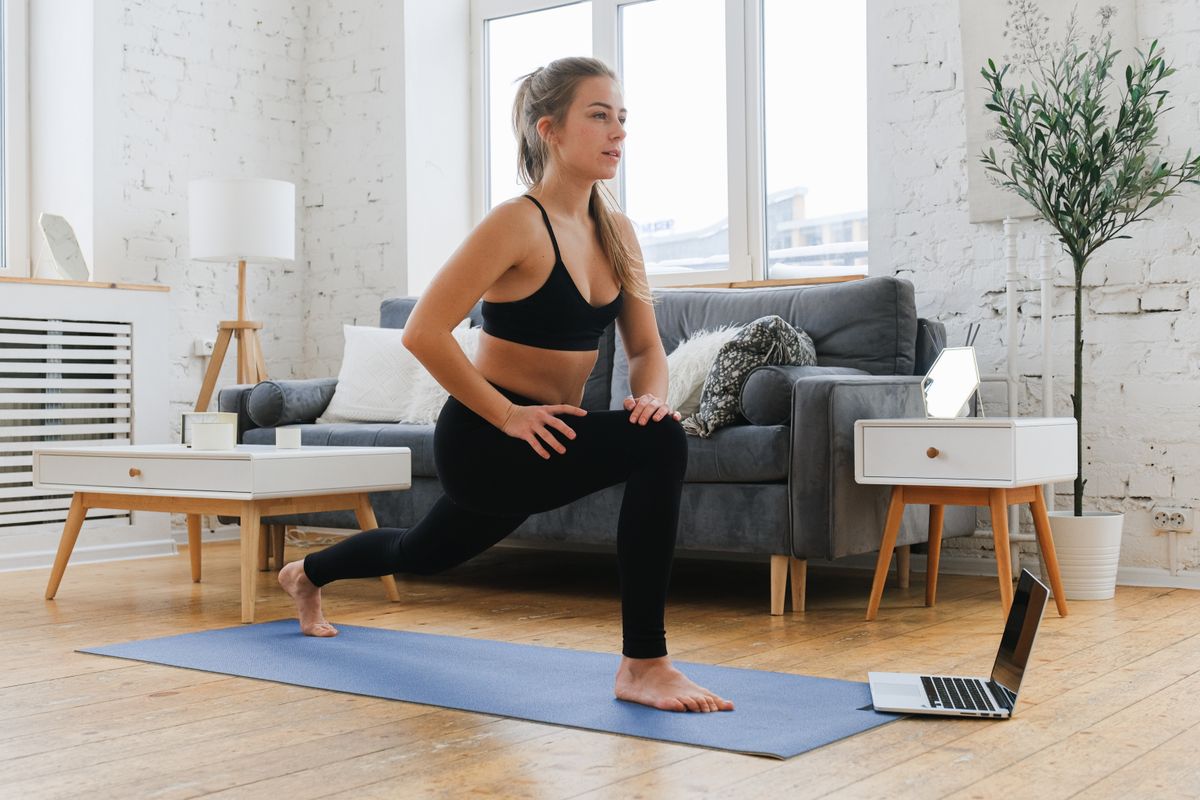
The image shows a gentle home movement setting, which fits a low-impact starter page about lowering jolt, keeping effort readable, and choosing a smaller first attempt.
Article match: low-impact starter movement, home setting, gentle pace, mat movement, lower jolt, and easy stopping. The image is exact because it supports a low-impact beginner context without implying treatment, rehab, pain outcomes, body change, or medical clearance. Article match: beginner, habit, home.
Image: Woman Following A Home Yoga Exercise. Author: Pexels photographer, see source page. License: Pexels License. Library: Pexels.