exercise benefits
Cycling Activity Benefits
What can cycling activity help a reader decide when the path, bike, effort, and traffic context matter as much as movement?
Cycling is useful when it gives you a movement option with a readable path, a clear stop point, and equipment that does not add stress. The practical benefit is not that cycling proves a heart, body, mood, sleep, or fitness result. It is that you can test path, bike fit, balance, breath, traffic, and recovery, then decide whether to repeat, shorten, change support, or ask for qualified help.
Choose one familiar path, path, or stationary-bike setting with a clear exit. Keep the first version easy enough that you can notice bike comfort, effort, traffic stress, and recovery without needing to prove distance.
Read This First
You are curious about cycling because it can fit commuting, errands, indoor bikes, or outdoor paths, but you do not want a benefits page to become a training plan or road-confidence lecture.
Choose one familiar path, path, or stationary-bike setting with a clear exit. Keep the first version easy enough that you can notice bike comfort, effort, traffic stress, and recovery without needing to prove distance.
path, traffic, surface, visibility, bike comfort, brakes, seat, breath, legs, handling, stopping, and recovery afterward
Use a shorter path, flatter path, lower resistance, indoor bike, quieter time, clearer stop point, or walking alternative before adding effort.
Treat the benefit as something to notice, not a result to chase.
Benefit pages put ordinary feedback first: energy, mood, ease, repeatability, and the moment when a claim becomes too personal for a web article.
- Name one ordinary signal before deciding whether this guide helped.
- Cycling Activity Benefits - Cycling Helps When the path is Readable: look first for path, traffic, surface, visibility, bike comfort, brakes, seat, breath, legs, handling, stopping, and recovery afterward; if that signal is missing or crowded out by chest discomfort, faintness, severe breathlessness, unusual pain, confusion, panic, dizziness, or unsafe symptoms, make the next version smaller before reading onward.
- path, traffic, surface, visibility, bike comfort, brakes, seat, breath, legs, handling, stopping, and recovery afterward
- Ask a clinician, physical therapist, emergency service, bike-safety instructor, bike mechanic, or qualified fitness professional when symptoms, medication, pregnancy, illness, surgery, chronic disease, recovery, bike-control issues, traffic risk, or professional instructions shape the cycling decision.
Safety Boundary
This is general education, not medical advice. Stop for warning signs and ask a qualified professional when the situation is personal, uncertain, or higher risk.
Not For
- diagnosis of pain, breath symptoms, dizziness, balance, injury, fitness level, traffic safety, or medical readiness
- replacing a clinician, physical therapist, emergency service, cycling instructor, bike-safety authority, or qualified fitness professional
- personal cycling programs, rehab guidance, pregnancy routines, body change, speed targets, distance targets, or outcome promises
What To Look For
Read the page by the signal you need to understand, then choose the next page only when that signal is clearer.
Decision 1
Cycling Helps When the path is Readable
Cycling Activity Benefits - Cycling Helps When the path is Readable: look first for path, traffic, surface, visibility, bike comfort, brakes, seat, breath, legs, handling, stopping, and recovery afterward; if that signal is missing or crowded out by chest discomfort, faintness, severe breathlessness, unusual pain, confusion, panic, dizziness, or unsafe symptoms, make the next version smaller before reading onward.
A cycling page can sound simple until path, traffic, equipment, weather, and exit points change the decision. This part matters only if it changes the next visible choice instead of adding a generic reason to move.
Cycling benefits begin with a readable path, not with distance. A useful first cycling attempt might be a flat path, a quiet street, an indoor bike, a short errand, or a practice loop where stopping is easy. the path decides how much attention the movement costs.
Traffic, turns, hills, wind, lighting, pavement, parked cars, signals, and other people can make the same minutes feel very different. This is why a cycling benefits article should not jump straight to heart, body, mood, sleep, or fitness claims. The practical benefit is learning whether cycling fits the setting today.
Can you describe the path? Can you stop without pressure? Did traffic stress stay low enough that effort was still readable?
Did the bike feel controllable afterward? Those observations are useful. They tell you whether to repeat the same path, choose an indoor bike, make the ride shorter, or put safety ahead of the activity.
path clarity keeps the choice grounded. Cycling Helps When the path is Readable should change what the reader watches next, not simply restate the guide topic. In cycling activity benefits, the section is useful when it turns the benefit claim in cycling activity benefits into a visible check: path, traffic, surface, visibility, bike comfort, brakes, seat, breath, legs, handling, stopping, and recovery afterward.
If the same attempt points instead to chest discomfort, faintness, severe breathlessness, unusual pain, confusion, panic, dizziness, or unsafe symptoms, the guide should narrow the choice, reduce the demand, or move the reader toward qualified help. CDC (Benefits of Physical Activity) and NHS (Cycling for Beginners) shape this dimension without becoming instructions to copy. CDC gives this guide public-facing vocabulary and a limit on what the guide can say.
NHS adds a second comparison point so the guide does not lean on one article or one phrasing pattern. The final wording should therefore stay with what can be observed, what should not be assumed, and what question belongs outside a self-directed page.
Decision 2
Bike Comfort And Stop Points Come Before Effort
Cycling Activity Benefits - Bike Comfort And Stop Points Come Before Effort: choose the next move from the visible signal, then direct symptoms, personal risk, or unclear safety to qualified help.
Cycling can become uncomfortable because of setup and stopping logistics before the reader learns anything about activity fit.
Before cycling becomes an effort question, check bike comfort and the stop point. Seat height, handlebar reach, brakes, helmet, visibility, shoes, water, path exit, indoor-bike settings, and whether you can dismount comfortably all shape the first attempt. This does not mean the guide should give a bike-fit lesson or road-safety course.
It means cycling benefits are only useful when the setup lets you observe movement clearly. If the seat feels wrong, hands go numb, knees feel sharp, brakes feel uncertain, or the path has no easy stop, the first version is too noisy. A good first ride might end at the first corner, the first path loop, or the point where you still feel comfortable turning back.
The stop point protects the experiment from becoming a distance goal. You are not trying to prove that cycling is good. You are checking whether this cycling version can be repeated without creating avoidable stress.
The setup decides the next adjustment. Cycling Activity Benefits needs bike comfort and stop points come before effort to answer a smaller question than "what should I do next?" Use the ordinary-life signal behind bike comfort and stop points come before effort as the filter and leave with one note: cycling solved a movement opportunity or added too many equipment and path decisions. If the note is only motivation, guilt, or a vague sense that more effort must be better, the section has not done its job yet.
CDC (Physical Activity Guidelines) and MedlinePlus (Exercise and Physical Fitness) shape this dimension without becoming instructions to copy. CDC gives this guide public-facing vocabulary and a limit on what the guide can say. MedlinePlus adds a second comparison point so the guide does not lean on one article or one phrasing pattern.
The final wording should therefore stay with what can be observed, what should not be assumed, and what question belongs outside a self-directed page. On a stationary bike, the first stop point can be five easy minutes plus one note about seat comfort, not a calorie or distance target. After one attempt, the note should be plain enough to compare later: cycling solved a movement opportunity or added too many equipment and path decisions.
If nothing useful changes, the fallback is not to push harder; it is to use a shorter path, flatter path, lower resistance, indoor bike, quieter time, clearer stop point, or walking alternative before adding effort. If the signal is mixed, change one variable: path, surface, traffic exposure, time of day, bike setup, resistance, hill, distance, speed, or whether cycling belongs in the trip.
Decision 3
Separate Breath, Legs, Handling, And Traffic Stress
Cycling Activity Benefits - Separate Breath, Legs, Handling, And Traffic Stress: use this section to choose repeat, reduce, pause, or ask, not to prove progress; watch the same version could repeat tomorrow without pressure.
Cycling creates several signals at once, and a single word like hard can hide the real next decision.
After a small cycling attempt, separate breath, legs, bike handling, and traffic stress. Breath tells you whether effort rose too quickly. Legs tell you whether hills, resistance, seat position, or path length was too much.
Handling tells you whether balance, braking, turning, or dismounting felt controlled. Traffic stress tells you whether the setting asked for too much attention. These signals point to different next steps.
You might keep the same path but slow down. You might choose an indoor bike because traffic made the ride noisy. You might reduce resistance because legs worked harder than breath.
You might ask for qualified help if pain, dizziness, chest discomfort, severe breathlessness, or personal health context shaped the decision. Separating signals keeps the guide from overclaiming. It also keeps cycling from becoming a hidden training plan.
The first benefit is clarity: knowing what made the attempt usable or not usable. That clarity prevents random progression. Separate Breath, Legs, Handling, And Traffic Stress belongs in cycling activity benefits because it can separate one ordinary signal from a larger claim.
For this guide, the difference between broad benefit language and today's observation matters more than finishing a routine. The reader should finish the section knowing whether to repeat the same version, make it smaller, change the setting, or pause because the ride worsened fatigue, pain, breath, mood, sleep, balance, or the rest of the day. American Heart Association (Recommendations for Physical Activity in Adults and Kids) and MoveKind (Exercise Intensity Safety) shape this dimension without becoming instructions to copy.
American Heart Association gives this guide public-facing vocabulary and a limit on what the guide can say. Exercise Intensity Safety supplies the site link if this section becomes the reader's next decision. The final wording should therefore stay with what can be observed, what should not be assumed, and what question belongs outside a self-directed page.
Write: breath easy, legs heavy on the hill, braking felt fine, traffic felt stressful. Each note suggests a different next change. After one attempt, the note should be plain enough to compare later: the same version could repeat tomorrow without pressure.
If nothing useful changes, the fallback is not to push harder; it is to use a shorter path, flatter path, lower resistance, indoor bike, quieter time, clearer stop point, or walking alternative before adding effort. If the signal is mixed, change one variable: path, surface, traffic exposure, time of day, bike setup, resistance, hill, distance, speed, or whether cycling belongs in the trip.
Decision 4
Everyday Cycling Can Count Without Becoming Training
Cycling Activity Benefits - Everyday Cycling Can Count Without Becoming Training: look first for a flatter path, indoor bike, walking option, or intensity-safety page is the cleaner next step; if that signal is missing or crowded out by chest discomfort, faintness, severe breathlessness, unusual pain, confusion, panic, dizziness, or unsafe symptoms, make the next version smaller before reading onward.
A cycling benefit page should protect readers who want useful movement without a training identity or performance goal.
Cycling can be useful even when it is not training. A short errand, a quiet path loop, a low-resistance indoor spin, or a ride to transit can all provide an activity signal. The question is whether cycling fits the day while keeping safety and recovery readable.
This matters because cycling culture can quickly introduce gear, speed, distance, paths, and group pace. Those may be enjoyable for some people, but they are not required for a general benefit article. A reader may only need to know whether cycling breaks up sitting, makes an errand more active, or provides a smoother option than walking on a particular day.
That observation should remain modest. It does not prove heart fitness, body change, mood change, or endurance. It helps the reader choose the next page.
If the everyday version works, repeat it before adding distance. If it adds stress, use a lower-support movement choice. Ordinary usefulness is enough evidence.
Everyday Cycling Can Count Without Becoming Training should change what the reader watches next, not simply restate the guide topic. In cycling activity benefits, the section is useful when it turns the benefit claim in cycling activity benefits into a visible check: a flatter path, indoor bike, walking option, or intensity-safety page is the cleaner next step. If the same attempt points instead to chest discomfort, faintness, severe breathlessness, unusual pain, confusion, panic, dizziness, or unsafe symptoms, the guide should narrow the choice, reduce the demand, or move the reader toward qualified help.
CDC (Physical Activity Guidelines) and Healthline (How to Start Exercising: A Beginner's Guide to Working Out) shape this dimension without becoming instructions to copy. CDC gives this guide public-facing vocabulary and a limit on what the guide can say. Healthline adds a second comparison point so the guide does not lean on one article or one phrasing pattern.
The final wording should therefore stay with what can be observed, what should not be assumed, and what question belongs outside a self-directed page.
Decision 5
If Nothing Changes, Change path Or Support Before Effort
Cycling Activity Benefits - If Nothing Changes, Change path Or Support Before Effort: choose the next move from the visible signal, then direct symptoms, personal risk, or unclear safety to qualified help.
A no-change ride can tempt the reader to push harder when the real constraint may be path, setup, or support.
If cycling does not feel useful, change the path or support before adding effort. Try a flatter path, a shorter loop, an indoor bike, lower resistance, a quieter time of day, better lighting, a known stop point, or a walking alternative. More speed may hide the real issue.
The ride may have been too traffic-heavy, too hilly, too hot, too long, too gear-focused, or too complicated to recover from. A smaller version gives cleaner information. If no cycling version feels useful, cycling may not be the right movement choice for this setting.
That is not failure. It is path literacy. Choose walking, low-impact movement, desk breaks, or another activity with fewer moving parts.
If symptoms, pain, dizziness, or unsafe traffic appear, the next decision is safety or qualified support, not another ride. The benefit of cycling is only practical while the version stays controllable and easy to exit. That keeps the experiment readable.
Cycling Activity Benefits needs if nothing changes, change path or support before effort to answer a smaller question than "what should I do next?" Use the ordinary-life signal behind if nothing changes, change path or support before effort as the filter and leave with one note: path, traffic, surface, visibility, bike comfort, brakes, seat, breath, legs, handling, stopping, and recovery afterward. If the note is only motivation, guilt, or a vague sense that more effort must be better, the section has not done its job yet. NHS (Cycling for Beginners) and Healthline (How to Start Exercising: A Beginner's Guide to Working Out) shape this dimension without becoming instructions to copy.
NHS gives this guide public-facing vocabulary and a limit on what the guide can say. Healthline adds a second comparison point so the guide does not lean on one article or one phrasing pattern. The final wording should therefore stay with what can be observed, what should not be assumed, and what question belongs outside a self-directed page.
If the first road ride felt stressful, try a stationary bike or protected path before deciding that cycling needs more effort. After one attempt, the note should be plain enough to compare later: path, traffic, surface, visibility, bike comfort, brakes, seat, breath, legs, handling, stopping, and recovery afterward. If nothing useful changes, the fallback is not to push harder; it is to use a shorter path, flatter path, lower resistance, indoor bike, quieter time, clearer stop point, or walking alternative before adding effort.
If the signal is mixed, change one variable: path, surface, traffic exposure, time of day, bike setup, resistance, hill, distance, speed, or whether cycling belongs in the trip.
Decision 6
Warning Signs Override The Ride
Cycling Activity Benefits - Warning Signs Override The Ride: use this section to choose repeat, reduce, pause, or ask, not to prove progress; watch cycling solved a movement opportunity or added too many equipment and path decisions.
Cycling can make stopping feel inconvenient because the reader may be away from home, in traffic, or trying to return the bike.
Warning signs override the ride because cycling can place you away from an easy stopping place. If chest discomfort, faintness, severe shortness of breath, unusual pain, confusion, panic, dizziness, loss of coordination, unsafe handling, or traffic danger appears, the guide should stop sounding like a benefit article. The next choice is to stop safely when possible, get away from traffic, ask for help, or use emergency support when appropriate.
Do not continue because the path is almost finished. Do not keep pace because a group is waiting. Do not use a bike lane, helmet, indoor display, or easy first minutes as permission to ignore a signal that feels unsafe.
This boundary is especially important for hills, heat, night riding, traffic, new medications, recent illness, recovery, or known health concerns. Cycling is only a useful activity while you can control the setting and exit. The exit matters more than completing the path.
Warning Signs Override The Ride belongs in cycling activity benefits because it can separate one ordinary signal from a larger claim. For this guide, the difference between broad benefit language and today's observation matters more than finishing a routine. The reader should finish the section knowing whether to repeat the same version, make it smaller, change the setting, or pause because the ride worsened fatigue, pain, breath, mood, sleep, balance, or the rest of the day.
American Heart Association (Recommendations for Physical Activity in Adults and Kids) and MoveKind (Cool-Down Safety Basics) shape this dimension without becoming instructions to copy. American Heart Association gives this guide public-facing vocabulary and a limit on what the guide can say. Cool-Down Safety Basics supplies the site link if this section becomes the reader's next decision.
The final wording should therefore stay with what can be observed, what should not be assumed, and what question belongs outside a self-directed page. If dizziness appears during a ride, the next decision is stopping safely and getting help, not finishing the loop. After one attempt, the note should be plain enough to compare later: cycling solved a movement opportunity or added too many equipment and path decisions.
If nothing useful changes, the fallback is not to push harder; it is to use a shorter path, flatter path, lower resistance, indoor bike, quieter time, clearer stop point, or walking alternative before adding effort. If the signal is mixed, change one variable: path, surface, traffic exposure, time of day, bike setup, resistance, hill, distance, speed, or whether cycling belongs in the trip.
After You Try It
After one small cycling attempt, you may notice whether a path, indoor bike, errand, or protected path made movement easier to fit into the day. No single ride proves a heart, body, mood, sleep, endurance, or fitness result.
What To Observe
- path, traffic, surface, visibility, bike comfort, brakes, seat, breath, legs, handling, stopping, and recovery afterward
- whether cycling solved a movement opportunity or added too many equipment and path decisions
- whether the same version could repeat tomorrow without pressure
- whether a flatter path, indoor bike, walking option, or intensity-safety page is the cleaner next step
Too Much
- chest discomfort, faintness, severe breathlessness, unusual pain, confusion, panic, dizziness, or unsafe symptoms
- unstable handling, unsafe traffic, poor visibility, uncertain braking, no clear stop point, or path stress
- the ride worsened fatigue, pain, breath, mood, sleep, balance, or the rest of the day
If Nothing Improves Or It Feels Worse
Use a shorter path, flatter path, lower resistance, indoor bike, quieter time, clearer stop point, or walking alternative before adding effort.
Change one variable: path, surface, traffic exposure, time of day, bike setup, resistance, hill, distance, speed, or whether cycling belongs in the trip.
Pause when cycling worsens breath, chest feelings, dizziness, pain, balance, handling, panic, traffic stress, fatigue, or uncertainty.
Ask a clinician, physical therapist, emergency service, bike-safety instructor, bike mechanic, or qualified fitness professional when symptoms, medication, pregnancy, illness, surgery, chronic disease, recovery, bike-control issues, traffic risk, or professional instructions shape the cycling decision.
When To Stop Or Ask First
- Stop for chest discomfort, faintness, severe shortness of breath, unusual pain, panic, confusion, loss of coordination, dizziness, unstable handling, traffic danger, or symptoms that feel unsafe.
- Ask first when medication, pregnancy, chronic disease, illness, surgery, recovery, disability needs, balance concerns, known heart concerns, bike-control issues, or professional instructions change the decision.
- Use cycling as general education and observation, not medical advice, road-safety instruction, personal clearance, or a training plan.
Next Decision
Choose the next page from what you noticed, not from a harder goal.
Pick Exercise Intensity Safety after cycling activity benefits if use this path when the reader can describe path is the clearest education signal; keep the safety boundary around symptoms, personal risk, and qualified help.
If The Setup Needs To ShrinkHow To Scale Down ExerciseUse this path when you can describe cycling solved a movement opportunity or added too many equipment and path decisions.Use How To Scale Down Exercise after cycling activity benefits when it clarifies which benefit is observable without overclaiming; it is general education, not personal clearance, treatment, or a program.
If Safety Is The QuestionThe Talk Test For Exercise IntensityUse this path when the ride worsened fatigue, pain, breath, mood, sleep, balance, or the rest of the day changes the decision.Choose The Talk Test For Exercise Intensity after cycling activity benefits when use this path when the ride worsened fatigue, pain changes the setting, support, or stop point; qualified help still handles symptoms or risk.
If The Neighboring Topic FitsActive Commuting BenefitsUse this path when you can describe a flatter path, indoor bike, walking option, or intensity-safety page is the cleaner next step.Read Active Commuting Benefits after cycling activity benefits if active commuting benefits is the better question before adding effort; keep personal risk outside self-direction.
How To Use The Source Notes
The sources support cycling as one possible physical activity and an activity people can approach gradually, but they do not support using cycling to promise heart, body, sleep, mood, or fitness outcomes.
CDC, NHS, MedlinePlus, and AHA anchor public activity education, beginner context, and intensity boundaries; Healthline is used only for coverage shape; MoveKind internal links path intensity and cool-down decisions.
No source is used to prescribe mileage, speed, hills, commuting paths, road behavior, bike setup, symptom interpretation, or personal clearance.
the guide is organized around six decisions: path readability, bike setup and stop points, effort and traffic notes, everyday cycling without training pressure, smaller alternatives when nothing changes, and warning signs that override the ride.
Practical Steps
- Choose one familiar path, protected path, or stationary-bike setting.
- Check the stop point before the first minute.
- Keep resistance, pace, and distance low enough to notice signals.
- Record breath, legs, handling, path stress, and recovery separately.
- Change path or support before changing effort.
- Use safety or qualified help when symptoms, traffic, bike control, or personal context change the decision.
Common Mistakes
- Framing cycling as a distance test.
- Adding hills or traffic before path comfort is readable.
- Ignoring bike setup, brakes, visibility, or stopping logistics.
- Using one comfortable ride as proof of heart, body, mood, or fitness results.
- Finishing a path after warning signs appear.
FAQ
Is Cycling Activity Benefits medical advice?
No. This page is general education and not medical advice. It does not diagnose symptoms, choose care, clear personal risk, or provide diagnosis, treatment, or rehab guidance.
Does cycling have to be outdoors?
No. A first attempt can be an indoor bike, a protected path, a short errand, or a quiet path if the stop point stays clear.
What should I notice after cycling?
Notice path, bike comfort, traffic stress, breath, leg effort, handling, stopping, recovery, and whether the version felt repeatable.
What if cycling feels too stressful?
Use a shorter path, quieter setting, indoor bike, flatter path, lower resistance, or another movement option. Ask qualified help when symptoms or safety risk are involved.
When should I stop cycling as activity?
Stop for chest discomfort, faintness, severe breathlessness, dizziness, unusual pain, confusion, unsafe handling, traffic danger, or symptoms that feel unsafe.
Image Source
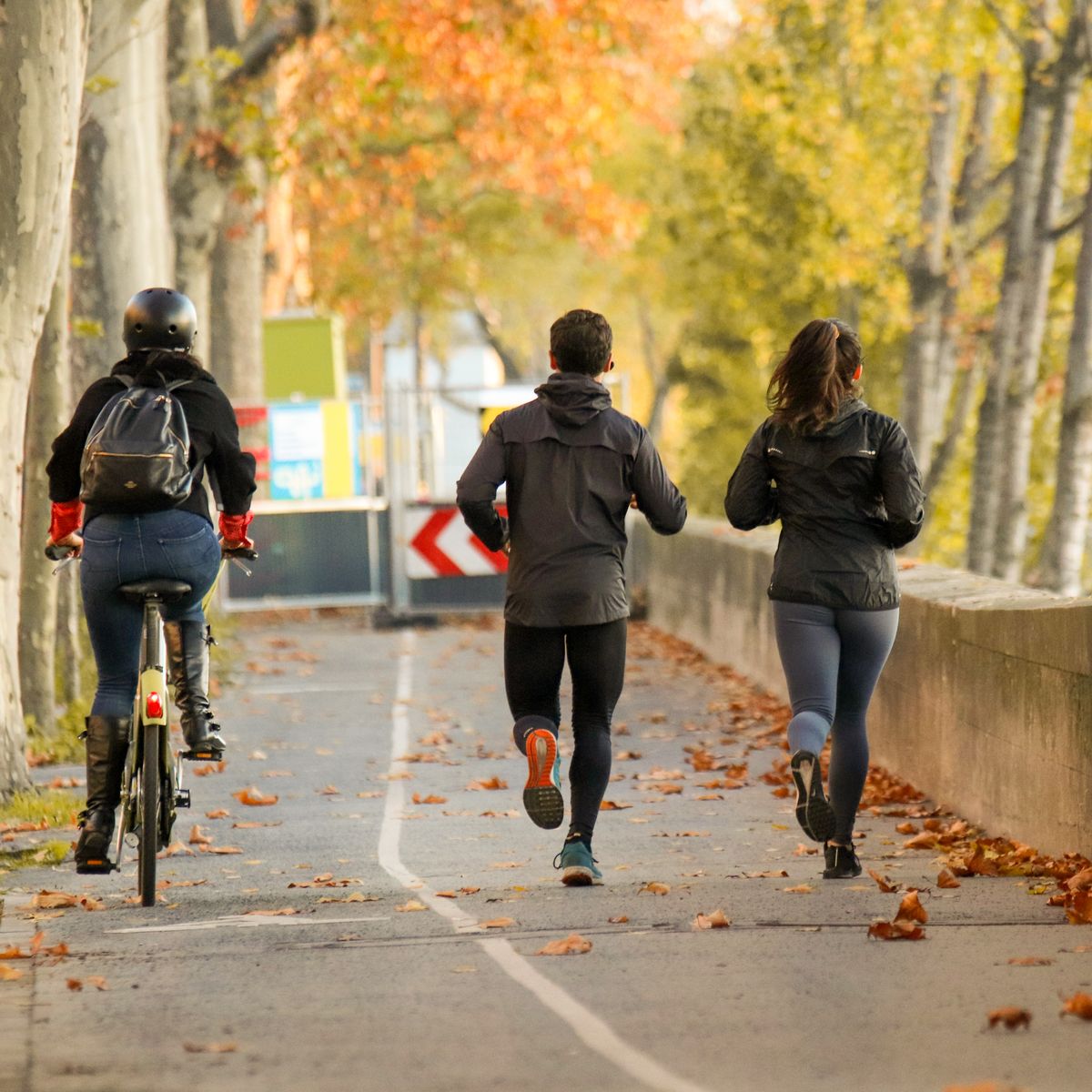
The image shows cycling in an outdoor path setting, which fits a page about checking path, effort, traffic context, and stop points. It is general-education context, not proof of a result.
Article match: cyclist riding on a bike lane with nearby runners, outdoor path context, and visible cycling activity. The image is exact for the page because it shows cycling as a movement option without implying heart, body, mood, medical, or performance results. Article match: cycling, benefits, walking.
Image: Runners And A Cyclist On A Bike Lane. Author: Pexels photographer, see source page. License: Pexels License. Library: Pexels.