exercise benefits
Exercise For Bone Strength Literacy
How should a beginner read exercise and bone-strength language without making it bone-health advice?
Bone-strength language can help a reader understand movement categories, but this guide does not assess bone health, fracture risk, pain, or personal training needs. It explains how to observe controlled resistance, weight-bearing language, stop points, and the next question to ask without making a medical or performance claim.
Choose a controlled, familiar movement that can stop immediately, such as a short walk, sit-to-stand practice near support, or a light resistance-band setup. Keep the first attempt easy enough to describe, not prove.
Read This First
You want to understand why some movement pages mention bones or strength, but you do not want a plan, a diagnosis, or advice that pretends a web page can judge your personal bone health.
Choose a controlled, familiar movement that can stop immediately, such as a short walk, sit-to-stand practice near support, or a light resistance-band setup. Keep the first attempt easy enough to describe, not prove.
whether the movement path felt controlled and easy to describe
Make the next version easier to control: less resistance, smaller range, more support, slower pace, or a shorter attempt.
Treat the benefit as something to notice, not a result to chase.
Benefit pages put ordinary feedback first: energy, mood, ease, repeatability, and the moment when a claim becomes too personal for a web article.
- Name one ordinary signal before deciding whether this guide helped.
- Exercise For Bone Strength Literacy - Bone-Strength Language Is Category Literacy First: look first for the movement path felt controlled and easy to describe; if that signal is missing or crowded out by sharp, unusual, worsening, or persistent pain, make the next version smaller before reading onward.
- whether the movement path felt controlled and easy to describe
- Ask qualified help when bone concerns, injury history, fall risk, pain, medication, medical history, recovery, or older-adult questions shape the decision.
Safety Boundary
This is general education, not medical advice. Stop for warning signs and ask a qualified professional when the situation is personal, uncertain, or higher risk.
Not For
- diagnosis of bone health, fracture risk, pain, injury, osteoporosis, balance risk, strength level, or personal medical status
- replacing a clinician, physical therapist, registered professional, or qualified fitness professional
- treatment, rehab, personal clearance, fall-risk decisions, medication decisions, or a personalized strength program
What To Look For
Read the page by the signal you need to understand, then choose the next page only when that signal is clearer.
Decision 1
Bone-Strength Language Is Category Literacy First
Exercise For Bone Strength Literacy - Bone-Strength Language Is Category Literacy First: look first for the movement path felt controlled and easy to describe; if that signal is missing or crowded out by sharp, unusual, worsening, or persistent pain, make the next version smaller before reading onward.
Readers may mistake broad bone and strength language for personal advice about their own bones. This part matters only if it changes the next visible choice instead of adding a generic reason to move.
A beginner page about exercise and bone strength should start with vocabulary, not a program. Public sources may mention strength, muscles, bones, balance, or physical ability, but those words do not tell one reader what their bones need. The safer article explains how to read the category.
Bone-strength language usually points toward movements where the body works against gravity, support, or resistance. That can include walking, stairs, sit-to-stand practice, or controlled resistance work, but the right example depends on context. The first task is to understand what kind of movement the guide is discussing and what it cannot know about you.
It cannot judge bone density, pain, fall risk, injury history, medication, or personal readiness. If any of those topics matter, the guide should help you prepare better questions. If they do not, category literacy helps you choose one small, observable attempt without making it a medical claim.
The category note comes before effort. Bone-Strength Language Is Category Literacy First should change what the reader watches next, not simply restate the guide topic. In exercise for bone strength literacy, the section is useful when it turns the benefit claim in exercise for bone strength literacy into a visible check: the movement path felt controlled and easy to describe.
If the same attempt points instead to sharp, unusual, worsening, or persistent pain, the guide should narrow the choice, reduce the demand, or move the reader toward qualified help. CDC (Benefits of Physical Activity) and National Institute on Aging (Four Types of Exercise Can Improve Your Health and Physical Ability) shape this dimension without becoming instructions to copy. CDC gives this guide public-facing vocabulary and a limit on what the guide can say.
National Institute on Aging adds a second comparison point so the guide does not lean on one article or one phrasing pattern. The final wording should therefore stay with what can be observed, what should not be assumed, and what question belongs outside a self-directed page.
Decision 2
Controlled Movement Matters More Than A Heavy Version
Exercise For Bone Strength Literacy - Controlled Movement Matters More Than A Heavy Version: choose the next move from the visible signal, then direct symptoms, personal risk, or unclear safety to qualified help.
Bone-strength searches can push people toward harder resistance before they can observe control and stop points. This part matters only if it changes the next visible choice instead of adding a generic reason to move.
For a first bone-strength literacy attempt, control is more useful than load. A light resistance band, a slow sit-to-stand near support, or a short walk can teach you whether the movement feels steady, understandable, and stoppable. A heavy or complex version may hide the information you need behind strain, balance worry, soreness, or uncertainty about form.
Choose a setup where you can stop without drama and where the movement path is easy to describe. If you cannot explain what changed, the attempt is too complicated for a literacy page. Keep the first version similar each time before changing resistance, range, speed, or surface.
If pain, instability, numbness, dizziness, or severe breathlessness appears, the guide's next step is not more effort. It is to pause and use a safety or professional path. Controlled does not mean easy forever; it means the first observation is clear enough to trust.
Write down the support you used. Exercise For Bone Strength Literacy needs controlled movement matters more than a heavy version to answer a smaller question than "what should I do next?" Use the ordinary-life signal behind controlled movement matters more than a heavy version as the filter and leave with one note: support, surface, resistance, or range affected confidence. If the note is only motivation, guilt, or a vague sense that more effort must be better, the section has not done its job yet.
CDC (Physical Activity Guidelines) and MedlinePlus (Exercise and Physical Fitness) shape this dimension without becoming instructions to copy. CDC gives this guide public-facing vocabulary and a limit on what the guide can say. MedlinePlus adds a second comparison point so the guide does not lean on one article or one phrasing pattern.
The final wording should therefore stay with what can be observed, what should not be assumed, and what question belongs outside a self-directed page. Try a gentle band pull with a clear stop point before deciding whether any stronger resistance belongs in the week. After one attempt, the note should be plain enough to compare later: support, surface, resistance, or range affected confidence.
If nothing useful changes, the fallback is not to push harder; it is to make the next version easier to control: less resistance, smaller range, more support, slower pace, or a shorter attempt. If the signal is mixed, change one variable at a time: support, movement category, surface, resistance, range, or whether the attempt is walking instead of resistance.
Decision 3
Weight-Bearing Does Not Mean Pushing Through Pain
Exercise For Bone Strength Literacy - Weight-Bearing Does Not Mean Pushing Through Pain: use this section to choose repeat, reduce, pause, or ask, not to prove progress; watch pain, wobble, soreness, breath, or fatigue changed afterward.
Some readers interpret bone-related benefit language as permission to endure discomfort. This part matters only if it changes the next visible choice instead of adding a generic reason to move.
Weight-bearing language can be useful, but it is often misunderstood. It does not mean that pain proves the movement is working, and it does not mean a reader should keep going through discomfort. In a public education article, weight-bearing should be described as a category clue, not a personal instruction.
Walking, standing transitions, or gentle step-ups may involve body weight, while resistance bands may involve controlled pull. The question is whether the movement feels stable, ordinary, and easy to stop. If a movement produces sharp pain, unusual joint discomfort, numbness, fear of falling, or a sense that you cannot control the path, the useful lesson is to stop or change path.
If ordinary effort is present without concerning signals, record where you felt effort and whether it settled afterward. This distinction keeps bone-strength literacy from becoming pain tolerance. It also gives the reader a safer way to discuss the experience with a professional if needed.
Weight-Bearing Does Not Mean Pushing Through Pain belongs in exercise for bone strength literacy because it can separate one ordinary signal from a larger claim. For this guide, the difference between broad benefit language and today's observation matters more than finishing a routine. The reader should finish the section knowing whether to repeat the same version, make it smaller, change the setting, or pause because the movement became a personal bone-health decision rather than a general education observation.
NHS (Exercise) and MoveKind (Unusual Pain During Exercise) shape this dimension without becoming instructions to copy. NHS gives this guide public-facing vocabulary and a limit on what the guide can say. Unusual Pain During Exercise supplies the site link if this section becomes the reader's next decision.
The final wording should therefore stay with what can be observed, what should not be assumed, and what question belongs outside a self-directed page. If a step-up feels unstable or painful, the next decision is support or help, not a tougher weight-bearing version. After one attempt, the note should be plain enough to compare later: pain, wobble, soreness, breath, or fatigue changed afterward.
If nothing useful changes, the fallback is not to push harder; it is to make the next version easier to control: less resistance, smaller range, more support, slower pace, or a shorter attempt. If the signal is mixed, change one variable at a time: support, movement category, surface, resistance, range, or whether the attempt is walking instead of resistance.
Decision 4
Separate Bone Language From Muscle And Balance Questions
Exercise For Bone Strength Literacy - Separate Bone Language From Muscle And Balance Questions: look first for the next decision is repeat, reduce, change category, safety, or qualified help; if that signal is missing or crowded out by sharp, unusual, worsening, or persistent pain, make the next version smaller before reading onward.
Bone, muscle, and balance language often appear together, but each points to a different reader decision. This part matters only if it changes the next visible choice instead of adding a generic reason to move.
Bone-strength literacy improves when you separate nearby ideas. A resistance movement may make you think about muscles. A standing movement may raise balance questions.
A walk may feel like heart-health or daily-energy movement more than strength. These categories overlap in real life, but they should not be collapsed into one conclusion. After one attempt, write down the main signal: controlled resistance, steadiness, walking repeatability, or ordinary fatigue.
If the signal is muscle effort, the next page should be muscle strength for everyday life. If the signal is wobble or support, balance is more relevant. If the signal is breath or energy, use a different path.
This prevents the bone-strength article from pretending to answer everything. It also reduces generic internal linking because every next page follows a named observation. the guide's role is to make the next question clearer, not to rank which benefit matters most.
One signal should lead the path. Separate Bone Language From Muscle And Balance Questions should change what the reader watches next, not simply restate the guide topic. In exercise for bone strength literacy, the section is useful when it turns the benefit claim in exercise for bone strength literacy into a visible check: the next decision is repeat, reduce, change category, safety, or qualified help.
If the same attempt points instead to sharp, unusual, worsening, or persistent pain, the guide should narrow the choice, reduce the demand, or move the reader toward qualified help. National Institute on Aging (Four Types of Exercise Can Improve Your Health and Physical Ability) and Healthline (How to Start Exercising: A Beginner's Guide to Working Out) shape this dimension without becoming instructions to copy. National Institute on Aging gives this guide public-facing vocabulary and a limit on what the guide can say.
Healthline adds a second comparison point so the guide does not lean on one article or one phrasing pattern. The final wording should therefore stay with what can be observed, what should not be assumed, and what question belongs outside a self-directed page.
Decision 5
After One Attempt, Look For Control And Recovery
Exercise For Bone Strength Literacy - After One Attempt, Look For Control And Recovery: choose the next move from the visible signal, then direct symptoms, personal risk, or unclear safety to qualified help.
The requested ending needs to explain what changed after the movement and what did not count as proof.
After one bone-strength literacy attempt, the useful observation is not whether your bones changed. It is whether the movement was controlled enough to repeat and whether recovery felt ordinary. Write down the movement type, support used, range, resistance, surface, and stop point.
Then note whether pain, wobble, soreness, breath, or fatigue changed during the day. If the movement was easy to describe and did not create concerning signals, repeating the same version may be more informative than adding difficulty. If the movement felt confusing, unstable, or painful, choose a smaller version, a different category, or qualified help.
This ending keeps the guide honest. It does not turn one resistance-band pose or walk into proof of bone benefit. It turns the attempt into a better question: Was the category understandable?
Was the setup controlled? Did any signal move the decision from benefits to safety? Keep the record concrete enough to compare later.
Exercise For Bone Strength Literacy needs after one attempt, look for control and recovery to answer a smaller question than "what should I do next?" Use the ordinary-life signal behind after one attempt, look for control and recovery as the filter and leave with one note: the movement path felt controlled and easy to describe. If the note is only motivation, guilt, or a vague sense that more effort must be better, the section has not done its job yet. MedlinePlus (Exercise and Physical Fitness) and MoveKind (Benefits Of Exercise For Beginners) shape this dimension without becoming instructions to copy.
MedlinePlus gives this guide public-facing vocabulary and a limit on what the guide can say. Benefits Of Exercise For Beginners supplies the site link if this section becomes the reader's next decision. The final wording should therefore stay with what can be observed, what should not be assumed, and what question belongs outside a self-directed page.
After a sit-to-stand attempt, record support, range, and whether discomfort appeared later before changing the version. After one attempt, the note should be plain enough to compare later: the movement path felt controlled and easy to describe. If nothing useful changes, the fallback is not to push harder; it is to make the next version easier to control: less resistance, smaller range, more support, slower pace, or a shorter attempt.
If the signal is mixed, change one variable at a time: support, movement category, surface, resistance, range, or whether the attempt is walking instead of resistance.
Decision 6
Choose The Next Page From The Limiting Question
Exercise For Bone Strength Literacy - Choose The Next Page From The Limiting Question: use this section to choose repeat, reduce, pause, or ask, not to prove progress; watch support, surface, resistance, or range affected confidence.
the guide needs next recommendations that are decision-specific rather than a generic related-article block. This part matters only if it changes the next visible choice instead of adding a generic reason to move.
The best next page depends on what limited the first attempt. If the words were still confusing, return to broad beginner benefits. If controlled resistance was the main signal, read muscle strength.
If support or wobble shaped the attempt, read balance before adding challenge. If breath or daily energy was the surprise, leave bone language and use the energy or heart-health path. If unusual pain, recent injury, instability, or medical history shaped the decision, use a safety page or qualified professional instead of another benefits page.
This linking keeps the guide from becoming a hidden sequence. It also respects the fact that bone-strength literacy is only one slice of movement education. A reader should not feel pushed into a larger routine simply because a category sounded important.
Progress after this guide means the next question is narrower and safer: which signal did you observe, and which page answers that signal directly? Choose The Next Page From The Limiting Question belongs in exercise for bone strength literacy because it can separate one ordinary signal from a larger claim. For this guide, the difference between broad benefit language and today's observation matters more than finishing a routine.
The reader should finish the section knowing whether to repeat the same version, make it smaller, change the setting, or pause because the movement became a personal bone-health decision rather than a general education observation. Verywell Fit (Beginner Workouts) and NHS (Exercise) shape this dimension without becoming instructions to copy. Verywell Fit is used here for reader-question coverage and article structure, not as proof of a health outcome.
NHS adds a second comparison point so the guide does not lean on one article or one phrasing pattern. The final wording should therefore stay with what can be observed, what should not be assumed, and what question belongs outside a self-directed page. If the band felt controlled but your knee felt unusual later, choose the pain ask-first page before reading another benefit page.
After one attempt, the note should be plain enough to compare later: support, surface, resistance, or range affected confidence. If nothing useful changes, the fallback is not to push harder; it is to make the next version easier to control: less resistance, smaller range, more support, slower pace, or a shorter attempt. If the signal is mixed, change one variable at a time: support, movement category, surface, resistance, range, or whether the attempt is walking instead of resistance.
After You Try It
After one controlled attempt, you may notice clearer category language, a better stop point, whether support is needed, or whether the next question belongs with muscle, balance, pain safety, or broad benefits. No single attempt proves a bone-health result.
What To Observe
- whether the movement path felt controlled and easy to describe
- whether support, surface, resistance, or range affected confidence
- whether pain, wobble, soreness, breath, or fatigue changed afterward
- whether the next decision is repeat, reduce, change category, safety, or qualified help
Too Much
- sharp, unusual, worsening, or persistent pain
- instability, fear of falling, numbness, dizziness, severe breathlessness, or chest discomfort
- the movement became a personal bone-health decision rather than a general education observation
If Nothing Improves Or It Feels Worse
Make the next version easier to control: less resistance, smaller range, more support, slower pace, or a shorter attempt.
Change one variable at a time: support, movement category, surface, resistance, range, or whether the attempt is walking instead of resistance.
Pause if pain, instability, numbness, dizziness, breath, fear of falling, or medical uncertainty makes the next attempt unclear.
Ask qualified help when bone concerns, injury history, fall risk, pain, medication, medical history, recovery, or older-adult questions shape the decision.
When To Stop Or Ask First
- Stop for sharp pain, unusual pain, instability, numbness, chest discomfort, faintness, severe shortness of breath, or loss of coordination.
- Ask first when bone health, injury history, fall risk, medication, recovery, older-adult needs, or personal restrictions shape the choice.
- Use this page as general education and question preparation, not as diagnosis, treatment, rehab guidance, or personal clearance.
Next Decision
Choose the next page from what you noticed, not from a harder goal.
Pick Benefits Of Exercise For Beginners after exercise for bone strength literacy if use this path when the reader can describe the is the clearest education signal; keep the safety boundary around symptoms, personal risk, and qualified help.
If The Setup Needs To ShrinkUnusual Pain During ExerciseUse this path when you can describe support, surface, resistance, or range affected confidence.Use Unusual Pain During Exercise after exercise for bone strength literacy when it clarifies which benefit is observable without overclaiming; it is general education, not personal clearance, treatment, or a program.
If Safety Is The QuestionBalance Benefits Of Regular MovementUse this path when the movement became a personal bone-health decision rather than a general education observation changes the decision.Choose Balance Benefits Of Regular Movement after exercise for bone strength literacy when use this path when the movement became a personal changes the setting, support, or stop point; qualified help still handles symptoms or risk.
If The Neighboring Topic FitsMuscle Strength Benefits For Everyday LifeUse this path when you can describe the next decision is repeat, reduce, change category, safety, or qualified help.Read Muscle Strength Benefits For Everyday Life after exercise for bone strength literacy if muscle strength benefits for everyday life is the better question before adding effort; keep personal risk outside self-direction.
How To Use The Source Notes
The sources support a bone-strength literacy article about category language, controlled first attempts, and safety boundaries. They do not support personal bone-health assessment or a strength program.
CDC, MedlinePlus, NHS, and NIA anchor general activity and category language; Healthline and Verywell Fit are used only for beginner-question coverage; MoveKind internal pages path broad benefits and pain-safety follow-ups.
No source is used to assess bone health, judge fracture risk, prescribe loads or repetitions, replace care, or clear a reader with pain, instability, injury history, medication questions, or medical concerns.
the guide is organized around six decisions: naming category language, keeping the first movement controlled, separating strength literacy from proof, watching pain and stability, choosing the next category link, and linking pain or uncertainty to safety.
Practical Steps
- Name the movement category before choosing effort.
- Use a controllable setup with a clear stop point.
- Record support, range, resistance, and surface.
- Watch pain, wobble, breath, and recovery afterward.
- Repeat the same easy version before increasing challenge.
- Use qualified help when bone, injury, fall, pain, or medical questions shape the decision.
Common Mistakes
- Reading bone-strength language as personal bone-health advice.
- Adding resistance before the movement feels controlled.
- Ignoring pain or instability because the category sounds beneficial.
- Mixing bone, muscle, balance, and energy signals into one conclusion.
- Following related pages as a personal strength program.
FAQ
Is Exercise For Bone Strength Literacy medical advice?
No. This page is general education and not medical advice. It does not provide diagnosis, treatment, rehab guidance, personal bone-health assessment, or exercise clearance.
Can this page tell me what my bones need?
No. It only explains movement category language and observation questions. Personal bone health, pain, injury, and fall-risk questions belong with qualified professionals.
What should I notice after one controlled attempt?
Notice control, support, range, resistance, surface, pain, wobble, breath, and recovery. Do not use one attempt as proof of a bone-health result.
What if a movement feels unstable or painful?
Stop or make the next version smaller, and use a safety or qualified-help path when pain, instability, or uncertainty is concerning.
Should I increase resistance next time?
Not automatically. Repeat the same controlled version first, then change one variable only when the setup feels ordinary and safe.
Image Source
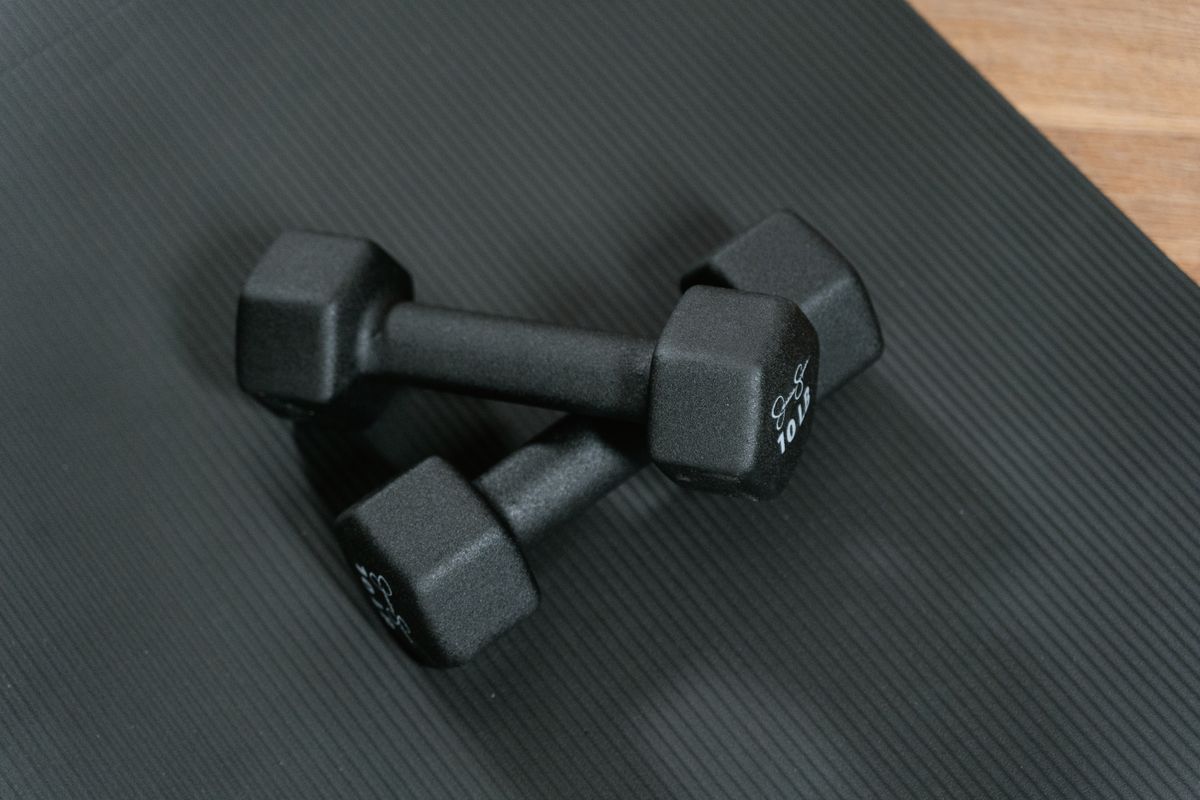
The image shows a controlled resistance-band setup, which fits a bone-strength literacy article because the page discusses category language, control, and stop points. It is context for general education, not proof of a bone result.
Article match: strength, resistance, indoor mobility, controlled exercise pose. The image fits a bone-strength literacy page because it shows a controllable resistance context without implying bone-health proof. Article match: strength.
Image: Light Dumbbells. Author: Pexels photographer, see source page. License: Pexels License. Library: Pexels.