exercise benefits
Stair Climbing Benefits
What can stair climbing help a reader observe without turning stairs into a fitness test or a heart-health promise?
Stair climbing is useful when it gives a built-in, easy-to-locate movement choice with a clear stop point. The benefit is not that stairs prove fitness or create a result. It is that you can test one small stair choice, observe your breath, legs, balance, setting, and recovery, then repeat, reduce, use a flatter option, or ask for help when warning signs or personal risk appear.
Choose one familiar stair setting with a handrail, good lighting, clear footing, and an easy alternative. Start below the point where your breath, balance, or leg effort becomes hard to describe.
Read This First
You have stairs at home, work, transit, or outdoors and wonder whether using them can count as movement, but you do not want pressure to climb flights, chase intensity, or ignore breath, balance, knees, traffic, or fatigue.
Choose one familiar stair setting with a handrail, good lighting, clear footing, and an easy alternative. Start below the point where your breath, balance, or leg effort becomes hard to describe.
stair setting, lighting, handrail, footing, bags, crowding, breath, leg effort, balance, descent, and recovery afterward
Use fewer steps, one landing, a slower pace, a handrail, a daylight stairwell, or a flat alternative before adding flights.
Treat the benefit as something to notice, not a result to chase.
Benefit pages put ordinary feedback first: energy, mood, ease, repeatability, and the moment when a claim becomes too personal for a web article.
- Name one ordinary signal before deciding whether this guide helped.
- Stair Climbing Benefits - Stairs Are Built In, Not A Fitness Test: look first for stair setting, lighting, handrail, footing, bags, crowding, breath, leg effort, balance, descent, and recovery afterward; if that signal is missing or crowded out by chest discomfort, faintness, severe breathlessness, unusual pain, confusion, panic, dizziness, or unsafe symptoms, make the next version smaller before reading onward.
- stair setting, lighting, handrail, footing, bags, crowding, breath, leg effort, balance, descent, and recovery afterward
- Ask a clinician, physical therapist, emergency service, building support, caregiver, or qualified fitness professional when symptoms, medication, pregnancy, illness, surgery, chronic disease, recovery, disability needs, balance concerns, or professional instructions shape the stair decision.
Safety Boundary
This is general education, not medical advice. Stop for warning signs and ask a qualified professional when the situation is personal, uncertain, or higher risk.
Not For
- diagnosis of chest symptoms, breath symptoms, dizziness, knee pain, balance, fatigue, fitness level, heart risk, or medical readiness
- replacing a clinician, physical therapist, emergency service, building-safety guidance, or qualified fitness professional
- personal stair programs, performance targets, body change, weight change, medical decisions, or outcome promises
What To Look For
Read the page by the signal you need to understand, then choose the next page only when that signal is clearer.
Decision 1
Stairs Are Built In, Not A Fitness Test
Stair Climbing Benefits - Stairs Are Built In, Not A Fitness Test: look first for stair setting, lighting, handrail, footing, bags, crowding, breath, leg effort, balance, descent, and recovery afterward; if that signal is missing or crowded out by chest discomfort, faintness, severe breathlessness, unusual pain, confusion, panic, dizziness, or unsafe symptoms, make the next version smaller before reading onward.
Stair-climbing pages can make ordinary stairs feel like a challenge the reader has to pass. This part matters only if it changes the next visible choice instead of adding a generic reason to move.
The useful thing about stairs is that they are often built into a day. They may appear at home, work, transit, a park, or an errand path. That does not make them a test of fitness, discipline, or heart health.
A better first question is whether one small stair choice gives readable information. Can you choose one familiar set of stairs with a handrail, good lighting, and an easy alternative? Can you stop at one landing?
Can you notice breath, leg effort, balance, and recovery without needing to prove anything? This keeps stairs from becoming pressure. If the first stair choice feels controlled and the rest of the day remains usable, repeat the same version before adding flights.
If it feels rushed, breathless, painful, unstable, or hard to stop, stairs are too large for that attempt. The benefit is not the climb. The benefit is learning whether stairs fit this setting today.
Stairs Are Built In, Not A Fitness Test should change what the reader watches next, not simply restate the guide topic. In stair climbing benefits, the section is useful when it turns the benefit claim in stair climbing benefits into a visible check: stair setting, lighting, handrail, footing, bags, crowding, breath, leg effort, balance, descent, and recovery afterward. If the same attempt points instead to chest discomfort, faintness, severe breathlessness, unusual pain, confusion, panic, dizziness, or unsafe symptoms, the guide should narrow the choice, reduce the demand, or move the reader toward qualified help.
CDC (Benefits of Physical Activity) and CDC (Adding Physical Activity as an Adult) shape this dimension without becoming instructions to copy. CDC gives this guide public-facing vocabulary and a limit on what the guide can say. CDC adds a second comparison point so the guide does not lean on one article or one phrasing pattern.
The final wording should therefore stay with what can be observed, what should not be assumed, and what question belongs outside a self-directed page.
Decision 2
Count Flights By Stop Points, Not Ambition
Stair Climbing Benefits - Count Flights By Stop Points, Not Ambition: choose the next move from the visible signal, then direct symptoms, personal risk, or unclear safety to qualified help.
Stairs escalate quickly, so the reader needs a way to make the first version smaller before effort becomes noisy.
If you use stairs, count by stop points rather than ambition. A stop point might be one landing, one short flight, the place where the handrail begins, or the option to switch to the elevator or ramp. This is more useful than asking how many flights you should climb.
The first version should be small enough that breath, legs, balance, and confidence remain easy to describe. If you cannot tell whether the effort is still conversational, the version is already too large for a clean observation. Stop points also protect the descent.
Going down can feel different from going up because footing, knees, vision, speed, and crowding change the task. If the stairwell is busy, dim, slippery, or unfamiliar, the first version should shrink or wait. A good stair choice leaves you able to repeat tomorrow.
It does not require you to earn the building. The stop point is the decision tool. Stair Climbing Benefits needs count flights by stop points, not ambition to answer a smaller question than "what should I do next?" Use the ordinary-life signal behind count flights by stop points, not ambition as the filter and leave with one note: stairs solved a movement opportunity or made the path harder to use.
If the note is only motivation, guilt, or a vague sense that more effort must be better, the section has not done its job yet. NHS (Exercise) and Harvard Health Publishing (Taking the Stairs) shape this dimension without becoming instructions to copy. NHS gives this guide public-facing vocabulary and a limit on what the guide can say.
Harvard Health Publishing adds a second comparison point so the guide does not lean on one article or one phrasing pattern. The final wording should therefore stay with what can be observed, what should not be assumed, and what question belongs outside a self-directed page. Choose one landing as the first stop point, then decide whether the elevator is the better path for the rest of the trip.
After one attempt, the note should be plain enough to compare later: stairs solved a movement opportunity or made the path harder to use. If nothing useful changes, the fallback is not to push harder; it is to use fewer steps, one landing, a slower pace, a handrail, a daylight stairwell, or a flat alternative before adding flights. If the signal is mixed, change one variable: setting, time of day, stair height, direction, handrail, bags, shoes, pace, stop point, or whether stairs belong in the trip at all.
Decision 3
Breath, Legs, And Balance Need Separate Notes
Stair Climbing Benefits - Breath, Legs, And Balance Need Separate Notes: use this section to choose repeat, reduce, pause, or ask, not to prove progress; watch the same version could repeat tomorrow without pressure.
Stair effort can feel intense quickly, and one overall feeling can hide different decisions. This part matters only if it changes the next visible choice instead of adding a generic reason to move.
After a small stair choice, separate breath, legs, and balance. Breath tells you whether the effort rose faster than expected. Leg effort tells you whether the height, speed, or step pattern was too much.
Balance tells you whether the setting, handrail, footwear, lighting, or crowding changed the decision. Keeping these notes separate prevents a vague conclusion like "stairs are good" or "stairs are bad." Maybe one flight felt fine for legs but made breath hard to describe. Maybe breath was fine but the descent felt unsteady.
Maybe the stairwell was safe in daylight but stressful when crowded. Each signal points to a different next step: slow down, use fewer steps, choose a handrail, change time of day, take an elevator, or ask qualified help if symptoms appear. the guide should not interpret those signals for the reader.
It should make them easier to describe and safer to act on. Separate notes make the next choice less dramatic. Breath, Legs, And Balance Need Separate Notes belongs in stair climbing benefits because it can separate one ordinary signal from a larger claim.
For this guide, the difference between broad benefit language and today's observation matters more than finishing a routine. The reader should finish the section knowing whether to repeat the same version, make it smaller, change the setting, or pause because the stair choice worsened fatigue, pain, breath, mood, sleep, balance, or the rest of the day. MedlinePlus (Exercise and Physical Fitness) and American Heart Association (Recommendations for Physical Activity in Adults and Kids) shape this dimension without becoming instructions to copy.
MedlinePlus gives this guide public-facing vocabulary and a limit on what the guide can say. American Heart Association adds a second comparison point so the guide does not lean on one article or one phrasing pattern. The final wording should therefore stay with what can be observed, what should not be assumed, and what question belongs outside a self-directed page.
Write down: one flight up felt controlled, descent felt rushed, breathing settled quickly, handrail helped balance. After one attempt, the note should be plain enough to compare later: the same version could repeat tomorrow without pressure. If nothing useful changes, the fallback is not to push harder; it is to use fewer steps, one landing, a slower pace, a handrail, a daylight stairwell, or a flat alternative before adding flights.
If the signal is mixed, change one variable: setting, time of day, stair height, direction, handrail, bags, shoes, pace, stop point, or whether stairs belong in the trip at all.
Decision 4
The Descent And The Setting Matter Too
Stair Climbing Benefits - The Descent And The Setting Matter Too: look first for a flatter path, elevator, ramp, or shorter active break would be cleaner; if that signal is missing or crowded out by chest discomfort, faintness, severe breathlessness, unusual pain, confusion, panic, dizziness, or unsafe symptoms, make the next version smaller before reading onward.
People often focus on climbing up, but the stairwell, descent, crowding, and surface can change the whole decision.
A stair choice includes more than the climb. The descent, handrail, step height, lighting, shoes, crowding, surface, doors, bags, and need to rush all matter. A stairwell that seems fine on the way up may feel different on the way down.
Outdoor stone steps may be beautiful but uneven. Transit stairs may be crowded and time-pressured. Home stairs may be familiar but cluttered.
Those setting details decide whether stairs are the right movement option today. If the descent feels uncertain, use the elevator, ramp, or flat path when available. If bags change balance, choose a safer path.
If the setting makes stopping awkward, the first version is not small enough. This is not fear-based writing; it is practical path literacy. The benefit of stairs appears only when the setting stays readable.
the guide should help readers notice the environment before they turn stairs into a movement challenge. Setting notes protect the exit. The Descent And The Setting Matter Too should change what the reader watches next, not simply restate the guide topic.
In stair climbing benefits, the section is useful when it turns the benefit claim in stair climbing benefits into a visible check: a flatter path, elevator, ramp, or shorter active break would be cleaner. If the same attempt points instead to chest discomfort, faintness, severe breathlessness, unusual pain, confusion, panic, dizziness, or unsafe symptoms, the guide should narrow the choice, reduce the demand, or move the reader toward qualified help. Healthline (Stair Climbing Benefits) and Harvard Health Publishing (Taking the Stairs) shape this dimension without becoming instructions to copy.
Healthline is used here for reader-question coverage and article structure, not as proof of a health outcome. Harvard Health Publishing adds a second comparison point so the guide does not lean on one article or one phrasing pattern. The final wording should therefore stay with what can be observed, what should not be assumed, and what question belongs outside a self-directed page.
Decision 5
If Nothing Changes, Make The Stair Choice Smaller
Stair Climbing Benefits - If Nothing Changes, Make The Stair Choice Smaller: choose the next move from the visible signal, then direct symptoms, personal risk, or unclear safety to qualified help.
A no-change stair attempt should not automatically become more flights or faster climbing. This part matters only if it changes the next visible choice instead of adding a generic reason to move.
If a stair attempt does not feel useful, make it smaller before making it harder. Use one fewer flight, one landing, a slower pace, a handrail, a daylight time window, a flatter path, or a version where stairs appear only as part of an errand. More flights may hide the real issue.
The problem might be timing, rushing, carrying bags, poor sleep, weather, crowding, footwear, leg fatigue, or the stairwell itself. A smaller version gives cleaner information. If no stair version feels useful, stairs may not be the right movement choice for this setting.
Walking, a ramp, home mobility, or a short active break may answer the same daily-movement question with less noise. If stairs make breath, pain, dizziness, balance, or fear worse, pause and use safety or qualified help. The point is not to conquer stairs.
The point is to choose a movement option that gives information and leaves options open. Stair Climbing Benefits needs if nothing changes, make the stair choice smaller to answer a smaller question than "what should I do next?" Use the ordinary-life signal behind if nothing changes, make the stair choice smaller as the filter and leave with one note: stair setting, lighting, handrail, footing, bags, crowding, breath, leg effort, balance, descent, and recovery afterward. If the note is only motivation, guilt, or a vague sense that more effort must be better, the section has not done its job yet.
CDC (Adding Physical Activity as an Adult) and Healthline (Stair Climbing Benefits) shape this dimension without becoming instructions to copy. CDC gives this guide public-facing vocabulary and a limit on what the guide can say. Healthline adds a second comparison point so the guide does not lean on one article or one phrasing pattern.
The final wording should therefore stay with what can be observed, what should not be assumed, and what question belongs outside a self-directed page. If two flights feel like too much, try one landing on another day or choose a flat hallway walk instead. After one attempt, the note should be plain enough to compare later: stair setting, lighting, handrail, footing, bags, crowding, breath, leg effort, balance, descent, and recovery afterward.
If nothing useful changes, the fallback is not to push harder; it is to use fewer steps, one landing, a slower pace, a handrail, a daylight stairwell, or a flat alternative before adding flights. If the signal is mixed, change one variable: setting, time of day, stair height, direction, handrail, bags, shoes, pace, stop point, or whether stairs belong in the trip at all.
Decision 6
Warning Signs Override The Stair Plan
Stair Climbing Benefits - Warning Signs Override The Stair Plan: use this section to choose repeat, reduce, pause, or ask, not to prove progress; watch stairs solved a movement opportunity or made the path harder to use.
Stairs can make people keep going because the destination is just above them, even when stop signs appear.
Warning signs override the stair plan because stairs can trap attention on the destination. If chest discomfort, faintness, severe shortness of breath, unusual pain, confusion, panic, loss of coordination, dizziness, unstable balance, or unsafe footing appears, the guide should stop sounding like a benefit page. The next decision is to stop, use the safer path when available, ask for help, or use emergency support when appropriate.
Do not finish a flight because the landing is close. Do not keep climbing because others are behind you. Do not use a handrail as permission to continue when the signal feels unsafe.
This is especially important in transit stations, office towers, outdoor steps, heat, cold, or crowded events. A useful stair habit includes permission to abandon the stair choice without guilt. Stairs are only a good movement option while they remain controllable, readable, and easy to exit.
That exit matters more than completion. Warning Signs Override The Stair Plan belongs in stair climbing benefits because it can separate one ordinary signal from a larger claim. For this guide, the difference between broad benefit language and today's observation matters more than finishing a routine.
The reader should finish the section knowing whether to repeat the same version, make it smaller, change the setting, or pause because the stair choice worsened fatigue, pain, breath, mood, sleep, balance, or the rest of the day. American Heart Association (Recommendations for Physical Activity in Adults and Kids) and MoveKind (Dizziness During Exercise: Stop-Sign Literacy) shape this dimension without becoming instructions to copy. American Heart Association gives this guide public-facing vocabulary and a limit on what the guide can say.
Dizziness During Exercise: Stop-Sign Literacy supplies the site link if this section becomes the reader's next decision. The final wording should therefore stay with what can be observed, what should not be assumed, and what question belongs outside a self-directed page. If dizziness appears halfway up a stairwell, the next choice is stopping and using a ask-first page, not reaching the next floor.
After one attempt, the note should be plain enough to compare later: stairs solved a movement opportunity or made the path harder to use. If nothing useful changes, the fallback is not to push harder; it is to use fewer steps, one landing, a slower pace, a handrail, a daylight stairwell, or a flat alternative before adding flights. If the signal is mixed, change one variable: setting, time of day, stair height, direction, handrail, bags, shoes, pace, stop point, or whether stairs belong in the trip at all.
After You Try It
After one small stair choice, you may notice a clearer stop point, better understanding of breath and leg effort, or evidence that stairs are too large for the setting today. No single stair attempt proves a health, heart, body, mood, fitness, or performance result.
What To Observe
- stair setting, lighting, handrail, footing, bags, crowding, breath, leg effort, balance, descent, and recovery afterward
- whether stairs solved a movement opportunity or made the path harder to use
- whether the same version could repeat tomorrow without pressure
- whether a flatter path, elevator, ramp, or shorter active break would be cleaner
Too Much
- chest discomfort, faintness, severe breathlessness, unusual pain, confusion, panic, dizziness, or unsafe symptoms
- unstable balance, poor lighting, slippery surface, crowded steps, unsafe descent, or no clear alternative
- the stair choice worsened fatigue, pain, breath, mood, sleep, balance, or the rest of the day
If Nothing Improves Or It Feels Worse
Use fewer steps, one landing, a slower pace, a handrail, a daylight stairwell, or a flat alternative before adding flights.
Change one variable: setting, time of day, stair height, direction, handrail, bags, shoes, pace, stop point, or whether stairs belong in the trip at all.
Pause when stairs worsen breath, chest feelings, dizziness, pain, balance, fatigue, panic, footing, or uncertainty.
Ask a clinician, physical therapist, emergency service, building support, caregiver, or qualified fitness professional when symptoms, medication, pregnancy, illness, surgery, chronic disease, recovery, disability needs, balance concerns, or professional instructions shape the stair decision.
When To Stop Or Ask First
- Stop for chest discomfort, faintness, severe shortness of breath, unusual pain, panic, confusion, loss of coordination, dizziness, unstable balance, or symptoms that feel unsafe.
- Ask first when medication, pregnancy, chronic disease, illness, surgery, recovery, disability needs, balance concerns, known heart concerns, or professional instructions change the decision.
- Use stair climbing as general education and observation, not medical advice, personal clearance, heart testing, therapy, or a training plan.
Next Decision
Choose the next page from what you noticed, not from a harder goal.
Pick Why Short Active Breaks Count after stair climbing benefits if use this path when the reader can describe stair is the clearest education signal; keep the safety boundary around symptoms, personal risk, and qualified help.
If The Setup Needs To ShrinkHow To Scale Down ExerciseUse this path when you can describe stairs solved a movement opportunity or made the path harder to use.Use How To Scale Down Exercise after stair climbing benefits when it clarifies which benefit is observable without overclaiming; it is general education, not personal clearance, treatment, or a program.
If Safety Is The QuestionExercise Intensity SafetyUse this path when the stair choice worsened fatigue, pain, breath, mood, sleep, balance, or the rest of the day changes the decision.Choose Exercise Intensity Safety after stair climbing benefits when use this path when the stair choice worsened fatigue changes the setting, support, or stop point; qualified help still handles symptoms or risk.
If The Neighboring Topic FitsWalking Safety BasicsUse this path when you can describe a flatter path, elevator, ramp, or shorter active break would be cleaner.Read Walking Safety Basics after stair climbing benefits if walking safety basics is the better question before adding effort; keep personal risk outside self-direction.
How To Use The Source Notes
The sources support stairs as one everyday physical activity option and a manageable way to add movement, but they do not support turning stairs into a fitness test, heart claim, or personal progression plan.
CDC, NHS, MedlinePlus, and AHA anchor broad activity and safety boundaries; Healthline and Harvard are used only for reader-question and everyday-stair coverage; MoveKind internal links path scale-down and dizziness decisions.
No source is used to prescribe flights, diagnose symptoms, promise results, clear chest or breath concerns, or tell a reader that stairs are appropriate for their personal risk.
the guide is organized around six decisions: using stairs as a built-in option, counting by stop points, separating breath and legs, checking descent and setting, reducing the stair version when nothing changes, and linking warning signs away from benefit pages.
Practical Steps
- Choose one familiar stair setting with a handrail and clear lighting.
- Name the stop point before the first step.
- Record breath, legs, balance, descent, and recovery separately.
- Use fewer flights before changing pace.
- Choose a flat or supported alternative when the setting is not readable.
- Use safety or qualified help when symptoms or personal context change the decision.
Common Mistakes
- Framing stairs as a fitness test.
- Counting flights before naming a stop point.
- Ignoring the descent, handrail, lighting, bags, or crowding.
- Adding stairs when breath, balance, or pain is already unclear.
- Finishing a stair plan after warning signs appear.
FAQ
Is Stair Climbing Benefits medical advice?
No. This page is general education and not medical advice. It does not diagnose symptoms, choose care, test heart health, or clear personal risk.
Do stairs have to be part of a workout?
No. A small stair choice can be an everyday movement observation, but it should stay easy to stop and safe for the setting.
What should I notice after using stairs?
Notice breath, leg effort, balance, handrail, lighting, descent, recovery, and whether a flatter path would be more appropriate.
What if stair climbing feels too hard?
Use fewer steps, a slower pace, a handrail, a flat path, or a different movement option. Ask qualified help when symptoms or personal risk are involved.
When should I stop using stairs as movement?
Stop for chest discomfort, faintness, severe breathlessness, dizziness, unusual pain, confusion, unstable balance, unsafe footing, or symptoms that feel unsafe.
Image Source
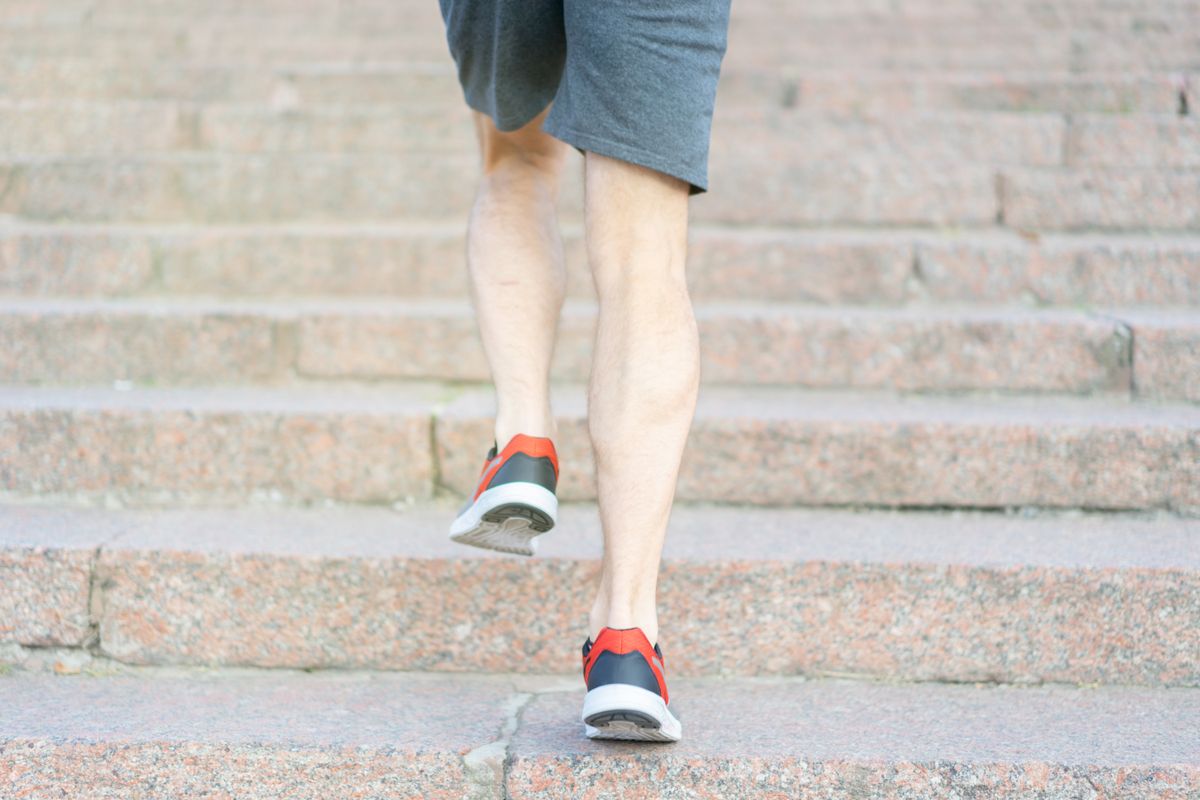
The image shows a person on stairs, which fits a page about using stair climbing as a small, observable movement choice. It is general-education context, not proof of fitness or a result.
Article match: person walking up stone stairs, ordinary stair setting, daily movement, and clear built-in activity context. The image is exact for the page because it shows stairs as a movement option without implying health, body, mood, heart, or performance results. Article match: stairs, walking, daily.
Image: Person Walking Up Stone Stairs. Author: Pexels photographer, see source page. License: Pexels License. Library: Pexels.