exercise types
Swimming As Exercise
What should a beginner understand about swimming as exercise before using a pool, class, or lap lane?
Swimming works as exercise education only when the water setting, supervision, exit point, breathing, and intensity are clear. The first decision is not whether swimming is low impact or hard enough. It is whether one water-based attempt gives you a safe, readable signal without turning pool access into medical or performance advice.
Choose a supervised pool setting or class where the depth, entry, exit, rail, lifeguard or instructor presence, and stopping point are clear. Keep the first effort easy enough that breath and leaving the water remain calm.
Read This First
You are interested in swimming, water aerobics, pool walking, or gentle lap movement, but you need to understand the water setting, breath demands, exit plan, and safety boundary before using it like a routine.
Choose a supervised pool setting or class where the depth, entry, exit, rail, lifeguard or instructor presence, and stopping point are clear. Keep the first effort easy enough that breath and leaving the water remain calm.
pool depth, supervision, entry, exit, rail or ladder, class or lane setting, water temperature, breath, and deck steadiness
Use shallower water, shorter time, more rest, pool walking, a supervised class, clearer exit support, or a land-based category for comparison.
Choose the option by setting, support, and stop point.
Type pages compare walking, strength, mobility, cardio, and similar choices by what the reader can safely start and leave today.
- Pick the movement that can be shortened without changing the whole day.
- Swimming As Exercise - Water Setting Comes Before Exercise Ambition: look first for pool depth, supervision, entry, exit, rail or ladder, class or lane setting, water temperature, breath, and deck steadiness; if that signal is missing or crowded out by chest discomfort, faintness, severe shortness of breath, dizziness, panic, water distress, unusual pain, or unsafe symptoms, make the next version smaller before reading onward.
- Pick the version that can be shortened without guilt.
- Ask a clinician, physical therapist, emergency service, swim instructor, lifeguard, or qualified fitness professional when symptoms, medication, pregnancy, illness, surgery, chronic disease, recovery, seizure history, water skill, supervision, or professional instructions shape the swimming decision.
Safety Boundary
This is general education, not medical advice. Stop for warning signs and ask a qualified professional when the situation is personal, uncertain, or higher risk.
Not For
- diagnosis of breath symptoms, pain, dizziness, swimming skill, water safety skill, fitness level, or medical readiness
- replacing a clinician, physical therapist, emergency service, swim instructor, lifeguard, or qualified fitness professional
- personal programming, rehab guidance, medical clearance, lap targets, intensity targets, swimming lessons, body change, weight change, or performance promises
What To Look For
Read the page by the signal you need to understand, then choose the next page only when that signal is clearer.
Decision 1
Water Setting Comes Before Exercise Ambition
Swimming As Exercise - Water Setting Comes Before Exercise Ambition: look first for pool depth, supervision, entry, exit, rail or ladder, class or lane setting, water temperature, breath, and deck steadiness; if that signal is missing or crowded out by chest discomfort, faintness, severe shortness of breath, dizziness, panic, water distress, unusual pain, or unsafe symptoms, make the next version smaller before reading onward.
Swimming adds water access, depth, entry, exit, and supervision variables that walking or cycling do not have. This part matters only if it changes the next visible choice instead of adding a generic reason to move.
Swimming as exercise begins with the water setting. Before you judge laps, class effort, or how the movement feels, you need to know the depth, entry, exit, rail, ladder, lifeguard or instructor presence, crowding, temperature, and where you can stop. If any of those details are unclear, the exercise question is too large.
A supervised pool, shallow area, class lane, or water-walking space can make the first signal easier to read. Open water, crowded pools, unclear exits, or unfamiliar depths add variables that a basics article cannot settle. That does not mean water movement is off limits for everyone.
It means the first useful observation is whether the setting lets you leave calmly. Swimming should not be read as simply low-impact before the water boundary is understood. The first success is an exit plan you can use, not a lap completed.
Write down the setting before you write down the effort. Water Setting Comes Before Exercise Ambition should change what the reader watches next, not simply restate the guide topic. In swimming as exercise, the section is useful when it turns the movement category behind water setting comes before exercise ambition into a visible check: pool depth, supervision, entry, exit, rail or ladder, class or lane setting, water temperature, breath, and deck steadiness.
If the same attempt points instead to chest discomfort, faintness, severe shortness of breath, dizziness, panic, water distress, unusual pain, or unsafe symptoms, the guide should narrow the choice, reduce the demand, or move the reader toward qualified help. CDC (Drowning Prevention) and NHS (Exercise) shape this dimension without becoming instructions to copy. CDC gives this guide public-facing vocabulary and a limit on what the guide can say.
NHS adds a second comparison point so the guide does not lean on one article or one phrasing pattern. The final wording should therefore stay with what can be observed, what should not be assumed, and what question belongs outside a self-directed page.
Decision 2
Supervision And Skill Are Not The Same As Fitness
Swimming As Exercise - Supervision And Skill Are Not The Same As Fitness: choose the next move from the visible signal, then direct symptoms, personal risk, or unclear safety to qualified help.
A person can be fit on land and still need a conservative water-skill boundary. This part matters only if it changes the next visible choice instead of adding a generic reason to move.
Swimming mixes exercise with water skill. That means fitness confidence on land does not automatically transfer to the pool. A person can walk, cycle, or lift comfortably and still need help understanding breathing, floating, lane rules, water depth, or panic signals.
This is why supervision, instruction, and lifeguard presence matter. A first water-based attempt should happen where help is visible and leaving the water is simple. If you are not confident in the water, choose a supervised class, pool walking, or instruction rather than self-testing laps.
If you are confident, still name the supervision and exit because fatigue or breath changes feel different in water. This keeps swimming education away from personal clearance. the guide can help you ask better questions: Where is help?
How do I stop? Can I touch bottom? Can I leave without rushing?
It should not decide that your water skill is enough. The first water note should mention help access before effort. Swimming As Exercise needs supervision and skill are not the same as fitness to answer a smaller question than "what should I do next?" Use the setup, support, equipment, and stop point in swimming as exercise as the filter and leave with one note: swimming, pool walking, or water aerobics made the movement signal clearer than land movement.
If the note is only motivation, guilt, or a vague sense that more effort must be better, the section has not done its job yet. CDC (Drowning Prevention) and National Institute on Aging (Four Types Of Exercise Can Improve Your Health And Physical Ability) shape this dimension without becoming instructions to copy. CDC gives this guide public-facing vocabulary and a limit on what the guide can say.
National Institute on Aging adds a second comparison point so the guide does not lean on one article or one phrasing pattern. The final wording should therefore stay with what can be observed, what should not be assumed, and what question belongs outside a self-directed page. If you are comfortable walking but unsure in deep water, pool walking or a supervised class is a clearer first category than lap swimming.
After one attempt, the note should be plain enough to compare later: swimming, pool walking, or water aerobics made the movement signal clearer than land movement. If nothing useful changes, the fallback is not to push harder; it is to use shallower water, shorter time, more rest, pool walking, a supervised class, clearer exit support, or a land-based category for comparison. If the signal is mixed, change one variable: pool setting, depth, class format, lane crowding, water temperature, movement type, rest breaks, supervision, or whether cycling or walking is clearer.
Decision 3
Breath And Rhythm Need A Smaller First Version
Swimming As Exercise - Breath And Rhythm Need A Smaller First Version: use this section to choose repeat, reduce, pause, or ask, not to prove progress; watch the next hour showed ordinary fatigue, soreness, chill, confidence, calmness, or water-setting concern.
Water changes how breath feels, and breath signals should be readable before intensity rises. This part matters only if it changes the next visible choice instead of adding a generic reason to move.
Breath is one of the first swimming signals to make smaller. In water, even easy movement can feel different because your face, rhythm, temperature, and confidence change the breath experience. Start with a version that lets you stop, stand, hold a rail, or exit.
That may be pool walking, gentle water aerobics, a short easy lap with clear rest, or a class format where stopping is normal. Do not chase a continuous swim before you know whether breath stays calm. If breath feels pressured, severe, panicky, or unsafe, stop and use a ask-first page.
If breath is readable, record what made it readable: shallow water, rest breaks, class cues, lane space, temperature, or easy rhythm. This keeps the guide from promising cardio progress or telling you how many laps to do. The first water attempt should make breath easier to describe, not harder to ignore.
A smaller version is the safe educational choice. Breath And Rhythm Need A Smaller First Version belongs in swimming as exercise because it can separate one ordinary signal from a larger claim. For this guide, which part of the option should stay optional matters more than finishing a routine.
The reader should finish the section knowing whether to repeat the same version, make it smaller, change the setting, or pause because you had to push laps, class intensity, or breath control to make swimming feel valid. CDC (Adult Activity: An Overview) and MoveKind (Severe Shortness Of Breath During Exercise) shape this dimension without becoming instructions to copy. CDC gives this guide public-facing vocabulary and a limit on what the guide can say.
Severe Shortness Of Breath During Exercise supplies the site link if this section becomes the reader's next decision. The final wording should therefore stay with what can be observed, what should not be assumed, and what question belongs outside a self-directed page. Pool walking for five minutes may answer more about breath and water confidence than trying to swim nonstop.
After one attempt, the note should be plain enough to compare later: the next hour showed ordinary fatigue, soreness, chill, confidence, calmness, or water-setting concern. If nothing useful changes, the fallback is not to push harder; it is to use shallower water, shorter time, more rest, pool walking, a supervised class, clearer exit support, or a land-based category for comparison. If the signal is mixed, change one variable: pool setting, depth, class format, lane crowding, water temperature, movement type, rest breaks, supervision, or whether cycling or walking is clearer.
Decision 4
Water Movement And Land Movement Answer Different Questions
Swimming As Exercise - Water Movement And Land Movement Answer Different Questions: look first for the next page should be swimming safety, cardio basics, low-impact cardio, severe-breath safety, unusual-pain safety, or cycling comparison; if that signal is missing or crowded out by chest discomfort, faintness, severe shortness of breath, dizziness, panic, water distress, unusual pain, or unsafe symptoms, make the next version smaller before reading onward.
Swimming may feel gentler in some ways but more complex in others, so it should not be sold as a universal substitute.
Swimming, water aerobics, and pool walking answer a different question from walking, cycling, or bodyweight movement. Water can change impact, temperature, balance, breath rhythm, social setting, and how effort feels. That may make the category appealing, but it also makes comparison harder.
If land movement feels noisy because of surface, shoes, or joint comfort, water movement may be worth understanding. If water confidence, pool access, supervision, breath, or exits are noisy, land movement may be clearer for the first observation. Neither direction is a universal upgrade.
Compare one constraint at a time: impact, breath, access, support, weather, privacy, social comfort, skill, or safety. A page should not say swimming is better because it is water-based. It should help you decide whether the water setting simplifies the problem or adds variables you should settle first.
The next page should follow the constraint, not a ranking. The comparison should make the next attempt simpler, not just wetter or more impressive. Water Movement And Land Movement Answer Different Questions should change what the reader watches next, not simply restate the guide topic.
In swimming as exercise, the section is useful when it turns the movement category behind water movement and land movement answer different questions into a visible check: the next page should be swimming safety, cardio basics, low-impact cardio, severe-breath safety, unusual-pain safety, or cycling comparison. If the same attempt points instead to chest discomfort, faintness, severe shortness of breath, dizziness, panic, water distress, unusual pain, or unsafe symptoms, the guide should narrow the choice, reduce the demand, or move the reader toward qualified help. Mayo Clinic (Fitness Basics) and Healthline (How to Start Exercising: A Beginner's Guide to Working Out) shape this dimension without becoming instructions to copy.
Mayo Clinic gives this guide public-facing vocabulary and a limit on what the guide can say. Healthline adds a second comparison point so the guide does not lean on one article or one phrasing pattern. The final wording should therefore stay with what can be observed, what should not be assumed, and what question belongs outside a self-directed page.
Decision 5
After One Pool Session, Notice The Exit
Swimming As Exercise - After One Pool Session, Notice The Exit: choose the next move from the visible signal, then direct symptoms, personal risk, or unclear safety to qualified help.
The moment of leaving the water often shows whether the session was safely sized. This part matters only if it changes the next visible choice instead of adding a generic reason to move.
After one swimming or pool session, notice the exit. Did you leave the water calmly, use the rail or steps comfortably, feel steady on the deck, and recover breath without rushing? Or did you feel shaky, panicked, unusually breathless, chilled, sore, dizzy, or uncertain?
The exit tells you whether the water setting was readable. A good note separates pool depth, supervision, class or lane setting, water temperature, breath, movement type, effort, exit, deck steadiness, and the next hour. If the exit was calm and the signal was clear, repeat the same water setting once before adding laps, speed, or class difficulty.
If the exit was messy, reduce the water time, choose shallower water, add instruction, use more rest, or change to land movement. If symptoms appeared, use safety first. The useful result is not a number of laps.
It is knowing whether water movement can be repeated without losing the exit plan. Swimming As Exercise needs after one pool session, notice the exit to answer a smaller question than "what should I do next?" Use the setup, support, equipment, and stop point in swimming as exercise as the filter and leave with one note: pool depth, supervision, entry, exit, rail or ladder, class or lane setting, water temperature, breath, and deck steadiness. If the note is only motivation, guilt, or a vague sense that more effort must be better, the section has not done its job yet.
CDC (Adult Activity: An Overview) and ACE Fitness (Exercise Library) shape this dimension without becoming instructions to copy. CDC gives this guide public-facing vocabulary and a limit on what the guide can say. ACE Fitness adds a second comparison point so the guide does not lean on one article or one phrasing pattern.
The final wording should therefore stay with what can be observed, what should not be assumed, and what question belongs outside a self-directed page. Write down whether you climbed out steadily and recovered breath calmly before deciding whether to repeat the same pool session. After one attempt, the note should be plain enough to compare later: pool depth, supervision, entry, exit, rail or ladder, class or lane setting, water temperature, breath, and deck steadiness.
If nothing useful changes, the fallback is not to push harder; it is to use shallower water, shorter time, more rest, pool walking, a supervised class, clearer exit support, or a land-based category for comparison. If the signal is mixed, change one variable: pool setting, depth, class format, lane crowding, water temperature, movement type, rest breaks, supervision, or whether cycling or walking is clearer.
Decision 6
The Next Page Should Follow The Pool Constraint
Swimming As Exercise - The Next Page Should Follow The Pool Constraint: use this section to choose repeat, reduce, pause, or ask, not to prove progress; watch swimming, pool walking, or water aerobics made the movement signal clearer than land movement.
Swimming pages become unsafe when they path every reader toward more laps instead of the constraint they noticed.
The next page after swimming should follow the pool constraint. If breath was the main signal, cardio basics or severe-breath safety may be the right path. If entry, exit, depth, supervision, or water confidence was unclear, swimming safety comes before another session.
If shoulder, back, hip, or unusual pain appeared, use a pain safety page instead of changing strokes. If the water setting felt safe but you want a comparable land option, look at cycling, walking, or low-impact cardio as categories. If social class cues helped, choose a class-based page later; if crowding made you tense, solve access first.
This keeps internal links from becoming a lap progression. the guide's job is to make the next decision smaller. More swimming is not the answer unless the first setting, breath, supervision, and exit were readable and no safety signal appeared.
When the signal is unclear, return to setup and supervision. Water uncertainty can turn a simple category choice into a safety problem quickly. The Next Page Should Follow The Pool Constraint belongs in swimming as exercise because it can separate one ordinary signal from a larger claim.
For this guide, which part of the option should stay optional matters more than finishing a routine. The reader should finish the section knowing whether to repeat the same version, make it smaller, change the setting, or pause because you had to push laps, class intensity, or breath control to make swimming feel valid. National Institute on Aging (Four Types Of Exercise Can Improve Your Health And Physical Ability) and MoveKind (Cardio Exercise Basics) shape this dimension without becoming instructions to copy.
National Institute on Aging gives this guide public-facing vocabulary and a limit on what the guide can say. Cardio Exercise Basics supplies the site link if this section becomes the reader's next decision. The final wording should therefore stay with what can be observed, what should not be assumed, and what question belongs outside a self-directed page.
If the class felt useful but exiting the pool felt uncertain, the next question is safety and support, not a harder class. After one attempt, the note should be plain enough to compare later: swimming, pool walking, or water aerobics made the movement signal clearer than land movement. If nothing useful changes, the fallback is not to push harder; it is to use shallower water, shorter time, more rest, pool walking, a supervised class, clearer exit support, or a land-based category for comparison.
If the signal is mixed, change one variable: pool setting, depth, class format, lane crowding, water temperature, movement type, rest breaks, supervision, or whether cycling or walking is clearer.
After You Try It
After one small water-based attempt, you may understand whether pool access, supervision, depth, breath, movement choice, exit, and recovery were readable. That is not proof of cardio progress, health change, body change, swimming skill, or personal readiness.
What To Observe
- pool depth, supervision, entry, exit, rail or ladder, class or lane setting, water temperature, breath, and deck steadiness
- whether swimming, pool walking, or water aerobics made the movement signal clearer than land movement
- whether the next hour showed ordinary fatigue, soreness, chill, confidence, calmness, or water-setting concern
- whether the next page should be swimming safety, cardio basics, low-impact cardio, severe-breath safety, unusual-pain safety, or cycling comparison
Too Much
- chest discomfort, faintness, severe shortness of breath, dizziness, panic, water distress, unusual pain, or unsafe symptoms
- pool depth, supervision, exit, crowding, temperature, or deck steadiness felt uncertain
- you had to push laps, class intensity, or breath control to make swimming feel valid
If Nothing Improves Or It Feels Worse
Use shallower water, shorter time, more rest, pool walking, a supervised class, clearer exit support, or a land-based category for comparison.
Change one variable: pool setting, depth, class format, lane crowding, water temperature, movement type, rest breaks, supervision, or whether cycling or walking is clearer.
Pause when swimming worsens breath, pain, dizziness, panic, water confidence, deck steadiness, chill, fatigue, or uncertainty.
Ask a clinician, physical therapist, emergency service, swim instructor, lifeguard, or qualified fitness professional when symptoms, medication, pregnancy, illness, surgery, chronic disease, recovery, seizure history, water skill, supervision, or professional instructions shape the swimming decision.
When To Stop Or Ask First
- Stop for chest discomfort, faintness, severe shortness of breath, unusual pain, dizziness, panic, water distress, confusion, loss of coordination, or feeling unable to exit calmly.
- Ask first when medication, pregnancy, chronic disease, illness, surgery, recovery, seizure history, water skill, new symptoms, pool safety, or professional instructions change the decision.
- Use swimming as exercise as general education and not medical advice, diagnosis, treatment, rehab guidance, swim instruction, lap prescription, class prescription, or personal clearance.
Next Decision
Choose the next page from what you noticed, not from a harder goal.
Pick Swimming Safety Basics after swimming as exercise if use this path when the reader can describe pool is the clearest education signal; keep the safety boundary around symptoms, personal risk, and qualified help.
If The Setup Needs To ShrinkWhen To Ask A Professional Before ExerciseUse this path when you can describe swimming, pool walking, or water aerobics made the movement signal clearer than land movement.Use When To Ask A Professional Before Exercise after swimming as exercise when it clarifies what equipment or support changes the choice; it is general education, not personal clearance, treatment, or a program.
If Safety Is The QuestionSevere Shortness Of Breath During ExerciseUse this path when you had to push laps, class intensity, or breath control to make swimming feel valid changes the decision.Choose Severe Shortness Of Breath During Exercise after swimming as exercise when use this path when the reader had to push changes the setting, support, or stop point; qualified help still handles symptoms or risk.
If The Neighboring Topic FitsLow-Impact Cardio BasicsUse this path when you can describe the next page should be swimming safety, cardio basics, low-impact cardio, severe-breath safety, unusual-pain safety, or cycling comparison.Read Low-Impact Cardio Basics after swimming as exercise if low-impact cardio basics is the better question before adding effort; keep personal risk outside self-direction.
How To Use The Source Notes
The reviewed sources support swimming as a physical-activity category and make the water setting part of the safety boundary. They do not support lap targets, class prescriptions, water-skill clearance, medical claims, or a promise that water movement fits every reader.
CDC activity guidance, CDC drowning prevention, NHS, Mayo Clinic, and NIA anchor category and water-safety boundaries; ACE and Healthline are used only for vocabulary and beginner-question comparison; MoveKind internal links path cardio and breath-safety decisions.
No source is used to teach swimming, judge water competence, prescribe laps, choose class intensity, diagnose symptoms, promise outcomes, or decide whether a water setting is personally safe.
the guide is organized around six decisions: water setting and exit, supervision, breath and rhythm, water versus land comparison, after-water notes, and next-page linking from pool, breath, pain, or category signals.
Practical Steps
- Choose a supervised water setting before choosing laps or class difficulty.
- Name depth, entry, exit, rail, ladder, and help access.
- Keep the first water effort easy enough that breath and leaving the pool stay calm.
- Record pool setting, breath, movement type, exit, deck steadiness, and recovery separately.
- Repeat a clear supervised setup before adding laps, speed, or class intensity.
- Use safety or qualified help when symptoms, water skill, supervision, or medical history shape the decision.
Common Mistakes
- Calling swimming low impact before checking water setting, supervision, and exit.
- Using land fitness confidence as proof of water skill.
- Increasing laps or class intensity before breath and exit are readable.
- Ignoring deck steadiness, water temperature, crowding, or panic signals.
- Continuing after chest discomfort, faintness, severe breathlessness, dizziness, unusual pain, water distress, or unsafe symptoms.
FAQ
Is Swimming As Exercise medical advice?
No. It is general education about swimming as a water-based movement category. It does not provide diagnosis, treatment, rehab guidance, swim instruction, lap targets, class prescriptions, or personal clearance.
Does swimming have to mean lap swimming?
No. Pool walking, gentle water movement, and supervised class formats can be clearer first attempts when breath, water confidence, or exits need to stay readable.
What should I notice after one pool session?
Notice depth, supervision, entry, exit, breath, movement type, water temperature, deck steadiness, recovery, and whether the same setting would be realistic to repeat.
What if swimming does not feel useful?
Make the next version smaller: shallower water, shorter time, more rest, pool walking, more supervision, or a land-based comparison.
When should swimming stop?
Stop for chest discomfort, faintness, severe breathlessness, dizziness, panic, water distress, unusual pain, confusion, or feeling unable to exit calmly.
Image Source
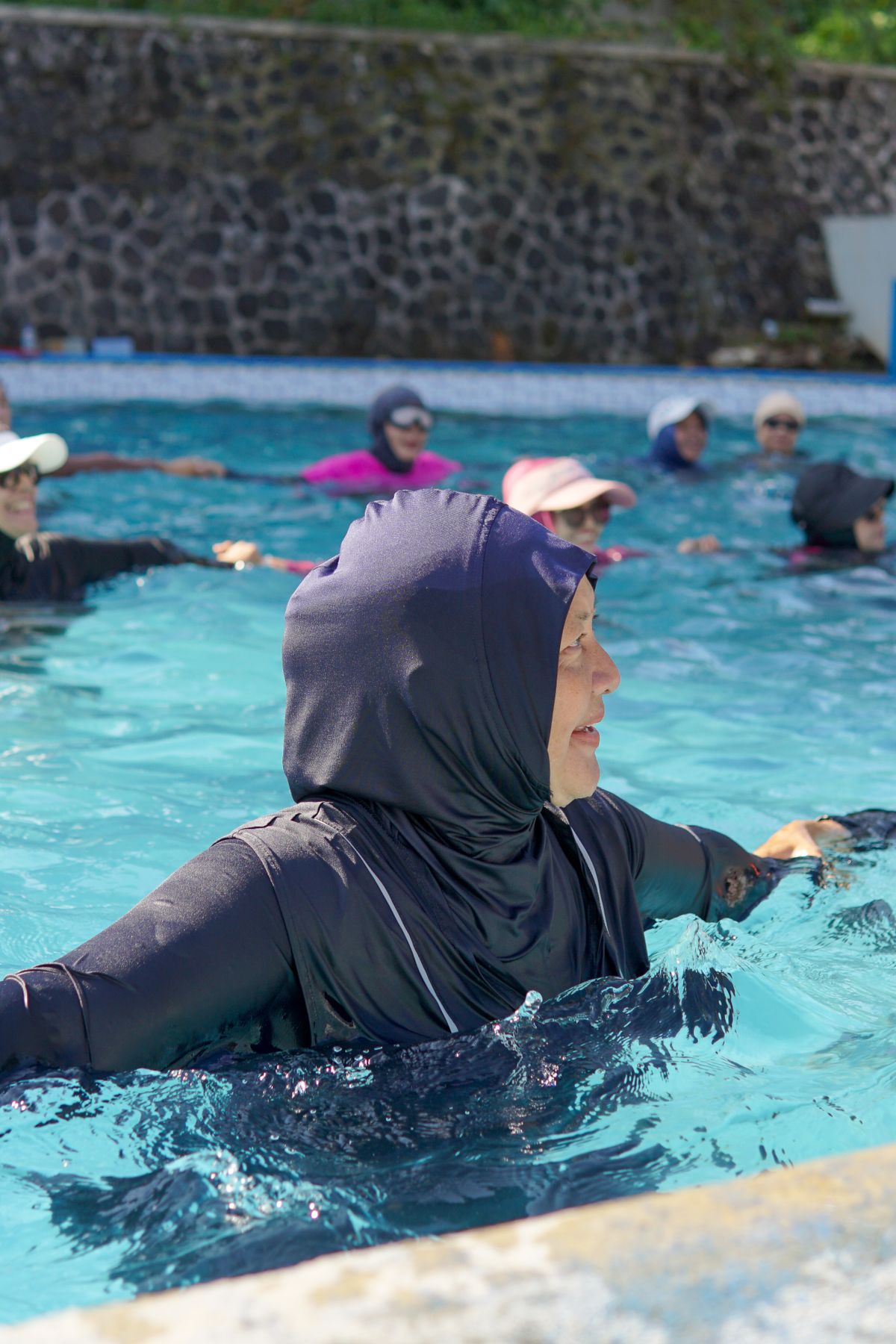
The image shows a pool-based movement class, which fits a page about water setting, supervision, breath, entry, exit, and recovery. It is general-education context, not proof that swimming is safe for every reader.
Article match: swimming, pool setting, water movement, social class context, and water-safety decisions. The image is exact because it shows pool-based movement without implying swimming skill, medical benefit, body result, lap target, or safety clearance. Article match: swimming, water, cardio.
Image: Group Water Aerobics Class In Outdoor Pool. Author: Pexels photographer, see source page. License: Pexels License. Library: Pexels.