home movement
Home Movement For Rainy Days
How can you use Home Movement For Rainy Days as general education while avoiding a personal exercise program?
Home Movement For Rainy Days is best used as a decision page, not a routine. Clear the surface and choose one movement that does not require perfect equipment, keep stable furniture, lighting, footwear, mat space, and enough room to turn visible, and judge the attempt by whether space, noise, surface, furniture, and exit quality made the movement easier or harder. If unsafe surfaces, dizziness, unusual pain, breath symptoms, or personal instructions should stop the session, the next step is stop, pause, or ask qualified help rather than adding effort.
Use one small attempt in a living room, bedroom, hallway, kitchen counter, or other real home space. Make the fallback explicit: use a chair, wall, smaller range, no-floor version, or quieter option. Stop if warning signs, symptoms, or personal instructions become the main signal.
Read This First
You are looking at Home Movement For Rainy Days because copying gym-style routines into a room that cannot safely hold them has made the next movement choice feel larger than it needs to be.
Use one small attempt in a living room, bedroom, hallway, kitchen counter, or other real home space. Make the fallback explicit: use a chair, wall, smaller range, no-floor version, or quieter option. Stop if warning signs, symptoms, or personal instructions become the main signal.
whether space, noise, surface, furniture, and exit quality made the movement easier or harder
Make the next home rainy days version smaller: use a chair, wall, smaller range, no-floor version, or quieter option. Keep the note focused on one observation and one stop point.
Let the room decide what the first version can be.
Home pages start with floor, furniture, noise, privacy, support, and an easy stopping point because those details decide more than a routine name.
- Change the room or range before changing intensity.
- Home Movement For Rainy Days - The Real-World Fit Behind Home Movement For Rainy Days: look first for space, noise, surface, furniture, and exit quality made the movement easier or harder; if that signal is missing or crowded out by you continue because the plan says so after warning signs appear, make the next version smaller before reading onward.
- Remove one friction point before adding a second movement.
- Ask a clinician, physical therapist, emergency service, mental health professional, or qualified fitness professional when symptoms, medication, pregnancy, illness, surgery, recovery, chronic disease, distress, or professional instructions shape the decision.
Let the room narrow the movement before effort does. Let equipment simplify, not complicate.
Home Movement For Rainy Days should help you decide what the home setting can honestly support. Read for floor space, furniture, noise, privacy, and exit points before choosing a harder version. The equipment variant asks whether a chair, mat, band, wall, or no-equipment option makes stopping clearer.
Picture home movement for rainy days in the actual room where it would happen. The page matters only if the real-world fit behind home movement for rainy days becomes specific enough to change the first setup. Read the scene as an equipment filter: the object should reduce uncertainty, not make the routine feel more official.
Do not copy a home routine just because the movement name sounds simple. If the space makes stopping awkward, start by changing the room, range, or support: Make the next home rainy days version smaller: use a chair, wall, smaller range, no-floor version, or quieter option. Keep the note focused on one observation and one stop point. Avoid adding gear as a badge of progress; support only helps if it makes the first version easier to control.
After reading, the decision is not more exercise; it is whether whether space, noise, surface, furniture, and exit quality made the movement easier or harder. Follow Home Movement Next Steps only when that setting choice is clearer. The reader should leave knowing which support changes the first attempt and which support can wait.
Safety Boundary
This is general education, not medical advice. Stop for warning signs and ask a qualified professional when the situation is personal, uncertain, or higher risk.
Not For
- diagnosis of pain, soreness, fatigue, dizziness, breath symptoms, cardiovascular readiness, injury, mood, sleep, or fitness level
- replacing a clinician, physical therapist, qualified fitness professional, emergency service, or personal medical instructions
- treatment decisions, rehab guidance, body-change goals, maximal performance, or a personalized exercise program
What To Look For
Read the page by the signal you need to understand, then choose the next page only when that signal is clearer.
Decision 1
The Real-World Fit Behind Home Movement For Rainy Days
Home Movement For Rainy Days - The Real-World Fit Behind Home Movement For Rainy Days: look first for space, noise, surface, furniture, and exit quality made the movement easier or harder; if that signal is missing or crowded out by you continue because the plan says so after warning signs appear, make the next version smaller before reading onward.
The visitor needs a concrete home setup question before effort, equipment, or comparison takes over. This part matters only if it changes the next visible choice instead of adding a generic reason to move.
A good home rainy days page begins by shrinking the decision until you can see what actually changes. In a living room, bedroom, hallway, kitchen counter, or other real home space, you need to know whether you can clear the surface and choose one movement that does not require perfect equipment without pressure. The answer may depend on stable furniture, lighting, footwear, mat space, and enough room to turn, the time available, the surface, the people around you, and whether the movement can stop without guilt.
This is why the guide should not open with a program. It should open with a question: what is the smallest version that gives useful information? If the first attempt works, you may repeat it.
If it feels noisy, you can use use a chair, wall, smaller range, no-floor version, or quieter option. If warning signs or personal instructions appear, the decision leaves ordinary exercise education. This keeps Home Movement For Rainy Days useful because it turns a broad idea into a concrete next step.
You are not trying to prove commitment. You are checking whether the idea fits today's room, body signals, schedule, and confidence well enough to repeat later. The recalled sources help with vocabulary and boundaries; they do not decide your personal readiness.
The Real-World Fit Behind Home Movement For Rainy Days should change what the reader watches next, not simply restate the guide topic. In home movement for rainy days, the section is useful when it turns the room, floor, furniture, noise, and exit path into a visible check: space, noise, surface, furniture, and exit quality made the movement easier or harder. If the same attempt points instead to you continue because the plan says so after warning signs appear, the guide should narrow the choice, reduce the demand, or move the reader toward qualified help.
NHS (Exercise) and CDC (Physical Activity Guidelines) shape this dimension without becoming instructions to copy. NHS gives this guide public-facing vocabulary and a limit on what the guide can say. CDC adds a second comparison point so the guide does not lean on one article or one phrasing pattern.
The final wording should therefore stay with what can be observed, what should not be assumed, and what question belongs outside a self-directed page.
Decision 2
Use Sources To Frame Home Rainy Days, Not To Prescribe It
Home Movement For Rainy Days - Use Sources To Frame Home Rainy Days, Not To Prescribe It: choose the next move from the visible signal, then direct symptoms, personal risk, or unclear safety to qualified help.
Public activity language is useful only after it becomes a small attempt you can actually observe. This part matters only if it changes the next visible choice instead of adding a generic reason to move.
The source material behind the home rainy days topic supports category literacy, gradual choices, and conservative boundaries. That means the guide should translate the idea into a small test: clear the surface and choose one movement that does not require perfect equipment. During that attempt, the useful evidence is whether space, noise, surface, furniture, and exit quality made the movement easier or harder.
A guideline amount, category name, or editorial routine can make movement sound more certain than it is. Your first version does not need to meet a public target or copy a sample routine. It needs a clear start, an easier option, and an exit.
If the attempt becomes too large, the guide should direct you toward use a chair, wall, smaller range, no-floor version, or quieter option rather than a harder version. If the question becomes personal because of symptoms, medication, pregnancy, illness, recovery, chronic disease, distress, or professional instructions, the guide should help you prepare a better question for qualified help. That is how source guidance becomes useful without becoming personal advice.
The summary should also name what the source cannot do: it cannot turn Home Movement For Rainy Days into clearance, treatment, rehabilitation guidance, or a promise that the next session will feel better. Home Movement For Rainy Days needs use sources to frame home rainy days, not to prescribe it to answer a smaller question than "what should I do next?" Use the home constraint that decides use sources to frame home rainy days, not to prescribe it as the filter and leave with one note: stable furniture, lighting, footwear, mat space, and enough room to turn made the attempt easier to start and leave. If the note is only motivation, guilt, or a vague sense that more effort must be better, the section has not done its job yet.
CDC (Physical Activity Guidelines) and NHS Better Health (How To Be More Active) shape this dimension without becoming instructions to copy. CDC gives this guide public-facing vocabulary and a limit on what the guide can say. NHS Better Health adds a second comparison point so the guide does not lean on one article or one phrasing pattern.
The final wording should therefore stay with what can be observed, what should not be assumed, and what question belongs outside a self-directed page.
Decision 3
Keep Home Movement For Rainy Easy To Scale Down
Home Movement For Rainy Days - Keep Home Movement For Rainy Easy To Scale Down: use this section to choose repeat, reduce, pause, or ask, not to prove progress; watch copying gym-style routines into a room that cannot safely hold them showed up during the attempt.
A smaller option protects home setup from becoming a test of willpower. This part matters only if it changes the next visible choice instead of adding a generic reason to move.
A smaller version is not a consolation prize for the home rainy days decision; it is part of the decision. Choose the fallback while you are calm: use a chair, wall, smaller range, no-floor version, or quieter option. Then the first sign of confusion does not have to become an argument.
If breath, balance, range, surface, noise, space, social pressure, or time starts to feel harder to read, you can reduce the version immediately. The fallback also helps you notice what the actual problem was. Maybe the movement was fine but the room was too crowded.
Maybe the duration was fine but the stop point was unclear. Maybe the support was missing. Maybe the plan sounded simple but the first minute raised uncertainty.
A useful fallback removes one variable so the signal can become specific. It does not promise that the movement is safe for everyone, and it does not replace professional advice. It simply keeps the first attempt from becoming bigger than the information you need.
Keep Home Movement For Rainy Easy To Scale Down belongs in home movement for rainy days because it can separate one ordinary signal from a larger claim. For this guide, the version that can stop without disrupting the whole day matters more than finishing a routine. The reader should finish the section knowing whether to repeat the same version, make it smaller, change the setting, or pause because pressure, comparison, unsafe symptoms, or personal risk becomes louder than the movement.
ODPHP (Move Your Way) and Verywell Fit (Beginner Workouts) shape this dimension without becoming instructions to copy. ODPHP gives this guide public-facing vocabulary and a limit on what the guide can say. Verywell Fit adds a second comparison point so the guide does not lean on one article or one phrasing pattern.
The final wording should therefore stay with what can be observed, what should not be assumed, and what question belongs outside a self-directed page. If the first home rainy days version starts to feel noisy, use the fallback before the session becomes hard to leave. After one attempt, the note should be plain enough to compare later: copying gym-style routines into a room that cannot safely hold them showed up during the attempt.
If nothing useful changes, the fallback is not to push harder; it is to make the next home rainy days version smaller: use a chair, wall, smaller range, no-floor version, or quieter option. Keep the note focused on one observation and one stop point. If the signal is mixed, change one home rainy days variable: time, setting, surface, support, range, effort, equipment, or the internal page you read next.
Decision 4
How The End Of Home Movement For Rainy Days Changes The Next Try
Home Movement For Rainy Days - How The End Of Home Movement For Rainy Days Changes The Next Try: look first for warning signs, symptoms, or personal instructions should lead before another try; if that signal is missing or crowded out by you continue because the plan says so after warning signs appear, make the next version smaller before reading onward.
The ending note decides whether the next step is repeat, reduce, change, pause, or ask. This part matters only if it changes the next visible choice instead of adding a generic reason to move.
One try at the home rainy days version can clarify the next decision without proving anything larger. Write down whether space, noise, surface, furniture, and exit quality made the movement easier or harder. Add the practical details that are easy to forget: time of day, surface, support, how quickly you could stop, what felt too large, and what you would keep the same.
If the ending was calm, the next decision may be to repeat rather than add more. If the ending was rushed, pressured, symptom-linked, or hard to describe, the next decision may be reduce, change the setting, pause, or ask. This after-note is not a diagnosis and not a progress certificate.
It is a way to prevent the next attempt from being based on memory, guilt, or a comparison with someone else's routine. The note should make the next version more specific. For Home Movement For Rainy Days, that means the practical signal matters more than finishing the plan.
If nothing changed, the guide should still be useful: it should tell you which variable to reduce or which question to bring to qualified help. How The End Of Home Movement For Rainy Days Changes The Next Try should change what the reader watches next, not simply restate the guide topic. In home movement for rainy days, the section is useful when it turns the room, floor, furniture, noise, and exit path into a visible check: warning signs, symptoms, or personal instructions should lead before another try.
If the same attempt points instead to you continue because the plan says so after warning signs appear, the guide should narrow the choice, reduce the demand, or move the reader toward qualified help. Verywell Fit (Beginner Workouts) and ACE Fitness (Exercise Library) shape this dimension without becoming instructions to copy. Verywell Fit is used here for reader-question coverage and article structure, not as proof of a health outcome.
ACE Fitness adds a second comparison point so the guide does not lean on one article or one phrasing pattern. The final wording should therefore stay with what can be observed, what should not be assumed, and what question belongs outside a self-directed page.
Decision 5
Pick A Related Page Only When It Answers The Constraint
Home Movement For Rainy Days - Pick A Related Page Only When It Answers The Constraint: choose the next move from the visible signal, then direct symptoms, personal risk, or unclear safety to qualified help.
Internal links are useful only when they answer the exact signal the visitor noticed. This part matters only if it changes the next visible choice instead of adding a generic reason to move.
Do not let the home rainy days page turn related links into a hidden routine order. If the issue was setup, choose the path that explains support, space, shoes, chair, wall, or surface. If the issue was effort, choose the path that explains breath, pace, RPE, or talk-test language.
If the issue was timing, consistency, pressure, or tracking, choose the path that keeps the next attempt smaller. If warning signs, symptoms, medication, pregnancy, illness, recovery, chronic disease, distress, or professional instructions shaped the attempt, choose stop or ask-first guidance instead of another movement idea. The useful choices near this guide include How To Choose Home Exercise Order, Home Movement For Beginners, Home Movement For Low Energy Days.
Each link should answer a question created by your observation, not act like a program order. If no link fits, make the next movement and the next note smaller before you keep browsing. If the guide still feels generic after reading the links, that is a signal to return to the observed constraint rather than add more articles.
Home Movement For Rainy Days needs pick a related page only when it answers the constraint to answer a smaller question than "what should I do next?" Use the home constraint that decides pick a related page only when it answers the constraint as the filter and leave with one note: space, noise, surface, furniture, and exit quality made the movement easier or harder. If the note is only motivation, guilt, or a vague sense that more effort must be better, the section has not done its job yet. MoveKind (How To Choose Home Exercise Order) and MoveKind (Home Movement For Beginners) shape this dimension without becoming instructions to copy.
MoveKind is used here for reader-question coverage and article structure, not as proof of a health outcome. Home Movement For Beginners supplies the site link if this section becomes the reader's next decision. The final wording should therefore stay with what can be observed, what should not be assumed, and what question belongs outside a self-directed page.
After You Try It
After one small Home Movement For Rainy Days attempt, the home rainy days note may show whether the next decision is repeat, reduce, change setup, pause, rest, or ask for help. That is useful information, but it is not proof of fitness, health, body change, or future consistency.
What To Observe
- whether space, noise, surface, furniture, and exit quality made the movement easier or harder
- whether stable furniture, lighting, footwear, mat space, and enough room to turn made the attempt easier to start and leave
- whether copying gym-style routines into a room that cannot safely hold them showed up during the attempt
- whether warning signs, symptoms, or personal instructions should lead before another try
Too Much
- you continue because the plan says so after warning signs appear
- the real home question is still unclear setup
- pressure, comparison, unsafe symptoms, or personal risk becomes louder than the movement
If Nothing Improves Or It Feels Worse
Make the next home rainy days version smaller: use a chair, wall, smaller range, no-floor version, or quieter option. Keep the note focused on one observation and one stop point.
Change one home rainy days variable: time, setting, surface, support, range, effort, equipment, or the internal page you read next.
Pause the home rainy days attempt when it creates pressure, confusion, unsafe symptoms, unusual pain, dizziness, severe breathlessness, or a setup you cannot leave calmly.
Ask a clinician, physical therapist, emergency service, mental health professional, or qualified fitness professional when symptoms, medication, pregnancy, illness, surgery, recovery, chronic disease, distress, or professional instructions shape the decision.
When To Stop Or Ask First
- Stop for chest discomfort, faintness, severe shortness of breath, dizziness, unusual pain, confusion, loss of coordination, or symptoms that feel unsafe.
- Ask first when symptoms, pain, medication, pregnancy, chronic disease, illness, surgery, recovery, injury history, distress, or professional instructions change whether to start.
- Use this article as general education and not medical advice, diagnosis, treatment, rehab guidance, emergency triage, body-change guidance, or personal programming.
Next Decision
Choose the next page from what you noticed, not from a harder goal.
Pick How To Choose Home Exercise Order after home movement for rainy days if use this path when the reader can describe space is the clearest education signal; keep the safety boundary around symptoms, personal risk, and qualified help.
If The Setup Needs To ShrinkHome Movement For BeginnersUse this path when you can describe stable furniture, lighting, footwear, mat space, and enough room to turn made the attempt easier to start and leave.Use Home Movement For Beginners after home movement for rainy days when it clarifies how the home setup limits the movement; it is general education, not personal clearance, treatment, or a program.
If Safety Is The QuestionHome Movement For Low Energy DaysUse this path when pressure, comparison, unsafe symptoms, or personal risk becomes louder than the movement changes the decision.Choose Home Movement For Low Energy Days after home movement for rainy days when use this path when pressure, comparison, unsafe symptoms, or changes the setting, support, or stop point; qualified help still handles symptoms or risk.
If The Neighboring Topic FitsHome Movement Habit AnchorsUse this path when you can describe warning signs, symptoms, or personal instructions should lead before another try.Read Home Movement Habit Anchors after home movement for rainy days if home movement habit anchors is the better question before adding effort; keep personal risk outside self-direction.
How To Use The Source Notes
The recalled material supports Home Movement For Rainy Days as a practical home setup decision with modest observation, conservative boundaries, and contextual next steps.
Official sources set the public-education boundary and activity vocabulary; editorial references show common reader questions; MoveKind internal pages path a setup note about what the room can actually support to the next safe read.
No source is used to diagnose symptoms, choose treatment, provide rehab guidance, promise body change, guarantee results, or clear personal risk.
The rewrite uses five dimensions: the main home setup decision, broad guidance translated into one attempt, a smaller fallback, after-session interpretation, and next-page linking from the signal noticed.
Practical Steps
- Name the real home rainy days question before choosing movement.
- Clear the surface and choose one movement that does not require perfect equipment for the home rainy days attempt.
- Keep stable furniture, lighting, footwear, mat space, and enough room to turn available during the first home rainy days attempt.
- Use use a chair, wall, smaller range, no-floor version, or quieter option when the home rainy days signal gets noisy.
- Write down whether space, noise, surface, furniture, and exit quality made the movement easier or harder for the home rainy days note.
- Ask qualified help when personal risk or warning signs shape the home rainy days decision.
Common Mistakes
- Using the home rainy days page as a fixed routine instead of a decision aid.
- Ignoring the home rainy days clue that copying gym-style routines into a room that cannot safely hold them and adding more effort anyway.
- Letting an app, video, class, or plan outrank warning signs during the home rainy days decision.
- Changing several home rainy days variables before the first signal is readable.
- Following related links after home rainy days as if they were a required progression.
FAQ
Is Home Movement For Rainy Days medical advice?
No. The home rainy days page is general education for home setup, setup, effort, and next-step decisions. It does not diagnose symptoms, prescribe treatment, provide rehab guidance, or clear personal risk.
What should I decide first with Home Movement For Rainy Days?
For home rainy days, decide whether you can clear the surface and choose one movement that does not require perfect equipment while keeping stable furniture, lighting, footwear, mat space, and enough room to turn available and stopping before warning signs or pressure take over.
How do I make Home Movement For Rainy Days easier?
Use the smaller home rainy days version first: use a chair, wall, smaller range, no-floor version, or quieter option. Keep one note about whether space, noise, surface, furniture, and exit quality made the movement easier or harder.
What if Home Movement For Rainy Days does not help?
If the home rainy days attempt does not help, reduce one variable, change the setting, pause, rest, or ask qualified help when symptoms, history, or instructions shape the decision.
When should I stop instead of continuing Home Movement For Rainy Days?
Stop the home rainy days attempt for chest discomfort, faintness, severe breathlessness, dizziness, unusual pain, confusion, loss of coordination, or unsafe symptoms.
Image Source
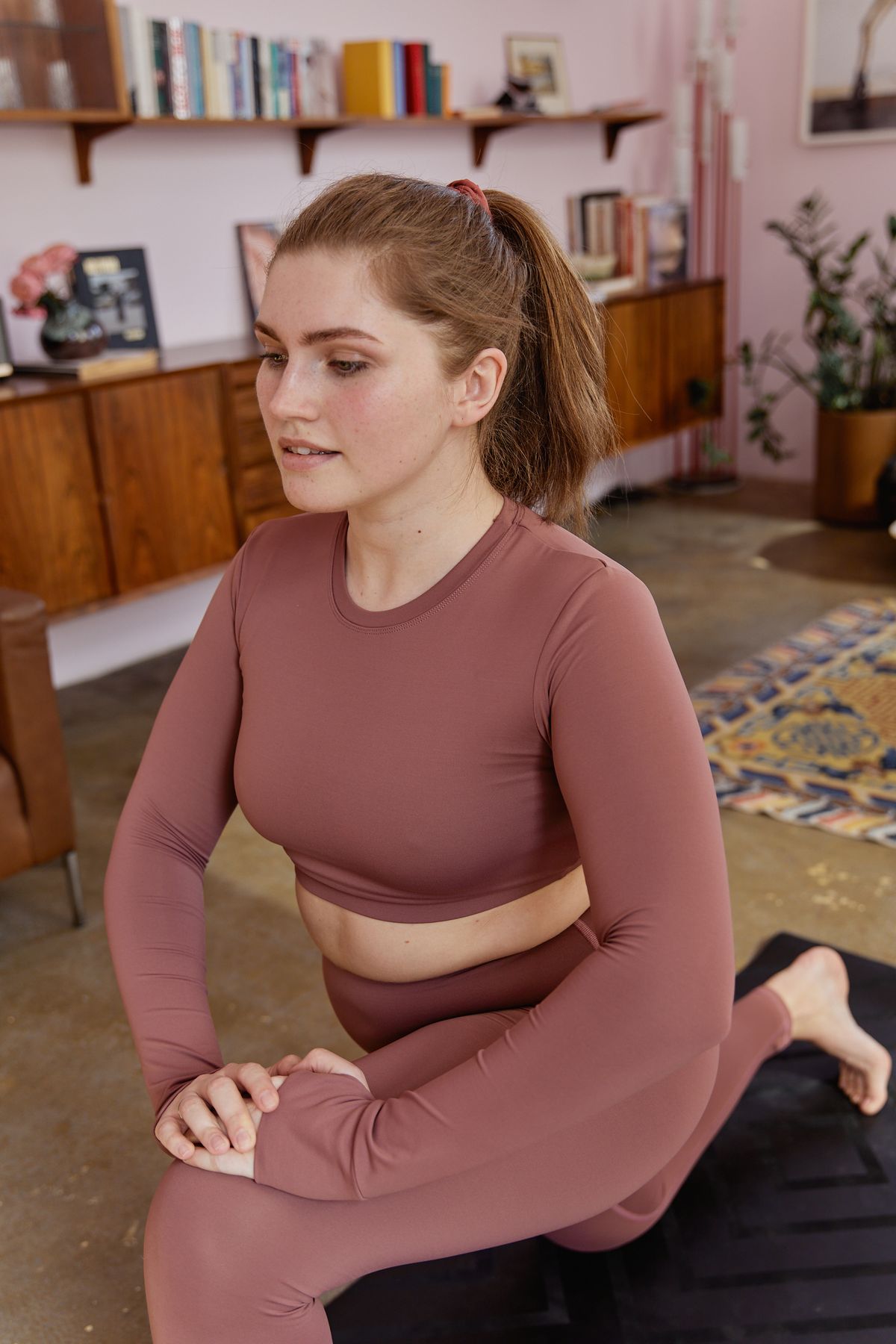
The image gives a visual setting for Home Movement For Rainy Days: stable furniture, lighting, footwear, mat space, and enough room to turn. It is context for choosing a small, stoppable version, not instruction to copy the pictured movement.
Article match: home, small-space, quiet, Home Movement For Rainy Days, and home setup. The image supports a concrete exercise-education setting without implying diagnosis, treatment, rehab, prevention, body change, performance, or medical clearance. Article match: indoor, mobility, home.
Image: Plus Size Woman Stretching At Home. Author: Pexels photographer, see source page. License: Pexels License. Library: Pexels.