exercise types
Flexibility Exercise Basics
What should a beginner understand about flexibility exercise before chasing a deeper stretch?
Flexibility exercise is best understood as range-of-motion education: you are checking whether a position, support, breath, and exit point make a stretch feeling easy to describe. The first useful question is not how far you can go. It is whether one small range lets you move away from strain, notice the signal, and decide what to read next.
Choose one gentle position with clear support and a clear exit. Keep the range small enough that you can breathe, talk, back out, and describe the stretch without bracing.
Read This First
You want to stretch or become less stiff, but you do not want a routine that tells you to force range, ignore warning signs, or read one stretch as proof that your body has changed.
Choose one gentle position with clear support and a clear exit. Keep the range small enough that you can breathe, talk, back out, and describe the stretch without bracing.
whether the stretch sensation stayed mild, specific, and easy to leave
Use a smaller range, more support, a simpler position, a shorter hold, a floor-free option, or a stretch that ends before strain.
Choose the option by setting, support, and stop point.
Type pages compare walking, strength, mobility, cardio, and similar choices by what the reader can safely start and leave today.
- Pick the movement that can be shortened without changing the whole day.
- Flexibility Exercise Basics - Flexibility Starts With Range You Can Leave: look first for the stretch sensation stayed mild, specific, and easy to leave; if that signal is missing or crowded out by sharp, unusual, worsening, or persistent pain, make the next version smaller before reading onward.
- Pick the version that can be shortened without guilt.
- Ask a clinician, physical therapist, occupational therapist, emergency service, or qualified fitness professional when symptoms, injury history, medication, pregnancy, illness, surgery, chronic disease, recovery, or professional instructions shape the flexibility decision.
Safety Boundary
This is general education, not medical advice. Stop for warning signs and ask a qualified professional when the situation is personal, uncertain, or higher risk.
Not For
- diagnosis of stiffness, pain, limited range, injury, posture, joint problems, fitness level, or medical readiness
- replacing a clinician, physical therapist, occupational therapist, emergency service, or qualified fitness professional
- personal programming, rehab guidance, medical clearance, form correction, stretch duration targets, body change, weight change, or performance promises
What To Look For
Read the page by the signal you need to understand, then choose the next page only when that signal is clearer.
Decision 1
Flexibility Starts With Range You Can Leave
Flexibility Exercise Basics - Flexibility Starts With Range You Can Leave: look first for the stretch sensation stayed mild, specific, and easy to leave; if that signal is missing or crowded out by sharp, unusual, worsening, or persistent pain, make the next version smaller before reading onward.
A beginner can confuse flexibility with going farther, when the safer first lesson is whether range stays reversible.
Flexibility exercise is about range of motion, but the first range should be one you can leave calmly. That may mean a smaller position, a supported position, or a stretch that stops well before strain. The important signal is not how far you went.
It is whether you could breathe, talk, back out, and describe the sensation without bracing. If the position makes you hold your breath, grip the floor, rush to leave, or wonder whether the feeling is pain, the range is too noisy for a basics page. A smaller range gives you better information because it separates stretch feeling from fear, balance, and force.
Use the first attempt to name the position, support, sensation, and exit. If all four are clear, the same range can be repeated later. If any part is unclear, the next decision is scale-down or safety, not a deeper stretch.
That keeps the first attempt honest and gives you a specific variable to adjust next time. Flexibility Starts With Range You Can Leave should change what the reader watches next, not simply restate the guide topic. In flexibility exercise basics, the section is useful when it turns the movement category behind flexibility starts with range you can leave into a visible check: the stretch sensation stayed mild, specific, and easy to leave.
If the same attempt points instead to sharp, unusual, worsening, or persistent pain, the guide should narrow the choice, reduce the demand, or move the reader toward qualified help. NHS (Strength And Flexibility Exercises) and Mayo Clinic (Stretching: Focus On Flexibility) shape this dimension without becoming instructions to copy. NHS gives this guide public-facing vocabulary and a limit on what the guide can say.
Mayo Clinic adds a second comparison point so the guide does not lean on one article or one phrasing pattern. The final wording should therefore stay with what can be observed, what should not be assumed, and what question belongs outside a self-directed page.
Decision 2
A Stretch Signal Should Be Descriptive, Not Dramatic
Flexibility Exercise Basics - A Stretch Signal Should Be Descriptive, Not Dramatic: choose the next move from the visible signal, then direct symptoms, personal risk, or unclear safety to qualified help.
Stretching advice often pushes intensity language before a reader has learned how to describe the signal. This part matters only if it changes the next visible choice instead of adding a generic reason to move.
A useful flexibility attempt gives you a descriptive signal: mild pull, easy breath, steady support, clear stop point, and no need to fight the position. Dramatic sensation is not a better lesson. It usually hides the information you need.
If the stretch is so strong that you cannot tell where it is, whether it changes with breath, or whether you can leave it slowly, the attempt is no longer educational. This is why a first stretch can stay short and modest. You are checking whether a sensation is understandable, not proving that a muscle is longer.
The next note can be simple: which side, which position, what support, what sensation, what changed afterward. If that note is easy, repeat the same version before changing anything. If it is not easy, reduce range, change support, or use a ask-first page.
The note should help you choose less range, not more intensity. Flexibility Exercise Basics needs a stretch signal should be descriptive, not dramatic to answer a smaller question than "what should I do next?" Use the setup, support, equipment, and stop point in flexibility exercise basics as the filter and leave with one note: breath, support, balance, floor access, and exit point stayed clear. If the note is only motivation, guilt, or a vague sense that more effort must be better, the section has not done its job yet.
Mayo Clinic (Stretching: Focus On Flexibility) and CDC (Adult Activity: An Overview) shape this dimension without becoming instructions to copy. Mayo Clinic gives this guide public-facing vocabulary and a limit on what the guide can say. CDC adds a second comparison point so the guide does not lean on one article or one phrasing pattern.
The final wording should therefore stay with what can be observed, what should not be assumed, and what question belongs outside a self-directed page. Write down: calf stretch near wall, small range, mild pull, breath steady, stopped without rushing. After one attempt, the note should be plain enough to compare later: breath, support, balance, floor access, and exit point stayed clear.
If nothing useful changes, the fallback is not to push harder; it is to use a smaller range, more support, a simpler position, a shorter hold, a floor-free option, or a stretch that ends before strain. If the signal is mixed, change one variable: position, support, body side, surface, time of day, or whether the question belongs to mobility instead of flexibility.
Decision 3
Flexibility And Mobility Are Neighboring Questions
Flexibility Exercise Basics - Flexibility And Mobility Are Neighboring Questions: use this section to choose repeat, reduce, pause, or ask, not to prove progress; watch the same version would be realistic to repeat without forcing range.
Readers often use flexibility and mobility as the same word, which can send the next step in the wrong direction.
Flexibility and mobility are related, but they point to different first questions. Flexibility asks whether a position or stretch range is understandable and easy to leave. Mobility asks whether you can move through a range with control.
If a stretch position feels clear but moving in or out feels clumsy, your next question may be mobility. If moving feels fine but one position feels tight or unfamiliar, flexibility may be the better category. This distinction keeps the guide from turning every range concern into a stretch routine.
It also helps you choose internal links wisely. A hip, shoulder, ankle, or back-of-leg signal may need a moving-range page, a stretch-safety page, or a beginner safety page depending on what you noticed. Do not decide from the label alone.
Decide from whether the signal was static range, moving range, balance, breath, pain, or confidence. That separation keeps your next link tied to the observed signal rather than the word you searched. Flexibility And Mobility Are Neighboring Questions belongs in flexibility exercise basics because it can separate one ordinary signal from a larger claim.
For this guide, which part of the option should stay optional matters more than finishing a routine. The reader should finish the section knowing whether to repeat the same version, make it smaller, change the setting, or pause because you had to brace, bounce, rush, hold your breath, or force the position to stay there. National Institute on Aging (Four Types Of Exercise Can Improve Your Health And Physical Ability) and MoveKind (Mobility Exercise Basics) shape this dimension without becoming instructions to copy.
National Institute on Aging gives this guide public-facing vocabulary and a limit on what the guide can say. Mobility Exercise Basics supplies the site link if this section becomes the reader's next decision. The final wording should therefore stay with what can be observed, what should not be assumed, and what question belongs outside a self-directed page.
If reaching a position is easy but moving out of it feels awkward, mobility may be the better next read. After one attempt, the note should be plain enough to compare later: the same version would be realistic to repeat without forcing range. If nothing useful changes, the fallback is not to push harder; it is to use a smaller range, more support, a simpler position, a shorter hold, a floor-free option, or a stretch that ends before strain.
If the signal is mixed, change one variable: position, support, body side, surface, time of day, or whether the question belongs to mobility instead of flexibility.
Decision 4
Support Makes Flexibility Less About Willpower
Flexibility Exercise Basics - Support Makes Flexibility Less About Willpower: look first for the next question is mobility, balance, support, or stretching safety; if that signal is missing or crowded out by sharp, unusual, worsening, or persistent pain, make the next version smaller before reading onward.
A stretch can feel like a test if the reader has no wall, chair, mat, floor plan, or exit strategy.
Support turns flexibility from a willpower test into a readable setup. A wall, chair, cushion, strap-like towel, mat, doorway, rail, or higher surface can reduce the range and make the exit clearer. Without support, the first attempt may mix stretch sensation with balance, floor access, embarrassment, or fear of getting stuck.
That mixture is not useful. Choose support before choosing a stretch. Ask where your hands go, where your weight rests, how you leave, and whether the floor or furniture changes the decision.
If the support makes the sensation easier to describe, keep it. If the support feels unstable, the next move is setup, not more effort. Flexibility basics are successful when you can name why the range felt readable.
The support is part of the lesson because it shows how to make the same idea smaller next time. Keep the support in your note so tomorrow's comparison is not a guess. Support Makes Flexibility Less About Willpower should change what the reader watches next, not simply restate the guide topic.
In flexibility exercise basics, the section is useful when it turns the movement category behind support makes flexibility less about willpower into a visible check: the next question is mobility, balance, support, or stretching safety. If the same attempt points instead to sharp, unusual, worsening, or persistent pain, the guide should narrow the choice, reduce the demand, or move the reader toward qualified help. ACE Fitness (Exercise Library) and Healthline (How To Start Exercising: A Beginner's Guide To Working Out) shape this dimension without becoming instructions to copy.
ACE Fitness is used here for reader-question coverage and article structure, not as proof of a health outcome. Healthline adds a second comparison point so the guide does not lean on one article or one phrasing pattern. The final wording should therefore stay with what can be observed, what should not be assumed, and what question belongs outside a self-directed page.
Decision 5
After One Try, Notice The Exit More Than The Stretch
Flexibility Exercise Basics - After One Try, Notice The Exit More Than The Stretch: choose the next move from the visible signal, then direct symptoms, personal risk, or unclear safety to qualified help.
The end of a stretch often reveals whether the first version was actually small enough. This part matters only if it changes the next visible choice instead of adding a generic reason to move.
After one flexibility attempt, the most useful note may be the exit. Did you leave the position slowly, or did you bounce out, twist, rush, hold your breath, or feel unsure about standing up? The exit tells you whether the range was modest enough.
A stretch that feels acceptable while you are in it may still be too large if the return is awkward. Write down the position, support, sensation, breath, and exit separately. If the exit was calm, repeat the same version before making it longer or deeper.
If the exit was rushed, reduce range or add support next time. If pain, numbness, dizziness, chest discomfort, severe breathlessness, or unstable balance appears, stop using flexibility as the main question and use a safety page or qualified help. The first attempt is a reading exercise, not a result to defend.
Your best outcome is a clearer next setup, even when the stretch itself felt uneventful. Flexibility Exercise Basics needs after one try, notice the exit more than the stretch to answer a smaller question than "what should I do next?" Use the setup, support, equipment, and stop point in flexibility exercise basics as the filter and leave with one note: the stretch sensation stayed mild, specific, and easy to leave. If the note is only motivation, guilt, or a vague sense that more effort must be better, the section has not done its job yet.
Mayo Clinic (Stretching: Focus On Flexibility) and MoveKind (Stretching Safety Basics) shape this dimension without becoming instructions to copy. Mayo Clinic gives this guide public-facing vocabulary and a limit on what the guide can say. Stretching Safety Basics supplies the site link if this section becomes the reader's next decision.
The final wording should therefore stay with what can be observed, what should not be assumed, and what question belongs outside a self-directed page. If the stretch felt fine but standing up afterward was awkward, the next version should be smaller or better supported. After one attempt, the note should be plain enough to compare later: the stretch sensation stayed mild, specific, and easy to leave.
If nothing useful changes, the fallback is not to push harder; it is to use a smaller range, more support, a simpler position, a shorter hold, a floor-free option, or a stretch that ends before strain. If the signal is mixed, change one variable: position, support, body side, surface, time of day, or whether the question belongs to mobility instead of flexibility.
Decision 6
The Next Page Should Follow The Tightest Signal
Flexibility Exercise Basics - The Next Page Should Follow The Tightest Signal: use this section to choose repeat, reduce, pause, or ask, not to prove progress; watch breath, support, balance, floor access, and exit point stayed clear.
A flexibility page should not automatically send the reader into more stretches when another decision is clearer. This part matters only if it changes the next visible choice instead of adding a generic reason to move.
The next page after flexibility basics should follow the tightest signal you noticed. If the signal was static range, a stretching safety page may help you keep range modest. If the signal was moving range, mobility basics may fit better.
If the signal was support, bodyweight or wall-supported education can help you make the setup smaller. If the signal was balance, do not chase range until steadiness and support are clearer. If the signal was breath, chest discomfort, dizziness, numbness, unusual pain, or a health-history concern, the next page should be safety or qualified help.
This keeps internal links from acting like a routine order. You are choosing the next reading path from the evidence of one small attempt. A careful flexibility page ends with a narrower question, not a command to stretch more.
That is how the guide remains useful even when the next action is to pause. Use the link only when it matches your note. The Next Page Should Follow The Tightest Signal belongs in flexibility exercise basics because it can separate one ordinary signal from a larger claim.
For this guide, which part of the option should stay optional matters more than finishing a routine. The reader should finish the section knowing whether to repeat the same version, make it smaller, change the setting, or pause because you had to brace, bounce, rush, hold your breath, or force the position to stay there. National Institute on Aging (Four Types Of Exercise Can Improve Your Health And Physical Ability) and MoveKind (Mobility Exercise Basics) shape this dimension without becoming instructions to copy.
National Institute on Aging gives this guide public-facing vocabulary and a limit on what the guide can say. Mobility Exercise Basics supplies the site link if this section becomes the reader's next decision. The final wording should therefore stay with what can be observed, what should not be assumed, and what question belongs outside a self-directed page.
If a hip stretch mostly revealed balance uncertainty, your next read should be balance or support, not deeper hip range. After one attempt, the note should be plain enough to compare later: breath, support, balance, floor access, and exit point stayed clear. If nothing useful changes, the fallback is not to push harder; it is to use a smaller range, more support, a simpler position, a shorter hold, a floor-free option, or a stretch that ends before strain.
If the signal is mixed, change one variable: position, support, body side, surface, time of day, or whether the question belongs to mobility instead of flexibility.
After You Try It
After one small flexibility attempt, you may understand which range, support, breath pattern, or exit point makes a stretch signal easier to describe. That is an observation, not proof of flexibility change, injury status, or health outcome.
What To Observe
- whether the stretch sensation stayed mild, specific, and easy to leave
- whether breath, support, balance, floor access, and exit point stayed clear
- whether the same version would be realistic to repeat without forcing range
- whether the next question is mobility, balance, support, or stretching safety
Too Much
- sharp, unusual, worsening, or persistent pain
- numbness, tingling, dizziness, unstable balance, chest discomfort, severe breathlessness, or unsafe symptoms
- you had to brace, bounce, rush, hold your breath, or force the position to stay there
If Nothing Improves Or It Feels Worse
Use a smaller range, more support, a simpler position, a shorter hold, a floor-free option, or a stretch that ends before strain.
Change one variable: position, support, body side, surface, time of day, or whether the question belongs to mobility instead of flexibility.
Pause when the stretch makes pain, breath, balance, numbness, dizziness, worry, or exit control worse.
Ask a clinician, physical therapist, occupational therapist, emergency service, or qualified fitness professional when symptoms, injury history, medication, pregnancy, illness, surgery, chronic disease, recovery, or professional instructions shape the flexibility decision.
When To Stop Or Ask First
- Stop for chest discomfort, faintness, severe shortness of breath, unusual pain, numbness, dizziness, unstable balance, confusion, loss of coordination, or symptoms that feel unsafe.
- Ask first when injury history, medication, pregnancy, illness, surgery, chronic disease, recovery, medical instructions, or new symptoms affect the stretch decision.
- Use flexibility basics as general education and not medical advice, diagnosis, treatment, rehab guidance, duration prescription, or personal clearance.
Next Decision
Choose the next page from what you noticed, not from a harder goal.
Pick Stretching Safety Basics after flexibility exercise basics if use this path when the reader can describe the is the clearest education signal; keep the safety boundary around symptoms, personal risk, and qualified help.
If The Setup Needs To ShrinkHow To Start Exercising SafelyUse this path when you can describe breath, support, balance, floor access, and exit point stayed clear.Use How To Start Exercising Safely after flexibility exercise basics when it clarifies what equipment or support changes the choice; it is general education, not personal clearance, treatment, or a program.
If Safety Is The QuestionMobility Exercise BasicsUse this path when you had to brace, bounce, rush, hold your breath, or force the position to stay there changes the decision.Choose Mobility Exercise Basics after flexibility exercise basics when use this path when the reader had to brace changes the setting, support, or stop point; qualified help still handles symptoms or risk.
If The Neighboring Topic FitsBodyweight Exercise BasicsUse this path when you can describe the next question is mobility, balance, support, or stretching safety.Read Bodyweight Exercise Basics after flexibility exercise basics if bodyweight exercise basics is the better question before adding effort; keep personal risk outside self-direction.
How To Use The Source Notes
The reviewed sources support flexibility as a broad movement category and stretching as general fitness education. They do not support deeper range targets, personal stretch duration, body-change claims, or safety clearance.
CDC, NHS, Mayo Clinic, and NIA set the category and caution boundary; ACE and Healthline are used only for vocabulary and reader-question comparison; MoveKind internal references path mobility and stretching-safety decisions.
No source is used to diagnose tightness, prescribe a stretch, choose duration, promise flexibility gains, explain pain, or decide whether a personal situation is safe.
the guide is organized around six decisions: defining flexibility, choosing range, separating stretch from mobility, protecting the exit point, reading after-effects, and linking the next page from the signal noticed.
Practical Steps
- Name the stretch position before changing range.
- Choose support and an exit before choosing duration.
- Keep the first stretch mild enough that breath stays steady.
- Record position, support, sensation, breath, and exit separately.
- Repeat the same small version once before going deeper.
- Use safety or qualified help when symptoms, pain, numbness, balance, or medical history shape the decision.
Common Mistakes
- Using farther range as proof that the stretch was better.
- Ignoring the exit from the stretch position.
- Changing position, range, duration, and support at the same time.
- Blending mobility and flexibility into the same next question.
- Continuing after sharp pain, numbness, dizziness, unstable balance, severe breathlessness, or unsafe symptoms.
FAQ
Is Flexibility Exercise Basics medical advice?
No. It is general education and not medical advice. It does not diagnose stiffness, provide treatment, give rehab guidance, set stretch duration, or clear personal risk.
How deep should the first flexibility stretch be?
Small enough that you can breathe, talk, leave the position slowly, and describe the sensation without bracing or forcing range.
What should I notice after one flexibility attempt?
Notice the position, support, sensation, breath, balance, exit point, and whether the same small version would be realistic to repeat.
What if I feel nothing after a gentle stretch?
Do not force range. Change one variable, such as support or position, or read mobility basics if moving through range is the real question.
When should flexibility exercise stop?
Stop for sharp pain, numbness, dizziness, unstable balance, chest discomfort, severe breathlessness, confusion, or feeling unable to exit safely.
Image Source
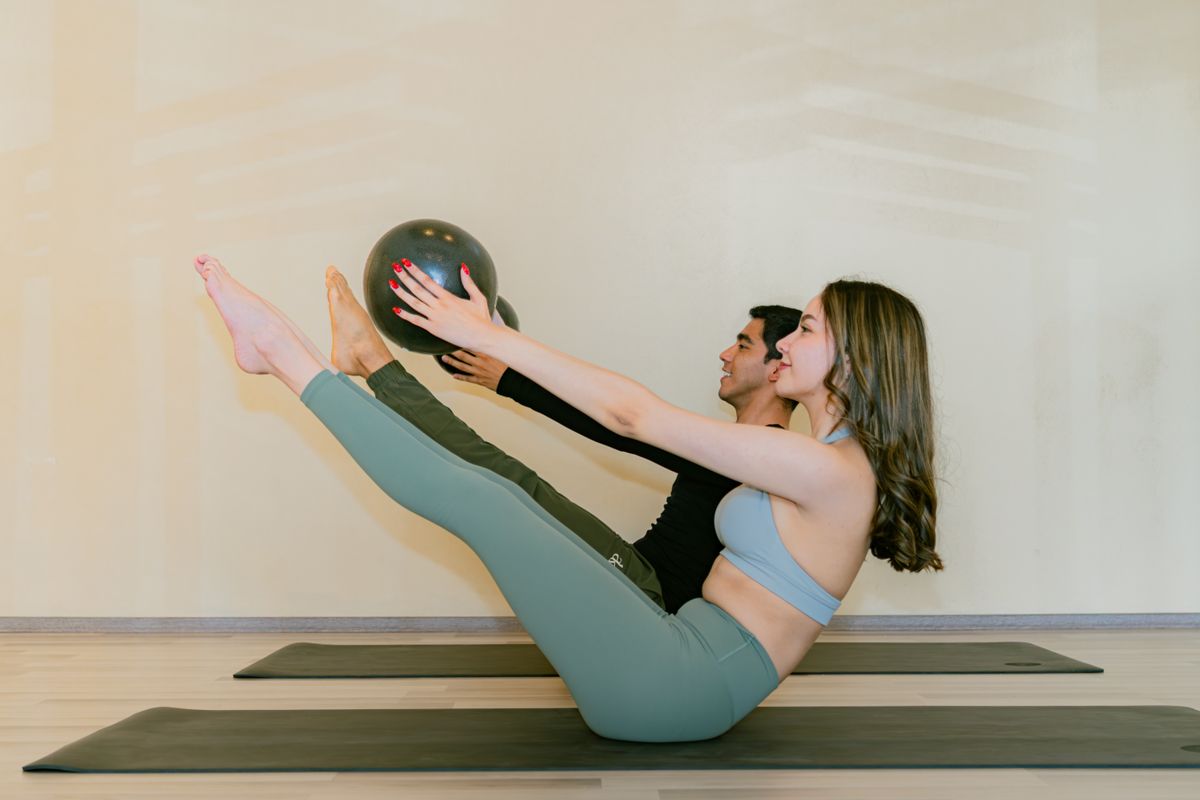
The image shows a controlled movement setup with equipment and body positioning, which fits a flexibility page about range, support, and exit points. It is visual context for general education, not a model to copy exactly.
Article match: mobility, flexibility, low-impact support, and beginner range education. The image is a close fit because it shows a supported movement setting rather than a precise stretch instruction. Article match: mobility.
Image: Couple Practicing Pilates With Exercise Ball. Author: Pexels photographer, see source page. License: Pexels License. Library: Pexels.