exercise types
Tai Chi As Balance Practice
How should a beginner understand tai chi as balance practice before joining a class or copying a sequence?
Tai chi is best read as balance practice when the first decision is stance, surface, pace, support, instruction, and recovery. A first attempt should not prove balance improvement or safety. It should show whether slow weight shifting stays readable enough to repeat or whether support, space, or qualified guidance should come first.
Choose a slow, supported, instruction-friendly version with clear space around you. Keep both feet available, support within reach, and the first movement small enough to stop calmly. Decide the stop point before you begin, and keep the version small enough that pausing does not feel like failure.
Read This First
You are interested in tai chi because it looks gentle and balance-focused, but you do not want to assume that slow movement is automatically safe, easy, or enough for your personal situation.
Choose a slow, supported, instruction-friendly version with clear space around you. Keep both feet available, support within reach, and the first movement small enough to stop calmly. Decide the stop point before you begin, and keep the version small enough that pausing does not feel like failure.
surface, support, stance, gaze, weight shift, class cue, breath, confidence, and recovery step
Use more support, a wider stance, smaller shift, fixed gaze, shorter session, slower instruction, clearer surface, or fewer arm and turning cues.
Choose the option by setting, support, and stop point.
Type pages compare walking, strength, mobility, cardio, and similar choices by what the reader can safely start and leave today.
- Pick the movement that can be shortened without changing the whole day.
- Tai Chi As Balance Practice - Tai Chi Begins With Slow Weight Shift, Not A Sequence: look first for surface, support, stance, gaze, weight shift, class cue, breath, confidence, and recovery step; if that signal is missing or crowded out by chest discomfort, faintness, severe shortness of breath, dizziness, numbness, unusual pain, confusion, or unsafe symptoms, make the next version smaller before reading onward.
- Pick the version that can be shortened without guilt.
- Ask a clinician, physical therapist, occupational therapist, emergency service, tai chi instructor, or qualified fitness professional when falls, dizziness, neurological symptoms, medication, pregnancy, illness, surgery, chronic disease, recovery, injury history, or professional instructions shape the tai chi decision.
Safety Boundary
This is general education, not medical advice. Stop for warning signs and ask a qualified professional when the situation is personal, uncertain, or higher risk.
Not For
- diagnosis of dizziness, fall risk, balance problems, pain, neurological symptoms, injury, fitness level, or medical readiness
- replacing a clinician, physical therapist, occupational therapist, emergency service, tai chi instructor, or qualified fitness professional
- personal programming, rehab guidance, medical clearance, fall-risk judgment, sequence prescription, body change, weight change, or performance promises
What To Look For
Read the page by the signal you need to understand, then choose the next page only when that signal is clearer.
Decision 1
Tai Chi Begins With Slow Weight Shift, Not A Sequence
Tai Chi As Balance Practice - Tai Chi Begins With Slow Weight Shift, Not A Sequence: look first for surface, support, stance, gaze, weight shift, class cue, breath, confidence, and recovery step; if that signal is missing or crowded out by chest discomfort, faintness, severe shortness of breath, dizziness, numbness, unusual pain, confusion, or unsafe symptoms, make the next version smaller before reading onward.
A beginner can mistake a flowing tai chi sequence for the first requirement, when the safer first lesson is one readable shift.
Tai chi can look like a flowing sequence, but the first useful decision is much smaller: can you shift weight slowly and return to ordinary standing calmly? A beginner does not need to memorize a form before learning the signal. Start with one small shift, a supported stance, and enough space to step out.
Notice whether your feet, breath, gaze, and recovery stay readable. If the sequence, teacher cue, or video makes you rush, the movement is too large for the first attempt. Make the shift smaller or choose a class where instruction and stopping are explicit.
This keeps tai chi as balance education instead of a performance task. The useful result is not completing a form. It is knowing whether slow movement made steadiness clearer or whether support and safety should come first.
That distinction matters because graceful movement can hide a setup that is still too hard to stop. Tai Chi Begins With Slow Weight Shift, Not A Sequence should change what the reader watches next, not simply restate the guide topic. In tai chi as balance practice, the section is useful when it turns the movement category behind tai chi begins with slow weight shift, not a sequence into a visible check: surface, support, stance, gaze, weight shift, class cue, breath, confidence, and recovery step.
If the same attempt points instead to chest discomfort, faintness, severe shortness of breath, dizziness, numbness, unusual pain, confusion, or unsafe symptoms, the guide should narrow the choice, reduce the demand, or move the reader toward qualified help. NCCIH (Tai Chi And Qi Gong: What You Need To Know) and National Institute on Aging (Four Types Of Exercise Can Improve Your Health And Physical Ability) shape this dimension without becoming instructions to copy. NCCIH gives this guide public-facing vocabulary and a limit on what the guide can say.
National Institute on Aging adds a second comparison point so the guide does not lean on one article or one phrasing pattern. The final wording should therefore stay with what can be observed, what should not be assumed, and what question belongs outside a self-directed page.
Decision 2
Support And Surface Come Before Flow
Tai Chi As Balance Practice - Support And Surface Come Before Flow: choose the next move from the visible signal, then direct symptoms, personal risk, or unclear safety to qualified help.
Tai chi may be slow, but surface, footwear, clutter, and nearby support still decide whether stopping is clear.
Support and surface should be settled before tai chi becomes flowing movement. A clear floor, stable shoes or bare-foot choice that feels secure, nearby wall or counter, and enough room to step out can make the first movement readable. If the surface is slippery, crowded, uneven, soft, or distracting, the next decision is space setup.
If support is too far away, make the stance smaller or practice near something stable. Slow movement can still become unsafe if you have to reach suddenly or cannot recover a step. A good first note should name surface, footwear, support, stance width, gaze, and whether the recovery step was calm.
If those details are clear, repeat the same setup before adding a sequence. If not, the guide should path to balance basics, space safety, or qualified help. Flow comes after the stop point is understood.
The surface note also helps separate balance practice from ordinary room hazards. Tai Chi As Balance Practice needs support and surface come before flow to answer a smaller question than "what should I do next?" Use the setup, support, equipment, and stop point in tai chi as balance practice as the filter and leave with one note: the strongest signal was balance, mobility, space setup, dizziness, instruction, or professional-boundary concern. If the note is only motivation, guilt, or a vague sense that more effort must be better, the section has not done its job yet.
CDC (Older Adult Activity: An Overview) and NHS (Exercise) shape this dimension without becoming instructions to copy. CDC gives this guide public-facing vocabulary and a limit on what the guide can say. NHS adds a second comparison point so the guide does not lean on one article or one phrasing pattern.
The final wording should therefore stay with what can be observed, what should not be assumed, and what question belongs outside a self-directed page. A wide stance on a clear floor with support nearby may teach more than a narrow stance in an open class space. After one attempt, the note should be plain enough to compare later: the strongest signal was balance, mobility, space setup, dizziness, instruction, or professional-boundary concern.
If nothing useful changes, the fallback is not to push harder; it is to use more support, a wider stance, smaller shift, fixed gaze, shorter session, slower instruction, clearer surface, or fewer arm and turning cues. If the signal is mixed, change one variable at a time: support, stance, surface, footwear, class pace, video length, gaze, turn size, instruction style, or whether the question belongs to mobility or balance basics.
Decision 3
Instruction Helps When It Slows The Decision Down
Tai Chi As Balance Practice - Instruction Helps When It Slows The Decision Down: use this section to choose repeat, reduce, pause, or ask, not to prove progress; watch the same small version would be realistic to repeat without feeling rushed.
Tai chi often benefits from instruction, but class pace or cueing can also make the first attempt too busy.
Instruction is useful when it helps you slow the decision down. A teacher, beginner class, or clear video can help you learn where the feet go, when to shift, and how to stop. It becomes less useful when you are trying to follow arm paths, turns, breath cues, and a group pace before the stance is readable.
For the first attempt, choose instruction that normalizes stopping, stepping out, and using support. If you cannot ask questions or slow down, use a smaller at-home version near support or look for a true beginner setting. This does not make tai chi less valuable.
It keeps the first signal honest. A web article cannot see whether your stance, dizziness, medication, or fall history changes the decision. It can help you pick instruction that makes the movement easier to observe rather than harder to copy.
The best instruction leaves you with a clearer note, not a feeling that you had to keep up. Instruction Helps When It Slows The Decision Down belongs in tai chi as balance practice because it can separate one ordinary signal from a larger claim. For this guide, which part of the option should stay optional matters more than finishing a routine.
The reader should finish the section knowing whether to repeat the same version, make it smaller, change the setting, or pause because class pace, turns, head movement, surface, or lack of support made stopping unclear. Mayo Clinic (Tai Chi: A Gentle Way To Fight Stress) and Verywell Fit (Tai Chi For Beginners) shape this dimension without becoming instructions to copy. Mayo Clinic gives this guide public-facing vocabulary and a limit on what the guide can say.
Verywell Fit adds a second comparison point so the guide does not lean on one article or one phrasing pattern. The final wording should therefore stay with what can be observed, what should not be assumed, and what question belongs outside a self-directed page. A class that invites pauses and wider stances may be more useful than a graceful video that keeps moving before you can recover.
After one attempt, the note should be plain enough to compare later: the same small version would be realistic to repeat without feeling rushed. If nothing useful changes, the fallback is not to push harder; it is to use more support, a wider stance, smaller shift, fixed gaze, shorter session, slower instruction, clearer surface, or fewer arm and turning cues. If the signal is mixed, change one variable at a time: support, stance, surface, footwear, class pace, video length, gaze, turn size, instruction style, or whether the question belongs to mobility or balance basics.
Decision 4
Head, Gaze, And Turning Can Change The Balance Signal
Tai Chi As Balance Practice - Head, Gaze, And Turning Can Change The Balance Signal: look first for the next page should be balance basics, dizziness safety, home-space safety, mobility basics, older-adult balance, or professional guidance; if that signal is missing or crowded out by chest discomfort, faintness, severe shortness of breath, dizziness, numbness, unusual pain, confusion, or unsafe symptoms, make the next version smaller before reading onward.
Tai chi sequences may include looking, turning, or shifting attention, which can change steadiness before effort is obvious.
Tai chi is not only slow stepping. Head position, gaze direction, arm movement, and turns can change the balance signal. A beginner should keep gaze simple and turns small before adding flowing complexity.
If looking sideways, turning the head, crossing steps, or following arm paths makes steadiness unclear, reduce the movement. Return to a fixed gaze, wider stance, smaller shift, or support. This matters because slow movement can hide multiple variables changing at once.
A person may think tai chi is too difficult when the actual issue was head turn, surface, or class pace. A careful article should help separate those signals. If dizziness, spinning feelings, numbness, feeling close to falling, or loss of coordination appears, stop and use qualified help rather than experimenting with more head movement.
The safe educational move is simplification, not challenge. Changing only gaze or turn size keeps the next observation specific enough to use. Head, Gaze, And Turning Can Change The Balance Signal should change what the reader watches next, not simply restate the guide topic.
In tai chi as balance practice, the section is useful when it turns the movement category behind head, gaze, and turning can change the balance signal into a visible check: the next page should be balance basics, dizziness safety, home-space safety, mobility basics, older-adult balance, or professional guidance. If the same attempt points instead to chest discomfort, faintness, severe shortness of breath, dizziness, numbness, unusual pain, confusion, or unsafe symptoms, the guide should narrow the choice, reduce the demand, or move the reader toward qualified help. National Institute on Aging (Four Types Of Exercise Can Improve Your Health And Physical Ability) and MoveKind (Balance Exercise Basics) shape this dimension without becoming instructions to copy.
National Institute on Aging gives this guide public-facing vocabulary and a limit on what the guide can say. Balance Exercise Basics supplies the site link if this section becomes the reader's next decision. The final wording should therefore stay with what can be observed, what should not be assumed, and what question belongs outside a self-directed page.
Decision 5
After One Practice, Notice The Recovery Step
Tai Chi As Balance Practice - After One Practice, Notice The Recovery Step: choose the next move from the visible signal, then direct symptoms, personal risk, or unclear safety to qualified help.
The recovery step after a slow movement often reveals whether the balance demand was well sized. This part matters only if it changes the next visible choice instead of adding a generic reason to move.
After one small tai chi attempt, notice the recovery step. Did you return to ordinary standing calmly? Did you need to grab support, step quickly, hold your breath, or stop because the next shift felt unclear?
The recovery step tells you whether the attempt was readable. A good note separates surface, support, stance, gaze, weight shift, class cue, breath, confidence, and after-effects. Repeat the same version if recovery stayed calm.
Widen stance, add support, shorten the movement, or choose a slower class if recovery was noisy. Use safety first if dizziness, faintness, chest discomfort, severe breathlessness, numbness, unusual pain, or feeling close to falling appears. The useful result is not a completed tai chi sequence.
It is knowing whether slow balance practice can be repeated without losing the stop point. Recovery is the proof of readability, not the appearance of the movement. That recovery note should decide the next stance size.
Tai Chi As Balance Practice needs after one practice, notice the recovery step to answer a smaller question than "what should I do next?" Use the setup, support, equipment, and stop point in tai chi as balance practice as the filter and leave with one note: surface, support, stance, gaze, weight shift, class cue, breath, confidence, and recovery step. If the note is only motivation, guilt, or a vague sense that more effort must be better, the section has not done its job yet. CDC (Older Adult Activity: An Overview) and NCCIH (Tai Chi And Qi Gong: What You Need To Know) shape this dimension without becoming instructions to copy.
CDC gives this guide public-facing vocabulary and a limit on what the guide can say. NCCIH adds a second comparison point so the guide does not lean on one article or one phrasing pattern. The final wording should therefore stay with what can be observed, what should not be assumed, and what question belongs outside a self-directed page.
Write down whether you returned to standing without a sudden step before deciding to repeat the same class cue. After one attempt, the note should be plain enough to compare later: surface, support, stance, gaze, weight shift, class cue, breath, confidence, and recovery step. If nothing useful changes, the fallback is not to push harder; it is to use more support, a wider stance, smaller shift, fixed gaze, shorter session, slower instruction, clearer surface, or fewer arm and turning cues.
If the signal is mixed, change one variable at a time: support, stance, surface, footwear, class pace, video length, gaze, turn size, instruction style, or whether the question belongs to mobility or balance basics.
Decision 6
The Next Page Should Follow The Balance Constraint
Tai Chi As Balance Practice - The Next Page Should Follow The Balance Constraint: use this section to choose repeat, reduce, pause, or ask, not to prove progress; watch the strongest signal was balance, mobility, space setup, dizziness, instruction, or professional-boundary concern.
Tai chi pages can become vague when they send readers toward more forms instead of the support or safety issue they noticed.
The next page after tai chi should follow the balance constraint. If support and stance were the main issue, read balance basics. If the room, footwear, or clutter changed confidence, read space safety.
If dizziness appeared, do not search for a new sequence; use a stop-sign path or qualified help. If slow movement felt clear but hip, ankle, or shoulder range limited the transition, read mobility basics. If instruction was useful but class pace was too fast, repeat a smaller beginner setting rather than advancing.
A good internal link should make the next version easier to understand and easier to stop. It should not act like a tai chi progression. When in doubt, reduce the movement and increase support before adding turns, sequence length, or class pace.
the guide succeeds when the reader can name the next safe question. That question should be narrow enough to answer before the next practice begins. The Next Page Should Follow The Balance Constraint belongs in tai chi as balance practice because it can separate one ordinary signal from a larger claim.
For this guide, which part of the option should stay optional matters more than finishing a routine. The reader should finish the section knowing whether to repeat the same version, make it smaller, change the setting, or pause because class pace, turns, head movement, surface, or lack of support made stopping unclear. Verywell Fit (Tai Chi For Beginners) and MoveKind (When To Ask A Professional Before Exercise) shape this dimension without becoming instructions to copy.
Verywell Fit is used here for reader-question coverage and article structure, not as proof of a health outcome. When To Ask A Professional Before Exercise supplies the site link if this section becomes the reader's next decision. The final wording should therefore stay with what can be observed, what should not be assumed, and what question belongs outside a self-directed page.
If the only unclear part was a turn, the next question is support and gaze, not a longer sequence. After one attempt, the note should be plain enough to compare later: the strongest signal was balance, mobility, space setup, dizziness, instruction, or professional-boundary concern. If nothing useful changes, the fallback is not to push harder; it is to use more support, a wider stance, smaller shift, fixed gaze, shorter session, slower instruction, clearer surface, or fewer arm and turning cues.
If the signal is mixed, change one variable at a time: support, stance, surface, footwear, class pace, video length, gaze, turn size, instruction style, or whether the question belongs to mobility or balance basics.
After You Try It
After one small tai chi attempt, you may understand whether stance, support, surface, gaze, instruction, recovery, and confidence were readable. That is not proof of balance improvement, fall-risk change, stress change, health change, body change, or personal readiness.
What To Observe
- surface, support, stance, gaze, weight shift, class cue, breath, confidence, and recovery step
- whether the strongest signal was balance, mobility, space setup, dizziness, instruction, or professional-boundary concern
- whether the same small version would be realistic to repeat without feeling rushed
- whether the next page should be balance basics, dizziness safety, home-space safety, mobility basics, older-adult balance, or professional guidance
Too Much
- chest discomfort, faintness, severe shortness of breath, dizziness, numbness, unusual pain, confusion, or unsafe symptoms
- you had to grab suddenly, step quickly, panic, hold your breath, or felt close to falling
- class pace, turns, head movement, surface, or lack of support made stopping unclear
If Nothing Improves Or It Feels Worse
Use more support, a wider stance, smaller shift, fixed gaze, shorter session, slower instruction, clearer surface, or fewer arm and turning cues.
Change one variable at a time: support, stance, surface, footwear, class pace, video length, gaze, turn size, instruction style, or whether the question belongs to mobility or balance basics.
Pause when tai chi worsens dizziness, pain, breath, numbness, balance, confidence, fall worry, fatigue, or uncertainty.
Ask a clinician, physical therapist, occupational therapist, emergency service, tai chi instructor, or qualified fitness professional when falls, dizziness, neurological symptoms, medication, pregnancy, illness, surgery, chronic disease, recovery, injury history, or professional instructions shape the tai chi decision.
When To Stop Or Ask First
- Stop for chest discomfort, faintness, severe shortness of breath, dizziness, numbness, unusual pain, confusion, loss of coordination, feeling close to falling, or needing to grab suddenly.
- Ask first when falls, dizziness, neurological symptoms, medication, pregnancy, chronic disease, illness, surgery, recovery, injury history, new symptoms, or professional instructions change the decision.
- Use tai chi as balance practice as general education and not medical advice, diagnosis, fall-risk judgment, personal clearance, sequence prescription, or a promised balance result.
Next Decision
Choose the next page from what you noticed, not from a harder goal.
Pick Balance Exercise Basics after tai chi as balance practice if use this path when the reader can describe surface is the clearest education signal; keep the safety boundary around symptoms, personal risk, and qualified help.
If The Setup Needs To ShrinkHome Exercise Space SafetyUse this path when you can describe the strongest signal was balance, mobility, space setup, dizziness, instruction, or professional-boundary concern.Use Home Exercise Space Safety after tai chi as balance practice when it clarifies what equipment or support changes the choice; it is general education, not personal clearance, treatment, or a program.
If Safety Is The QuestionWhen To Ask A Professional Before ExerciseUse this path when class pace, turns, head movement, surface, or lack of support made stopping unclear changes the decision.Choose When To Ask A Professional Before Exercise after tai chi as balance practice when use this path when class pace, turns, head movement changes the setting, support, or stop point; qualified help still handles symptoms or risk.
If The Neighboring Topic FitsDizziness During Exercise: Stop-Sign LiteracyUse this path when you can describe the next page should be balance basics, dizziness safety, home-space safety, mobility basics, older-adult balance, or professional guidance.Read Dizziness During Exercise: Stop-Sign Literacy after tai chi as balance practice if dizziness during exercise: stop-sign literacy is the better question before adding effort; keep personal risk outside self-direction.
How To Use The Source Notes
The reviewed sources support tai chi as a slow mind-body movement practice and a balance-related category, but they do not support personal fall-risk judgment, outcome promises, sequence prescriptions, or safety clearance.
NCCIH, Mayo Clinic, NIA, CDC, and NHS anchor the public-education and safety boundary; Verywell Fit and Healthline are used only for beginner-question comparison; MoveKind internal links path balance and professional-boundary decisions.
No source is used to diagnose dizziness, assess falls, prescribe tai chi sequences, promise balance change, judge urgency, or decide whether a personal situation is safe.
the guide is organized around six decisions: slow movement setup, support and surface, stance and weight shift, class or solo pacing, after-practice recovery, and next-page linking by the balance signal.
Practical Steps
- Choose clear support and surface before choosing a sequence.
- Keep the first weight shift small and slow.
- Use a fixed gaze and wide stance before adding turns or flowing steps.
- Record support, surface, stance, gaze, breath, cueing, recovery, and after-effects separately.
- Repeat a calm supported version before reducing help or increasing sequence length.
- Use safety or qualified help when dizziness, falls, symptoms, medication, or medical history shape the decision.
Common Mistakes
- Assuming slow movement is automatically safe.
- Following a graceful sequence before support and recovery are clear.
- Adding turns, narrow stance, and arm paths at the same time.
- Judging tai chi only by how calm it looks.
- Continuing after dizziness, feeling close to falling, numbness, unusual pain, severe breathlessness, or unsafe symptoms.
FAQ
Is Tai Chi As Balance Practice medical advice?
No. It is general education and not medical advice. It does not diagnose dizziness, judge fall risk, prescribe sequences, provide rehab guidance, or clear personal safety.
Does tai chi have to start with a full form?
No. A small supported weight shift can be a clearer first attempt when stance, surface, gaze, and recovery need to stay readable.
What should I notice after one tai chi attempt?
Notice surface, support, stance, gaze, cueing, weight shift, breath, confidence, recovery step, and whether the same version would be realistic to repeat.
What if tai chi does not feel useful?
Make the next version smaller, add support, widen stance, use a slower class, or change the setting. If symptoms or fall concerns appear, ask qualified help.
When should tai chi stop?
Stop for chest discomfort, faintness, severe breathlessness, dizziness, numbness, unusual pain, confusion, feeling close to falling, or needing to grab suddenly.
Image Source
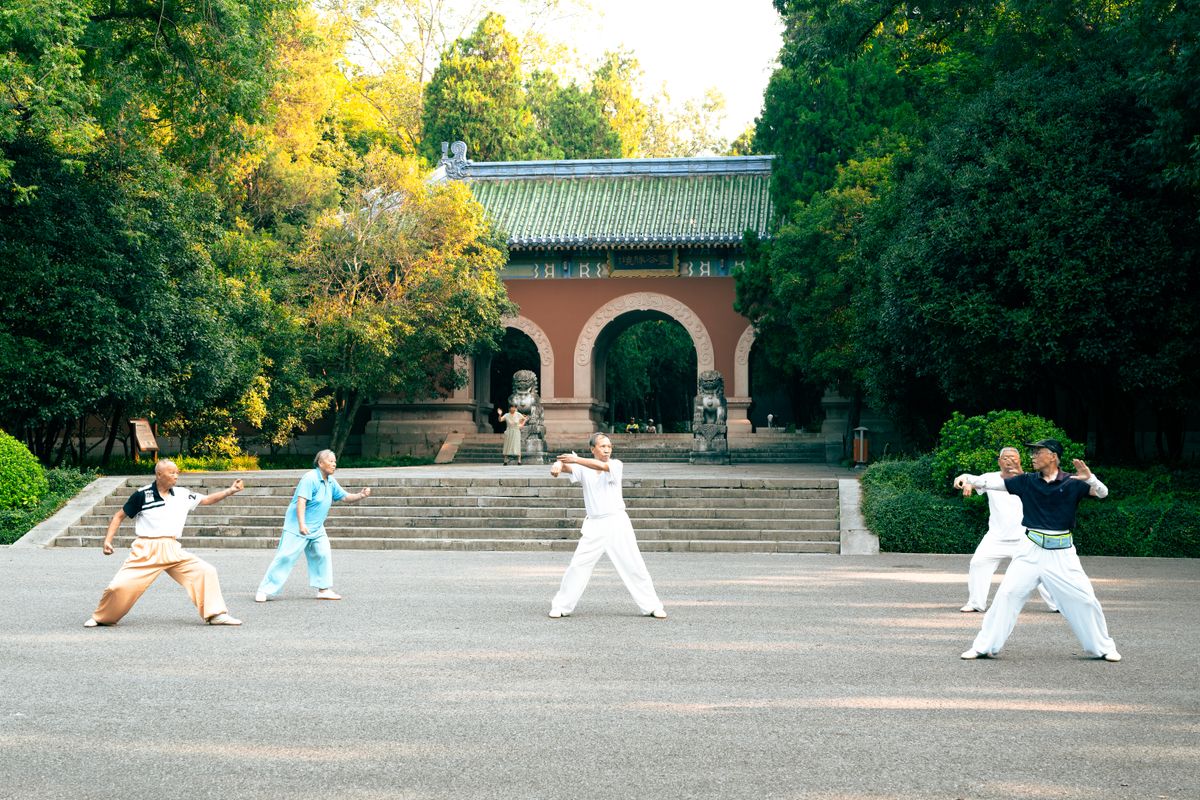
The image shows a tai chi group practice setting, which fits a page about stance, surface, instruction, support, and recovery. It is general-education context, not proof of a result.
Article match: tai chi, group practice, slow balance movement, outdoor class setting, and support-by-instruction decisions. The image is exact because it shows tai chi context without implying fall prevention, medical benefit, body result, or personal safety clearance. Article match: tai-chi, balance.
Image: Group Practicing Tai Chi Near A Temple. Author: Pexels photographer, see source page. License: Pexels License. Library: Pexels.