exercise types
Chair Exercise Basics
How should a beginner use chair exercise as a supported movement option without reading the chair as clearance?
Chair exercise is best read as support and setup education. The chair can make some movements easier to start, but it does not decide personal safety. The first useful attempt checks chair stability, feet, range, breath, and recovery before choosing a class, video, or longer routine. Read it first for one decision: chair type, floor, feet, back, arms, movement range, breath, recovery, and whether standing was involved. If the answer is unclear, make the next version smaller or move to the ask-first page before adding time, speed, load, range, or another page.
Use a solid, stable chair without wheels, sit where your feet can settle on the floor, choose one small seated movement, and stop before the chair becomes a reason to ignore breath, pain, dizziness, or uncertainty.
Read This First
You are considering chair exercise because standing work, floor work, class pace, balance, fatigue, or home space feels uncertain, and you want a supported first version without making it medical or rehab advice.
Use a solid, stable chair without wheels, sit where your feet can settle on the floor, choose one small seated movement, and stop before the chair becomes a reason to ignore breath, pain, dizziness, or uncertainty.
chair type, floor, feet, back, arms, movement range, breath, recovery, and whether standing was involved
Use a more stable chair, smaller range, slower pace, seated-only movement, fewer transitions, shorter session, or longer pauses.
Choose the option by setting, support, and stop point.
Type pages compare walking, strength, mobility, cardio, and similar choices by what the reader can safely start and leave today.
- Pick the movement that can be shortened without changing the whole day.
- Chair Exercise Basics - The Chair Is Support, Not Permission: look first for chair type, floor, feet, back, arms, movement range, breath, recovery, and whether standing was involved; if that signal is missing or crowded out by chest discomfort, faintness, severe shortness of breath, dizziness, numbness, unusual pain, panic, unstable balance, or unsafe symptoms, make the next version smaller before reading onward.
- Pick the version that can be shortened without guilt.
- Ask a clinician, physical therapist, occupational therapist, emergency service, caregiver, coach, or qualified fitness professional when falls, dizziness, neurological symptoms, medication, pregnancy, illness, surgery, chronic disease, recovery, injury history, or care instructions shape the chair decision.
Safety Boundary
This is general education, not medical advice. Stop for warning signs and ask a qualified professional when the situation is personal, uncertain, or higher risk.
Not For
- diagnosis of pain, dizziness, balance, fatigue, disability needs, fitness level, or medical readiness
- replacing a clinician, physical therapist, occupational therapist, emergency service, caregiver, coach, or qualified fitness professional
- personal programming, rehab guidance, fall-risk judgment, transfer instruction, medical clearance, weight change, body change, or performance goals
What To Look For
Read the page by the signal you need to understand, then choose the next page only when that signal is clearer.
Decision 1
The Chair Is Support, Not Permission
Chair Exercise Basics - The Chair Is Support, Not Permission: look first for chair type, floor, feet, back, arms, movement range, breath, recovery, and whether standing was involved; if that signal is missing or crowded out by chest discomfort, faintness, severe shortness of breath, dizziness, numbness, unusual pain, panic, unstable balance, or unsafe symptoms, make the next version smaller before reading onward.
A chair can make movement feel safer, but the object itself cannot decide whether the activity is suitable for a person.
Chair exercise starts with the chair, not the exercise name. The chair should be solid, stable, and without wheels. Your feet should have a clear place to settle.
The floor should not slide. Arms, cushions, height, and nearby clutter can change the signal before the movement begins. This matters because the chair can create a false sense of permission: sitting down may feel lower risk, but breath, pain, dizziness, transfer difficulty, and personal medical instructions still matter.
Use the first attempt to check setup. Can you sit upright without gripping? Can you stop the movement without shifting the chair?
Can you leave the position calmly? Also notice whether the chair height lets your knees and feet stay settled before any movement begins. If the chair moves, the floor catches, or getting up becomes the hard part, the next decision is support or qualified help, not another exercise.
Chair exercise stays useful when the support makes observation clearer instead of hiding personal risk. The Chair Is Support, Not Permission should change what the reader watches next, not simply restate the guide topic. In chair exercise basics, the section is useful when it turns the movement category behind the chair is support, not permission into a visible check: chair type, floor, feet, back, arms, movement range, breath, recovery, and whether standing was involved.
If the same attempt points instead to chest discomfort, faintness, severe shortness of breath, dizziness, numbness, unusual pain, panic, unstable balance, or unsafe symptoms, the guide should narrow the choice, reduce the demand, or move the reader toward qualified help. NHS (Sitting Exercises) and NHS (Strength Exercises) shape this dimension without becoming instructions to copy. NHS gives this guide public-facing vocabulary and a limit on what the guide can say.
NHS adds a second comparison point so the guide does not lean on one article or one phrasing pattern. The final wording should therefore stay with what can be observed, what should not be assumed, and what question belongs outside a self-directed page.
Decision 2
Seated Movement Separates Range From Balance
Chair Exercise Basics - Seated Movement Separates Range From Balance: choose the next move from the visible signal, then direct symptoms, personal risk, or unclear safety to qualified help.
A seated position may reduce some balance noise, which can make range, breath, and control easier to observe.
One reason chair exercise can be useful is that seated movement separates range from balance. If standing movement feels busy, a seated version may let you notice shoulder range, ankle movement, hip marching, arm reach, breath, or coordination without also managing a standing stance. That does not make the seated version automatically suitable.
It simply changes the question. Keep the first movement small enough that you can describe it: what moved, what stayed supported, where breath changed, and whether you could stop without gripping. If a seated march changes breath too much, reduce the range or pause.
If an arm movement brings shoulder pain, stop and use a safety or professional path. If seated movement is clear but standing remains uncertain, do not turn clarity in the chair into standing clearance. Record the seated signal as its own information.
The next version should keep the same support until the range itself is readable. Chair Exercise Basics needs seated movement separates range from balance to answer a smaller question than "what should I do next?" Use the setup, support, equipment, and stop point in chair exercise basics as the filter and leave with one note: the strongest signal was support, flexibility, bodyweight movement, balance, dizziness, class pace, or professional-boundary concern. If the note is only motivation, guilt, or a vague sense that more effort must be better, the section has not done its job yet.
NHS (Sitting Exercises) and MedlinePlus (Exercise For Older Adults) shape this dimension without becoming instructions to copy. NHS gives this guide public-facing vocabulary and a limit on what the guide can say. MedlinePlus adds a second comparison point so the guide does not lean on one article or one phrasing pattern.
The final wording should therefore stay with what can be observed, what should not be assumed, and what question belongs outside a self-directed page. A seated ankle movement may help you notice control and range before deciding whether a standing balance page belongs next. After one attempt, the note should be plain enough to compare later: the strongest signal was support, flexibility, bodyweight movement, balance, dizziness, class pace, or professional-boundary concern.
If nothing useful changes, the fallback is not to push harder; it is to use a more stable chair, smaller range, slower pace, seated-only movement, fewer transitions, shorter session, or longer pauses. If the signal is mixed, change one variable at a time: chair type, floor surface, arms or no arms, movement range, standing transition, class pace, video length, or whether the question belongs to safety.
Decision 3
Sit-To-Stand Changes The Chair Question
Chair Exercise Basics - Sit-To-Stand Changes The Chair Question: use this section to choose repeat, reduce, pause, or ask, not to prove progress; watch the same chair setup would feel realistic to repeat without adding repetitions, standing work, bands, or weights.
Many chair pages include standing transitions, which are different from fully seated movement. This part matters only if it changes the next visible choice instead of adding a generic reason to move.
A sit-to-stand choice changes the chair question. Fully seated movement asks whether the chair position makes range and control readable. Sit-to-stand adds foot position, forward lean, leg effort, balance, chair height, surface, and the ability to sit back down calmly.
Those are meaningful variables. If the first attempt includes standing, make it one supported transition, not a set to finish. Notice whether you could rise without the chair sliding, whether your feet stayed settled, whether breath changed, and whether sitting back down was controlled.
If standing brings dizziness, unstable balance, pain, chest discomfort, severe breathlessness, or fear of falling, stop and ask for qualified help rather than adjusting repetitions. If standing was clear but tiring, repeat the same small version another day before adding anything. Write down whether the hard part was rising, standing still, or returning to the chair.
The chair should make the transition easier to understand, not pressure you to turn a seated page into a standing workout. Sit-To-Stand Changes The Chair Question belongs in chair exercise basics because it can separate one ordinary signal from a larger claim. For this guide, which part of the option should stay optional matters more than finishing a routine.
The reader should finish the section knowing whether to repeat the same version, make it smaller, change the setting, or pause because class pace made pausing, skipping, or asking for help feel difficult. NHS (Strength Exercises) and CDC (Older Adult Activity: An Overview) shape this dimension without becoming instructions to copy. NHS gives this guide public-facing vocabulary and a limit on what the guide can say.
CDC adds a second comparison point so the guide does not lean on one article or one phrasing pattern. The final wording should therefore stay with what can be observed, what should not be assumed, and what question belongs outside a self-directed page. One careful stand and sit can be a better first signal than trying to match the repetitions from a video.
After one attempt, the note should be plain enough to compare later: the same chair setup would feel realistic to repeat without adding repetitions, standing work, bands, or weights. If nothing useful changes, the fallback is not to push harder; it is to use a more stable chair, smaller range, slower pace, seated-only movement, fewer transitions, shorter session, or longer pauses. If the signal is mixed, change one variable at a time: chair type, floor surface, arms or no arms, movement range, standing transition, class pace, video length, or whether the question belongs to safety.
Decision 4
Class Pace Can Hide Support Needs
Chair Exercise Basics - Class Pace Can Hide Support Needs: look first for the next page should be bodyweight basics, flexibility basics, balance basics, dizziness safety, or professional guidance; if that signal is missing or crowded out by chest discomfort, faintness, severe shortness of breath, dizziness, numbness, unusual pain, panic, unstable balance, or unsafe symptoms, make the next version smaller before reading onward.
Chair classes and videos may feel welcoming while still moving faster than a beginner can observe. This part matters only if it changes the next visible choice instead of adding a generic reason to move.
Chair exercise often appears in classes, senior videos, community sessions, and short routines. That can be encouraging, but class pace can hide support needs. A group may keep moving from arms to ankles to standing work before you know which part was useful.
Music, instructor energy, and other participants can make stopping feel awkward even though stopping is the most important option. A good beginner setting names modifications, chair choice, water, pauses, and the right to skip standing transitions. If the class moves before you can record breath, range, chair stability, and recovery, make the next version smaller or ask the instructor for support options.
If symptoms or medical instructions shape the decision, a video cannot answer them. Notice whether the class makes slower movement feel normal or makes it feel like falling behind. Use class energy as context, not as pressure.
The useful chair class leaves you with a clearer note about support, not a feeling that you had to keep up. Class Pace Can Hide Support Needs should change what the reader watches next, not simply restate the guide topic. In chair exercise basics, the section is useful when it turns the movement category behind class pace can hide support needs into a visible check: the next page should be bodyweight basics, flexibility basics, balance basics, dizziness safety, or professional guidance.
If the same attempt points instead to chest discomfort, faintness, severe shortness of breath, dizziness, numbness, unusual pain, panic, unstable balance, or unsafe symptoms, the guide should narrow the choice, reduce the demand, or move the reader toward qualified help. Healthline (Exercise Plan For Older Adults) and Harvard Health Publishing (Chair Exercises For Seniors) shape this dimension without becoming instructions to copy. Healthline is used here for reader-question coverage and article structure, not as proof of a health outcome.
Harvard Health Publishing adds a second comparison point so the guide does not lean on one article or one phrasing pattern. The final wording should therefore stay with what can be observed, what should not be assumed, and what question belongs outside a self-directed page.
Decision 5
After One Chair Attempt, Notice Setup And Recovery
Chair Exercise Basics - After One Chair Attempt, Notice Setup And Recovery: choose the next move from the visible signal, then direct symptoms, personal risk, or unclear safety to qualified help.
The useful result of chair exercise is often a clearer support note, not a completed routine. This part matters only if it changes the next visible choice instead of adding a generic reason to move.
After one chair attempt, notice setup and recovery separately. Did the chair stay still? Did your feet, hips, back, and hands know where to go?
Did breath stay ordinary? Did the movement make range clearer, or did it create pain, dizziness, fatigue, fear, or confusion? Did you need the chair because standing was uncertain, because floor work was inconvenient, or because the chair made a specific movement easier to observe?
A useful note includes chair type, height, floor, arms or no arms, movement, breath, range, recovery, and whether standing was involved. Add one sentence about the next hour, because fatigue or dizziness may appear after the movement stops. If the setup was clear and recovery was calm, repeat the same small movement before adding time.
If the setup was unclear, change the chair or room before changing effort. If symptoms appeared, use safety or qualified help. This review keeps chair exercise from becoming generic reassurance.
It turns one attempt into a precise next decision. Chair Exercise Basics needs after one chair attempt, notice setup and recovery to answer a smaller question than "what should I do next?" Use the setup, support, equipment, and stop point in chair exercise basics as the filter and leave with one note: chair type, floor, feet, back, arms, movement range, breath, recovery, and whether standing was involved. If the note is only motivation, guilt, or a vague sense that more effort must be better, the section has not done its job yet.
National Institute on Aging (Exercise And Physical Activity) and MoveKind (Dizziness During Exercise: Stop-Sign Literacy) shape this dimension without becoming instructions to copy. National Institute on Aging gives this guide public-facing vocabulary and a limit on what the guide can say. Dizziness During Exercise: Stop-Sign Literacy supplies the site link if this section becomes the reader's next decision.
The final wording should therefore stay with what can be observed, what should not be assumed, and what question belongs outside a self-directed page. If seated marching was easy but getting up afterward felt uncertain, the next question is transition support, not more marching. After one attempt, the note should be plain enough to compare later: chair type, floor, feet, back, arms, movement range, breath, recovery, and whether standing was involved.
If nothing useful changes, the fallback is not to push harder; it is to use a more stable chair, smaller range, slower pace, seated-only movement, fewer transitions, shorter session, or longer pauses. If the signal is mixed, change one variable at a time: chair type, floor surface, arms or no arms, movement range, standing transition, class pace, video length, or whether the question belongs to safety.
Decision 6
The Next Page Should Follow The Chair Signal
Chair Exercise Basics - The Next Page Should Follow The Chair Signal: use this section to choose repeat, reduce, pause, or ask, not to prove progress; watch the strongest signal was support, flexibility, bodyweight movement, balance, dizziness, class pace, or professional-boundary concern.
Chair exercise can point to strength, flexibility, balance, safety, or professional guidance, and the next link should match that signal.
The next page after chair exercise should follow the chair signal. If the chair helped you understand a bodyweight movement, bodyweight basics may be the right next read. If it isolated range, flexibility basics may be clearer.
If a standing transition changed steadiness, balance basics or a professional-boundary page may belong next. If dizziness, chest discomfort, severe breathlessness, unusual pain, numbness, panic, or feeling close to falling appeared, do not search for a more comfortable chair routine. Use a ask-first page and qualified help when needed.
If the chair was simply unstable, change the chair and repeat one smaller seated movement. This makes the internal path useful instead of generic. Chair exercise is not a lower-risk promise.
It is one way to make support visible. The best next link should explain the exact signal you noticed, not reward you for finishing a routine. the guide succeeds when you can say what the chair clarified and which smaller question should be answered before trying again.
The Next Page Should Follow The Chair Signal belongs in chair exercise basics because it can separate one ordinary signal from a larger claim. For this guide, which part of the option should stay optional matters more than finishing a routine. The reader should finish the section knowing whether to repeat the same version, make it smaller, change the setting, or pause because class pace made pausing, skipping, or asking for help feel difficult.
Harvard Health Publishing (Chair Exercises For Seniors) and MoveKind (Bodyweight Exercise Basics) shape this dimension without becoming instructions to copy. Harvard Health Publishing is used here for reader-question coverage and article structure, not as proof of a health outcome. Bodyweight Exercise Basics supplies the site link if this section becomes the reader's next decision.
The final wording should therefore stay with what can be observed, what should not be assumed, and what question belongs outside a self-directed page. If the chair clarified shoulder range but not standing balance, the next page should follow range or safety, not a longer chair workout. After one attempt, the note should be plain enough to compare later: the strongest signal was support, flexibility, bodyweight movement, balance, dizziness, class pace, or professional-boundary concern.
If nothing useful changes, the fallback is not to push harder; it is to use a more stable chair, smaller range, slower pace, seated-only movement, fewer transitions, shorter session, or longer pauses. If the signal is mixed, change one variable at a time: chair type, floor surface, arms or no arms, movement range, standing transition, class pace, video length, or whether the question belongs to safety.
After You Try It
After one small chair attempt, you may understand whether chair stability, seated range, standing transition, breath, recovery, and class pace were readable. That is not proof of balance change, strength change, independence, pain change, body change, or personal readiness.
What To Observe
- chair type, floor, feet, back, arms, movement range, breath, recovery, and whether standing was involved
- whether the strongest signal was support, flexibility, bodyweight movement, balance, dizziness, class pace, or professional-boundary concern
- whether the same chair setup would feel realistic to repeat without adding repetitions, standing work, bands, or weights
- whether the next page should be bodyweight basics, flexibility basics, balance basics, dizziness safety, or professional guidance
Too Much
- chest discomfort, faintness, severe shortness of breath, dizziness, numbness, unusual pain, panic, unstable balance, or unsafe symptoms
- the chair moved, slid, rolled, or made sitting down or standing up feel uncertain
- class pace made pausing, skipping, or asking for help feel difficult
If Nothing Improves Or It Feels Worse
Use a more stable chair, smaller range, slower pace, seated-only movement, fewer transitions, shorter session, or longer pauses.
Change one variable at a time: chair type, floor surface, arms or no arms, movement range, standing transition, class pace, video length, or whether the question belongs to safety.
Pause when chair exercise worsens dizziness, pain, breath, numbness, balance, fatigue, confidence, fall worry, or uncertainty.
Ask a clinician, physical therapist, occupational therapist, emergency service, caregiver, coach, or qualified fitness professional when falls, dizziness, neurological symptoms, medication, pregnancy, illness, surgery, chronic disease, recovery, injury history, or care instructions shape the chair decision.
When To Stop Or Ask First
- Stop for chest discomfort, faintness, severe shortness of breath, dizziness, numbness, unusual pain, confusion, loss of coordination, unstable balance, feeling close to falling, or symptoms that feel unsafe.
- Ask first when falls, dizziness, neurological symptoms, medication, pregnancy, chronic disease, illness, surgery, recovery, injury history, new symptoms, disability needs, or care instructions change the decision.
- Use chair exercise basics as general education and not medical advice, diagnosis, treatment, rehab guidance, fall-risk judgment, transfer instruction, or personal clearance.
Next Decision
Choose the next page from what you noticed, not from a harder goal.
Pick Bodyweight Exercise Basics after chair exercise basics if use this path when the reader can describe chair is the clearest education signal; keep the safety boundary around symptoms, personal risk, and qualified help.
If The Setup Needs To ShrinkFlexibility Exercise BasicsUse this path when you can describe the strongest signal was support, flexibility, bodyweight movement, balance, dizziness, class pace, or professional-boundary concern.Use Flexibility Exercise Basics after chair exercise basics when it clarifies what equipment or support changes the choice; it is general education, not personal clearance, treatment, or a program.
If Safety Is The QuestionBalance Exercise BasicsUse this path when class pace made pausing, skipping, or asking for help feel difficult changes the decision.Choose Balance Exercise Basics after chair exercise basics when use this path when class pace made pausing, skipping changes the setting, support, or stop point; qualified help still handles symptoms or risk.
If The Neighboring Topic FitsWhen To Ask A Professional Before ExerciseUse this path when you can describe the next page should be bodyweight basics, flexibility basics, balance basics, dizziness safety, or professional guidance.Read When To Ask A Professional Before Exercise after chair exercise basics if when to ask a professional before exercise is the better question before adding effort; keep personal risk outside self-direction.
How To Use The Source Notes
The reviewed sources support chair exercise as a supported, setup-sensitive movement option and give useful chair-stability context. They do not support personal clearance, fall-risk judgment, a rehab plan, or a promised older-adult outcome.
NHS, NIA, CDC, and MedlinePlus anchor setup and older-adult boundaries; Healthline and Harvard Health are used only for reader-question and coverage comparison; MoveKind internal links path bodyweight and dizziness decisions.
No source is used to prescribe repetitions, choose transfers, judge fall risk, diagnose dizziness, promise independence, or decide whether chair exercise is personally safe.
the guide is organized around six decisions: chair setup, seated range, sit-to-stand transition, class pace, after-attempt recovery notes, and next-page linking from the support signal.
Practical Steps
- Choose a solid chair without wheels before choosing a movement.
- Keep the first attempt seated unless the standing transition is the actual question.
- Record chair height, floor, feet, back, breath, range, and recovery separately.
- Stop after one small movement if setup or recovery is unclear.
- Repeat the same chair setup before adding standing, bands, weights, or class pace.
- Use safety or qualified help when dizziness, falls, symptoms, medication, health history, or care instructions shape the decision.
Common Mistakes
- Assuming seated movement is automatically suitable.
- Using a rolling or soft chair without checking stability.
- Adding standing transitions before seated range is readable.
- Following class pace when pausing or skipping feels awkward.
- Continuing after dizziness, feeling close to falling, numbness, unusual pain, severe breathlessness, or unsafe symptoms.
FAQ
Is Chair Exercise Basics medical advice?
No. It is general education and not medical advice. It does not diagnose dizziness, judge fall risk, prescribe chair routines, provide rehab guidance, or clear personal safety.
Does chair exercise have to stay seated?
No, but seated movement and sit-to-stand movement are different questions. Keep the first version seated unless standing transition is the signal you need to understand.
What should I notice after one chair attempt?
Notice chair stability, floor, feet, range, breath, recovery, whether standing was involved, and whether the same setup would feel realistic to repeat.
What if chair exercise does not feel useful?
Change the chair, reduce range, slow the pace, stay seated, or choose a different support category. If symptoms or fall concerns appear, ask qualified help.
When should chair exercise stop?
Stop for chest discomfort, faintness, severe breathlessness, dizziness, numbness, unusual pain, confusion, unstable balance, or symptoms that feel unsafe.
Image Source
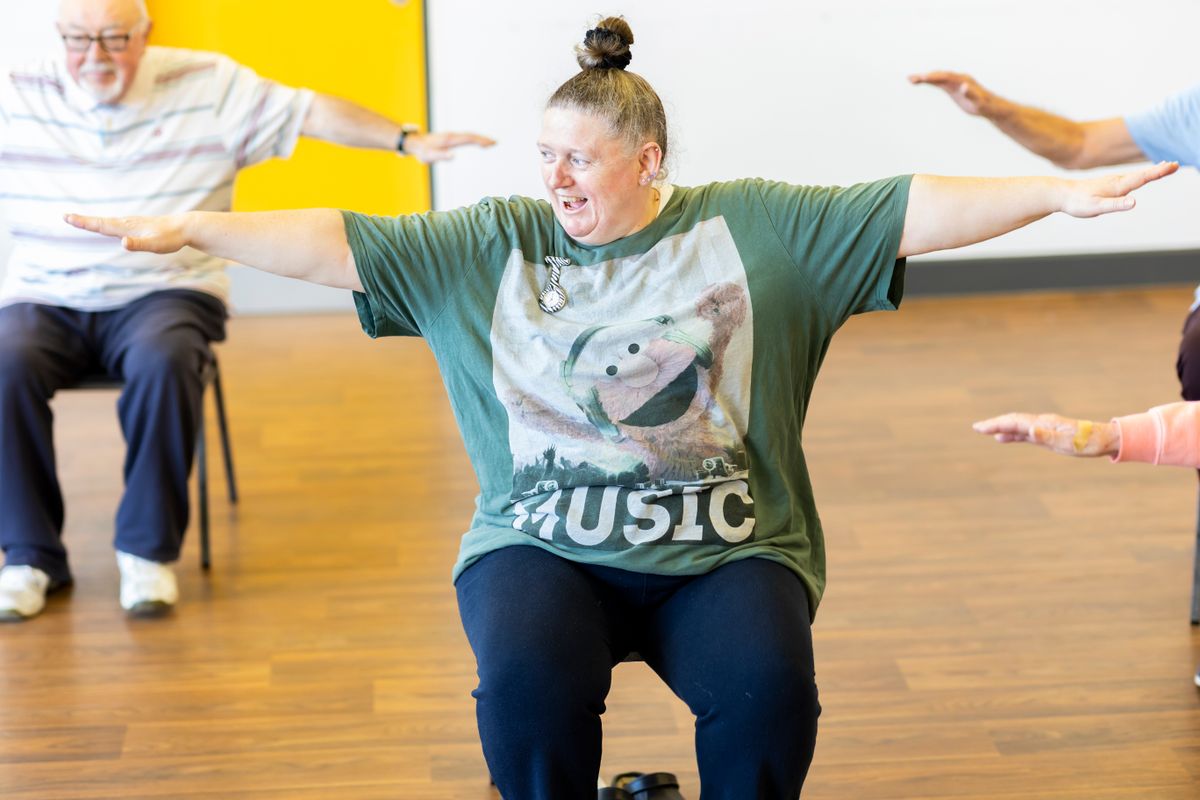
The image shows people using chairs in a movement class, which fits a page about chair stability, seated range, standing transitions, class pace, and recovery. It is general-education context, not proof of a result.
Article match: chair exercise class, older-adult support context, seated movement, class pace, and support decisions. The image is exact because it shows chair-based exercise without implying medical benefit, fall-risk change, body result, or personal safety clearance. Article match: chair, balance.
Image: Elderly People Exercising In A Chair Class. Author: Pexels photographer, see source page. License: Pexels License. Library: Pexels.