Practical guide
Can I Bring a Dog on a Group Walk? What to Check
Check the actual group agreement, route restrictions, dog control and optional stops separately. Includes country-qualified guidance, joining wording and a fictional changed-route example.
On this page
Check the group agreement and the route separately
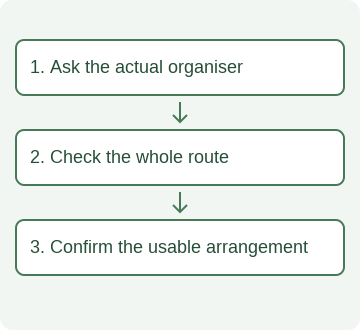
A dog can join a particular walk only when the actual group arrangement and the route conditions work together. Ask the organiser before arriving with the dog, then check where the walk goes and what control or access restrictions apply. A “dogs welcome” message is not proof that every field, stop or alternative route is suitable.
Ramblers’ walking-together guidelines ask participants to check whether dogs are permitted and to follow the leader’s decisions. That is the Ramblers context; another organiser needs to explain its own arrangement. Do not copy one organisation’s policy onto an unrelated event or assume that a public invitation accepts every dog.
Ask about the named event and date, rather than the group in general. A group may offer different routes or optional stops. Identify whether the dog is part of the booked walking place, who will handle it, and whether anything remains unconfirmed. The owner still needs to assess whether they can control the dog and meet the actual outing’s requirements.
Source: [1]
Read the rules for the country and land type
On a small screen, swipe inside the table, or focus it and use the arrow keys.
| Setting | Source-based requirement or guidance | What to check for this outing |
|---|---|---|
| England and Wales: countryside visitors | Keep the dog under effective control and in sight; check local signs for lead requirements or exclusions. | The actual path, local restrictions and the owner’s ability to prevent unwanted approaches. |
| England and Wales: Open Access land | The visitor Code says a lead is legally required around livestock and from 1 March to 31 July on Open Access land. | Whether this segment is Open Access land; do not apply its seasonal rule to every path or another country. |
| England and Wales: coast | The visitor Code says dogs must be on a lead around livestock; local restrictions may also apply. | Current local and seasonal restrictions; the Open Access seasonal sentence is not a blanket rule for all coastal land. |
| Scotland: fields with young farm animals | The Scottish guidance says not to take a dog into fields with lambs, calves or other young farm animals. | A different suitable route; a lead does not remove this guidance. |
| Scotland: other animals, birds and public places | Use a short lead or close control as the Scottish guidance specifies, avoid disturbance and remove waste. | Current animals and nesting context, other users, local information and the whole route. |
In England and Wales, local signs may require leads for part or all of the year or exclude dogs, with the visitor Code identifying an assistance-dog exception to local bans. Discuss the actual access needs and applicable policy with the responsible organiser or operator; this guide does not decide an individual’s legal entitlement.
Scottish guidance treats dog walking within responsible access differently from England and Wales. It says to keep dogs on a short lead or close at heel around farm animals, as far from them as possible, and to avoid fields with young animals. During ground-nesting birds’ breeding season, usually April to July, its guidance covers relevant habitats such as moorland, grassland and shores. Read the current official source for the actual setting.
Both sources address livestock threats and explain circumstances in which releasing the dog may be needed. Read that guidance before an outing that could encounter livestock; do not rely on “keep the lead on whatever happens.” An online checklist cannot predict animal behaviour or make an unsuitable route safe.
Check the whole outing before confirming a dog
Follow the route from arrival to the finish. Check fields, narrow passages, shared paths, rest stops and any planned cafe or indoor alternative. Walking permission does not establish a venue’s dog policy, transport carriage conditions or space for the group. Ask the responsible operator about those separate arrangements where they matter.
Find out who handles the dog while the organiser gives the briefing, manages a junction or responds to another participant. An owner who also has a leader role needs a workable arrangement for both responsibilities. Do not silently hand the dog to a stranger or treat a helper’s attendance as agreement to handle it.
Plan to carry bags and remove dog waste. The England/Wales Code says never to leave a bag behind even with an intention to collect it later; take it home if no public waste bin is available. Scottish guidance also requires waste removal and warns about its effects on people and animals.
Use the route-recce guide to record observed conditions and remaining questions. A dry-day recce or an old photograph cannot establish which animals or restrictions will be present on the event date. Recheck essential conditions and tell participants when an advertised arrangement changes.
Write a clear invitation and owner reply
Original invitation wording: “Please ask the organiser before bringing a dog to this named walk. We are checking the route and the optional stop separately. Tell us who will handle the dog and whether you can follow the confirmed control arrangements. A place is confirmed only after we reply about this event.” Replace those statements with the actual policy; do not publish them as facts if your process differs.
Original owner question: “I would like to bring one dog and will handle it throughout. Does this date’s route include livestock, a dog-restricted section or an optional indoor stop? What control arrangement do you require, and is any part still being checked?” This asks for practical facts without claiming that the owner or website has certified the dog’s behaviour.
If a participant raises access requirements, speak about the needed arrangement rather than requesting unnecessary private details in the group chat. Refer individual rights or specialist questions to the responsible organisation and appropriate advice. A casual reply is not a complete legal or safeguarding process.
Download the original dog-joining record (TXT). Keep the group response, route information and unresolved condition in separate fields. It is an independent planning record, not an official dog permit or training assessment.
Work through a fictional changed-route decision
Fictional example: Mira asks about bringing her dog on a Scottish social walk. The organiser says dogs may join the group if the confirmed route works and the owner follows the agreed control arrangements. The original route uses a path away from livestock; the optional cafe has not yet confirmed its dog policy.
A proposed route change then crosses a field with calves. “Mira has a lead” does not resolve the new issue: the Scottish guidance says not to take dogs into fields with young farm animals. The organiser checks a suitable alternative or changes the event arrangement rather than describing the old confirmation as covering the new route.
The cafe question also remains separate. Until the venue replies, do not promise that the dog can join the optional indoor stop or that somebody else will wait outside with it. A confirmed walking place and an unresolved cafe arrangement should both appear in the event message.
If the organiser cannot establish an appropriate dog arrangement, explain the actual options before travel. That might mean a changed route, a different event or declining this particular dog-joining request, subject to applicable obligations. It does not prove the dog is badly behaved or establish a universal group policy.
Source: [3]
Check three common dog-walk assumptions
These fictional checks test the separate decisions, not an animal’s behaviour.
Case 1
The organiser says dogs are welcome. Does that remove a local lead requirement?
Show answer and explanation for case 1
No. The actual route conditions still apply.
Group admission and local control/access requirements answer different questions. Check both for the named event and date.
Case 2
A Scottish alternative crosses a field with calves. Does using a short lead make the dog arrangement settled?
Show answer and explanation for case 2
No. Check another suitable route or change the arrangement.
The official Scottish guidance says not to take dogs into fields with young farm animals; a lead does not erase that distinction.
Case 3
A dog is confirmed for the walking section. Is its place inside the optional cafe also confirmed?
Show answer and explanation for case 3
Only if the venue’s actual arrangement has been checked.
Walking, venue access and any handling responsibilities are separate. Preserve the unresolved question in the invitation instead of silently promising a complete outing.
Sources and further reading
- Ramblers: Walking together guidelinesParticipant guidance for Ramblers group walks: ask whether dogs are permitted and follow the leader’s decisions. Check an unrelated organiser’s own policy.
- Natural England / Natural Resources Wales: Countryside Code for visitorsEngland/Wales guidance on effective control, local signs, livestock, Open Access lead dates, waste and route preparation. Check current local conditions for the actual outing.
- Scottish Outdoor Access Code: Dog walkingScottish guidance on young farm animals, control, nesting birds, waste and livestock threats. The country and land context differ from England and Wales.